Subscribe
Share
Share
Embed
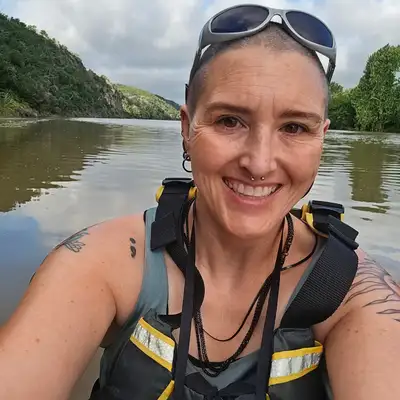
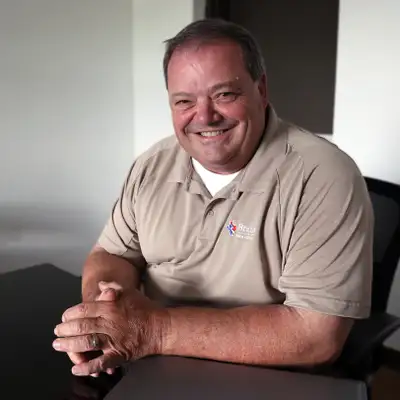
Ready to unpack the powerful stories of a Texas titan - the Brazos River? Listen as experts explain the Brazos River Basin's immense role in our daily lives. They'll cover everything from the river's fascinating history to all the work that goes into ensuring you have water when you turn on your faucet.
Hear invaluable insights on topics like why lake levels change, the important projects safeguarding our water, the many species that call the Brazos home, and even some tips for enjoying the water from Brazos River Authority experts.
This is your chance to understand the immense work that goes into developing, managing, and protecting the Brazos River Basin, which stretches from the Texas-New Mexico border to the Gulf. (The basin is the size of Tennessee, y’all, it’s big.)
It’s a huge part of our state’s story and we can’t wait to share it with you.
Clay Sellers: Got questions about the Brazos? No more unknowns. Ever wonder where that water comes from or where it goes? We're Unpacking the Brazos River.
Randy Lock: So I wanna try to educate as many people as we can. You know, it's pretty critical that people have an understanding of what we do and the necessity and the importance of what we do. This is a vital public service. It would be pretty astronomical if we weren't doing what we were doing.
Charlie L. Shugart: Every single day, we pull off a minor miracle. We push a little silver lever, make our problems disappear, and just ... move on with our lives. But have you ever stopped to wonder where "away" actually is? Because spoiler alert: there is no away. Sewage isn’t exactly a sexy topic. It doesn't scream "add to playlist." But it is quite literally the thin, watery line between modern civilization and total, chaotic collapse. Y’all think I’m exaggerating. But we’re talking poop today. Yours, mine, everyone's. And you’re going to want to hear this before your next flush. And you're gonna wanna hear this before you flush because what you do in your own bathroom can wreck your city's operations or choke your own pipes. Either way, it's costing you a pretty penny. We've left the Brazos River Authority’s Lt. Gen. Phillip J. Ford Central Office in Waco and hit the road for Temple, where we'll be talking from the Doshier Farm Wastewater Treatment Plant, one of the plants the BRA manages for the city.
I'm Charlie Shugart, and this is Unpacking the Brazos River.
Joining us today is Randy Lock, the BRA's treatment and conveyance manager. Thanks for joining us today.
Randy Lock: Glad to be here. Thank you for having me.
Charlie L. Shugart: Yeah. Well, since this is your first time on the podcast, tell everyone a little bit about your history with the organization.
Randy Lock: So I started with BRA in 1988 as a maintenance worker, worked my way through different departments, and you know, it's, it's the consummate success story. You know, start at the bottom and work your way, you know, toward the top anyway. And that kind of, that's kind of the direction that I've been fortunate enough to advance. Most all of my experience is through wastewater operations, but as the years have gone on, I've transitioned to conveyance and to water operations, so now with the position, you know, I'm in charge of water operations, wastewater operations, and conveyance. Which, our conveyance is our, our pipelines that connect like, for example, Stillhouse Lake to Lake Georgetown. You know, with the conveyance there, we also have conveyance at Granger where we're doing transition water from Granger Lake to the plant and then from the water treatment plant, EWC water treatment plant, to our customers in Circleville.
Charlie L. Shugart: Yeah. A lot of different aspects, then.
Randy Lock: Yeah, it, there really is. There are quite a few moving parts to it, you know. I'm very blessed that I have the people who are working for the BRA that report to me who are exceptionally good at what they do. They make your life a lot better whenever you have, you know, competent, qualified people out there working diligently to make everything come together. I've got an excellent crew.
Charlie L. Shugart: That's amazing. I love that. Okay. Well, let's kind of dive into all the details we’re here to talk about wastewater treatment. So, most people know the Brazos River Authority is dealing with, well, the Brazos River, or one of the three water supply reservoirs we own and operate - lakes, Possum Kingdom, Granbury, Limestone, but wastewater, not as much. What is the BRA's role in wastewater treatment? Why is the Brazos River Authority involved in this?
Randy Lock: So, the BRA's role is, you know, to provide for the waters of the Brazos Basin. You know, and when I say provide for the waters of the Brazos Basin, what I'm really referring to is like maintain a standard, a constant quality of water. And so, in the early '70s, BRA got into wastewater treatment. And, and the very first one was the WMARSS, Waco Metropolitan Regional Sewer System over at, it's probably closest to Robinson is where it's located. But BRA built that facility, they funded the facility, and built the facility, then managed the facility for 30-odd years. And then once the bonds were paid off by the cities, there were multiple cities that were involved with that. It was Waco and Midway and Bellmead, and I forget all the towns, but there were, there were probably a group of about six or seven towns that were all sending wastewater to that facility. Once those bonds were paid off, it was an option that they could purchase the facility back. And so, the BRA then, you know, worked with the cities and transitioned that back under their control. In that time, that was in the, like, '70–'71, somewhere in there. It was even before my time here. But, in '70, mid-'70s, '75–'76, they also built the Sugar Land regional facility and the Temple-Belton regional facility.
Charlie L. Shugart: Okay.
Randy Lock: So they were basically funding and building these facilities, and the cities were making payments for those facilities to BRA for the payment of the facility and the operation and maintenance of the facility. And so that's kind of how they got in. And over the years, you know, we're a resource to other municipalities if they're struggling with, you know, maintaining compliance, or if they're struggling with maintaining certified, qualified operators, they reach out to the Brazos River Authority, and we can go in and do contract work for them. And so, that's kind of how we're in the business now, so.
Charlie L. Shugart: Really developed a level of expertise over the years.
Randy Lock: You know, it, it really does, because when you have multiple facilities like we do, and are, and have had, it's a lot of different types of treatment. So there are a lot of different types of wastewater treatment, and they all have the same end result with a good quality effluent. But each one of those different modes of treatment has a different specific way to operate that facility. And if you're only at one plant, like if you're only at a conventional activated sludge plant, you know how to run a conventional activated sludge plant, but you couldn't really run an SBR, which is a sequential batch reactor, or different types of facilities. Unless you're in a situation where you have new businesses and stuff coming in, it just, it gives you more knowledge about the overall industry, and, "Oh, yeah, I remember that, I worked on that plant when I was, when I was at Hutto, or when I was at Sugar Land, or when I was at Clute, or Dime Box, or Round Rock," or any of the multitude of the places that we've been.
Charlie L. Shugart: Yeah.
Randy Lock: We don't actively seek new business. We historically are waiting for municipalities to reach out to us for assistance, you know, if they're, like I said, if they're having issues. It wouldn't be anyone who has a perfectly running plant with an excellent crew where no equipment is breaking down, everything is ...
Charlie L. Shugart: Right, they're not reaching out.
Randy Lock: They're not reaching out. So, it's never the most well-run facilities that are, that you're, that you're getting, and that's, yeah, that's a challenge though, it is to get it back on track and keep it on track.
Charlie L. Shugart: There's got to be a level of accomplishment there to get it in one state and to bring it up to a state of, I mean, excellence.
Randy Lock: That's our goal, you know. We know that perfection is never going to be there, but we do have a, a level of expectations, and that's, it's not just that we have internally with BRA, it's that what's required through TCEQ, you know, that, they don't give you a lot of flexibility in regards to what they will allow you to do or not do in your, you know, in your day-to-day operations. They don't care what the situation is. They care: these are the permitted pollutant limits that you can discharge, you do what you have to do to make sure you stay inside of those. So, you don't have a lot of flexibility in any of those things.
Charlie L. Shugart: And, and for everyone listening, TCEQ is the Texas Commission on Environmental Quality.
Randy Lock: That's right. You will have to correct me mostly, I will use acronyms frequently. It's a habit. But yes, we work under the EPA and TCEQ. EPA has allowed TCEQ to do the pollutants for water in the State of Texas. Now, everything that TCEQ does is under the mandate of the EPA.
Charlie L. Shugart: Which is the Environmental Protection Agency?
Randy Lock: That's correct, with their Texas rules built into that.
Charlie L. Shugart: Okay.
Randy Lock: So you have a minimum of EPA rules, and then you any specific Texas rules that will be worked into that also.
Charlie L. Shugart: Because EPA is federal?
Randy Lock: That’s correct. Our permits for discharging water in the State of Texas come from TCEQ.
Charlie L. Shugart: Okay. Okay. Well, let's talk a little bit about the process. We, we flush the toilet, we do the dishes, we take a shower. For most people, that water just vanishes. It obviously doesn't just vanish. What happens after that?
Randy Lock: And so that, that's a real important deal is that whenever you think of a wastewater plant, you think what goes through the toilet, you know. That's the, your immediate thought is what is processed through the toilets in your house. But wastewater is all the water from your house. It's your dishwasher, it's your washing machine, it's your showers and your bath, and everything that you do water-wise in your house that goes into the sewage system is wastewater. What happens is whenever that wastewater, whenever it's flushed or goes down the drain or any number of things, it goes through a series of gravity piping to what's called a lift station. And so, it'll gravity flow as far as it can, so that there's, it doesn't cost anything to move that water to that location.
Charlie L. Shugart: Okay, it's literally, it's called that because it's literally based on the gravity, okay.
Randy Lock: That's correct. So it goes through the gravity section to a lift … of course everything is not uphill of wastewater plants, so some of it has to be pumped.
Charlie L. Shugart: Right.
Randy Lock: So what'll happen is that the lift station will either push it uphill and allow it to gravity flow again, or from some of the main lift stations, will pump directly to the plant.
Charlie L. Shugart: So like an elevator for wastewater?
Randy Lock: That's exactly what it is. So then, once it gets to the facility, we start the process of treating the wastewater.
Charlie L. Shugart: Yeah. Well, let's talk about the process a little bit. What does that look like?
Randy Lock: You have really four phases of operation. You have preliminary, primary, secondary and tertiary treatment going through any wastewater plant regardless if it's an activated sludge plant, an SBR trickling filter plant, whatever kind of plant, those are the processes. And in your preliminary, you're removing any type of grit. So because I talked about the lines that it comes to the get to the facility, the integrity of those lines can sometimes get jeopardized where you can get gravel and rocks and grid and other particles into the system. If you had gravel and rocks and things like that going through your pumps, that would tear up your impellers and things that are in your pumps. So we wanna take that out in the preliminary treatment.
Charlie L. Shugart: Where are the rocks and gravel coming from?
Randy Lock: Pipe or the force mains could be cracked, or you could have an open manhole, or in people's backyard where you clean out in your backyard. Right. It gets knocked off, and then they come through the alley with a motor grader, and they're pushing gravel or Junior's back, dropping rocks down. Dropping rocks into the sewer … A lot of the older manholes that the gravity lines flow through, they were made out of brick, and just over time, the gases that can accumulate, the hydrogen sulfide, and the gases can deteriorate that rock, and they start to slough off. And then as the flows come up, it forces that through the lines and into your lift station. Your lift station, when they have high flows, can get that material, they have so much flow in them that they can get that stirred up and pump that material into the plant. And if you don't take that out, it's going to mess up a lot of your plants. So, in your preliminary treatment, you're taking out inorganic material is what you're taking out. Anything that, if in a settled state, would settle out. Then you go to primary treatment. Now, not all facilities have primary treatment, but primary treatment is just a way to remove pollutants manually instead of having to use microorganisms to remove them. So you could have a primary clarifier. So, you would pump everything in there. Some materials would settle. Other materials that would float, you could skin that material off which are FOG, which are fat oils and greases. You can then skin those fat oils and greases off and then dispose of them without having to push them through your plant, try to treat that.
Charlie L. Shugart: Okay. So, when you're saying fats, oils, and greases, we're talking about cooking oils, butter, lard, meat, salad dressings, dairy products. So that's why it's so important to not let any of that go down their drain. It'll just be causing problems later.
Randy Lock: So, the fat soils and greases are a big problem for wastewater. We don't really have a good way to treat fat soils and greases.
Charlie L. Shugart: That's like an industry thing. That's not a …
Randy Lock: It's everywhere. It's all of us. We all suffer the same burden with the FOG, and so if we can remove that without it actually having to go through the process, then that's a good thing. And so what it does with primary treatment, with primary treatment you can get rid of a lot of the material that's more challenging so that you have your organisms only focusing on what you want them to focus. We also have screens where you can take out. So when we're talking about preliminary treatment earlier, and I'll go back just a second, but when we're talking about preliminary treatment earlier, we also take out any material that will cause pumps to block up, rags and debris, and things that get into the system. And those are either taken out by a green or what they call it a bar screen which is just straight bars to where material gets trapped against and then as soon as they go over and dumps it into a dumpster or a rotating fine screen. And in those rotating fine screens which is my preference, any material that goes through the wastewater system that comes through that would be small enough not to pass through the screens or either a bar screen or a fine screen, any of that material that doesn't go through is removed mechanically, goes into it and then it can be disposed of and dewatered it can be disposed of in the landfill. And then we only treat what's required to be treated through secondary treatment, which is aeration, where you have your aeration base, where the bulk of your microorganisms are, to biologically break down the pollutants that are in the water.
Charlie L. Shugart: Talk about the microorganisms. What is it you're talking about when you say that?
Randy Lock: There are a lot of different microorganisms and bacteria that we use in wastewater treatment to treat wastewater. Some of the more significant ones that we have, we have a lot of stalked ciliate type organisms, we have a lot of amoeboids, we have a lot of rotifers, they're also known as indicator organisms. So when you get into a specific mode of operation, that's a predominant organism that's in that. In a certain aerated state, in a certain food state, the amount of food that they have coming in, it will be the environment that they really love this specific organism, and they'll really develop, foster, and grow like crazy. So, what we primarily do is wastewater treatment, we try to produce an environment that's conducive to specific organisms so that these specific organisms treat this the way that we want them to treat it. We have a level of expectations on those organisms that they're going to treat it a certain way.
Charlie L. Shugart: Are we talking bugs?
Randy Lock: Yeah. That's exactly what it is. It's like if you're going on a picnic and it's a 75-degree day, warm and sunny, you're loving life, and everything is great. And that's the type of environment that we try to produce in a wastewater field.
Charlie L. Shugart: So, to get these bugs firing on all cylinders, they need to be living like absolute royalty.
Randy Lock: That's exactly what it is. Some of those microorganisms, they're aerobes and they want a lot of air. Some are facultative, and they require just a minimum amount of air. They can work with air or without air. Some are anaerobic, and so we produce that environment so that we can get those organisms functioning the way that we want them to, so that they can strip specific pollutants from the water. A perfect example is the cycle of decay, the natural biomass and natural bacteria, the ammonia cycle of wastewater. So whenever you have wastewater coming in and you have an ammonia concentration in milligrams per liter and that ammonia concentration is converted to nitrate and then to nitrite. And you have specific bacteria, nitrosomonas and nitrobacter bacteria that convert that and converts it to a nitrite gas that you just released off to the atmosphere so that nitrogen that you have in your water isn't going out as a pollutant in your effluent.
Charlie L. Shugart: So, setting up the perfect condition not only allows them to thrive, but then by thriving, they're treating the water, the wastewater.
Randy Lock: That's exactly right. They're doing what we need them to do.
Charlie L. Shugart: Those are some bugs that are hard at work.
Randy Lock: They are hard at work. In trillions and trillions. The amount that you have in this is just a number, you can't measure it.
Charlie L. Shugart: Oh, wow. Okay. If you have a new wastewater treatment plant, where do you get those bugs?
Randy Lock: So, you can seed from an old plant. So, for example, this Doshier facility is a sister plant to Temple-Belton. So Temple-Belton was built in '91 and this facility was built in '94. When this plant came online, because it's the same exact mode of operation just a little smaller footprint, so you went to the aeration basin with trucks, drew that material out, brought it in here, and put that material in there, so you had the right proportion of organisms, so you don't have to spend the time to try to develop. They all have a life cycle. Everything has a life cycle. Lot of these things take multiple weeks in order to develop unless you already have that life cycle built into what's feeding into it. There are synthetic organisms also. You can buy concentrated microorganisms from vendors that are made, refined, and harvested to really high concentrations.
Charlie L. Shugart: Interesting.
Randy Lock: So, one gallon is the equivalent of several thousand gallons of regular natural wastewater.
Charlie L. Shugart: Wow. Okay.
Randy Lock: So that’s secondary treatment. From your aeration basin, you go over to a clarifier. A clarifier is just a settling basin. All facilities don’t have clarifiers unless they're an SDR and this all happens in one unit. A SDR is a sequential batch reactor, and what that means is that all the aeration, the clarifier, the wasting, and everything all happen from one single unit. So it comes on, it feeds solids, it feeds raw wastewater into it, it comes on and it aerates, it shuts down, the subtle material settles to the bottom, the clear water is a supernatant, it's a clear water that comes off, which goes out into your effluent or to the next series. And that's what a clarifier does: it allows material to settle in your basin, clear water to come over the weirs, because as water comes in, it displaces the water that's there and pushes the clear water over the weirs. The solid material settles to the bottom. That solid material is called mixed liquor.
Charlie L. Shugart: It's called what?
Randy Lock: Mixed liquor.
Charlie L. Shugart: Okay.
Randy Lock: It's gonna be your return activated sludge that's gonna contribute to your mixed liquor in your in your aeration. But what it is just extremely heavily concentrated microorganisms because they're dispersed throughout there in the finely dispersed particles, the sludge part of the solids particles that are in the clarifier. But as they settle, they concentrate. Then you can take that concentrated material, pump it back into your aeration basin so that then you're keeping the correct proportion for the strength of your wastewater coming in. You could keep the proportion that you need of those microorganisms in your unit at all times. That's what operators do is that balancing act between the amount of pollutant coming into the facility, the concentration of microorganisms that you have, the environment that they're in, those are the things that operators control on a daily basis. And then from your secondary treatment you go to tertiary treatment or disinfection. Now all facilities don't have tertiary. Tertiary just filters. So, like if you have anything that potentially didn't settle or was filtered out in your system, a lot of facilities have sand filters or rotating filters that are just a porous material that the water can fold through. Material is captured on the outside of that and then flushed and then either disposed of or worked back into the system for further treatment. This facility does not have tertiary treatment.
Charlie L. Shugart: Because you don't need it?
Randy Lock: So, it depends on what your permit levels are. Depending on the water level that you're discharging into, that's what regulates what TCEQ sets for your permit levels. So, if you're discharging into an impaired body, then TCEQ's gonna have much stricter pollutant limits on your TPEDS, Texas Pollution Elimination Disposal Permit. They're gonna have much stricter regulations on your permit. And so if you have a normal permit without a real strict limit, you can make those limits regularly. If you have an impaired body that you're discharging in, you may need to filter to have some type of tertiary treatment so that you can ensure that you can achieve those lower levels, those lower permanent pollutant levels.
Charlie L. Shugart: Okay. That makes sense.
Randy Lock: I don't mean it to sound overly complex because but it's but there is a method to the madness. There is a method to the madness.
Charlie L. Shugart: Well, it sounds like a really intense balancing act.
Randy Lock: It is, but it doesn't change dramatically unless it's by an environmental event like heavy rain or things like that. Those things can impact a facility. One of the things that all systems are plagued with is called I&I, which is inflow and infiltration. So, inflow is like we were talking about earlier, how you'd have a clean out in your backyard that was broken off, and then whenever it rains, your backyard drains into that. That's inflow. Infiltration is like if you have a crack in that line that carries to the lift station, you have a crack that water gets seep into the ground and continually flow into that pipe. So, whenever we get heavy rain events, the flows at these facilities can jump dramatically.
Charlie L. Shugart: Oh, okay.
Randy Lock: Those are things that really are trying for operations. Once you get acclimated to adjusting for it, you have a routine that you normally do. But if you don't if you don't account for it, it will dramatically impact things.
Charlie L. Shugart: What does it do? If there's a really heavy storm and there's lots of rain, that means there's more inflows. What's the what how are you feeling it? What's the impact?
Randy Lock: Okay. So if you have a five-gallon bucket of water and you're slowly pouring two gallons into it at a time, and you have an overflow of however long it takes you to pour those two gallons into the bucket. Now imagine you have a five-gallon bucket, you have a 500-gallon bucket, and you are pouring water into the 500-gallon bucket. So for example, Temple-Belton facility is a 10,000,000 gallon a day facility, which means that usually they do three times the normal flow, which is your limit on two hour peak flow. So 30,000,000 gallons. And we've had 50,000,000 gallons come through that plant before. It comes through so fast that it's called a washout. And when that water hits the plant with that kind of volume, it just stirs everything up and pushes it all up, and everything kinda submerges, and it just washes out all of the solids and everything that you have, all those microorganisms that you have in the plant, it just washes them out.
Charlie L. Shugart: So, what do you do if you lose all your microorganisms? Are we going to do another plant and asking to borrow?
Randy Lock: We set up for high flow so that we can isolate specific units, hold back the majority of the solids. You're still gonna have some loss in that, but you're not losing the entire plant.
Charlie L. Shugart: Right. Okay. You're not saying when we get that huge inflow, the flow is pushing so hard it's pushing out into a river being untreated?
Randy Lock: Well, it definitely could. But it doesn't because we account for it. For example, at Temple-Belton, we have what's called an EQ basin, an equalization basin. Hydraulically, whenever so much water is coming into the facility, water bypasses and goes into the equalization basin and is held there till the flows start coming down, then you start working those flows back into the system. Not all facilities have an equalization basin. As a general rule, high flows because they're mainly rain flows, there's not a lot of pollutants in them, they only hurt you because they wash out your plant. It's not a pollutant loading issue; it's a hydraulic issue where you have just too much water coming into too small a vessel to handle that type of flow.
Charlie L. Shugart: Is heavy rain the main weather impact?
Randy Lock: I would say that's the more consistent or the more prevalent impact is that. And we've been impacted by tornadoes and ice, winter storm Uri, and some of those events where you had sub-freezing weather. This is Central Texas, and so we're not set up for that. We're not set up for that extended periods of cold, and so you have stuff that had never frozen before that it started freezing and breaking. So, if we have a vulnerability, it's going to be environmental. We had a tornado here, I think it was last week or a year ago, we had a tornado.
Charlie L. Shugart: Here in Temple?
Randy Lock: Yeah. It was not a large tornado, but it was big enough that it downed a ton of power lines, and it pushed a bunch of trees over, which blocked us from getting to the lift stations where we'd have to go and take a generator to get that lift station to pump. That lift station wasn't able to flow, and so the flow is still coming to it, so it's overflowing. Environmental impacts are the worst thing that we have to deal with. You always have the potential to have a toxic load come in. And a toxic load to come in would be something that either inhibits or it kills your microorganisms. Say someone were to dump a household chemical that impacted the specific organism a certain way, that changes the dynamic of how we're trying to keep the balance. That does happen occasionally, but it's not frequent.
Charlie L. Shugart: Not as often?
Randy Lock: Yeah, it's not frequent.
Charlie L. Shugart: We didn't touch on this a lot, but talk more about the end process. After the disinfecting, what happens next?
Randy Lock: Okay, so one of the things that's really starting to take off over the last five to ten years is reuse. But what happens in the facility, the water from the facility goes into either a receiving stream, a lake, an impoundment, or some type of system like that. So, the city actually still owns that water all the way up until it hits the receiving stream. Once it hits the receiving stream, it becomes waters of the state, and it's a different deal. But the municipality still owns the water while it's in the facility so what they figured that they could do if we can treat it to a clean enough state, they can use that for parks. There's two different types of reuse, there's a type one and a type two reuse. Type two reuse is more for industrial. So, like this Doshier facility, we probably send 80 plus percent of the water that we produce here to a power plant that's just down the road right here, and they use it for cooling for the power plant and then the remainder of that water is then released into the receiving stream. But this is a unique facility and that's a type two but we also have a type one permit here so that they can take water from this facility, we can treat it to a high enough level then it can be used on the parks. So over at the soccer fields and the baseball fields and stuff, they're able to safely use this water for irrigation so that they're not spending, you know, they're not buying to produce a billion gallons of treated city water. They can use wastewater to do it. And a lot of cities are starting to do this.
Charlie L. Shugart: Yeah. That's amazing.
Randy Lock: One of the things that's really cool that they're starting to do now is they're starting to set up water treatment plants directly behind the wastewater treatment plant. So, the effluent from your wastewater treatment plant will go directly into a water treatment plant to be turned and recycled immediately, and go back out for drinking water. The problem with that is the mantra of that you're treating wastewater for your drinking water.
Charlie L. Shugart: People don't like it. They cringe.
Randy Lock: Everyone that's downstream of anyone else, that's someone else's wastewater.
Charlie L. Shugart: And I don't think a lot of people realize that.
Randy Lock: So that's where you kind of have the hang up. There already operating facilities that take the effluent from the wastewater plant directly into their water treatment plant and they treat that water for drinking water immediately.
Charlie L. Shugart: So, when you hear people get upset about being downstream from a wastewater treatment plant, what do you say? What do you tell them?
Randy Lock: The water that we're cleaning and redoing and using, it's the same water that's always been on the planet. There's no new water. You know? This is the same water and everyone that's downstream of anyone else, they're using the water that that person had used it. So, it's imperative that we keep the water as good and clean as we can so we don't have outbreaks of waterborne diseases that have been detrimental to populations forever. The water that we discharge into that receiving body is substantially cleaner than the water that's in there before we discharge. Runoff from streets, runoff from parking lots, all those non-point pollutants that are going into that receiving stream are way worse than anything that we're putting in there. The water that we're putting in there, because we're so strictly regulated, it's way cleaner water than you'll find that's already in that receiving stream or lake or wherever you dump.
Charlie L. Shugart: Right, yeah.
Randy Lock: As I said, it's more of the thought process of that you have to be, you're taking this wastewater, and you're treating it for drinking, but they're always taking wastewater, and they're always treating it for drinking water. So, it's a natural thing, and as we get more populated in Texas, which is going to happen more and more and more because of the availability of water, again, there's no new water. And all the water that was available was all contracted, and so there's no water to buy. So, you have to develop new sources for water, and that's one of the ways that they're doing it. They can also do what's called micro-filtration, which is a form of tertiary treatment that we talked about in the four stages of treatment. They can do micro-filtration, and micro-filtration will get water even cleaner than the water treatment plant can get the water. There's a lot of progress being made in the water business right now.
Charlie L. Shugart: I know some people jump around on podcast episodes, but hopefully our listeners have listened to some of the previous ones cause they have heard so many people say there just isn't more water.
Randy Lock: There just isn’t. These cities are growing so quickly. Five years ago they thought that they were in great shape with what they have contracted for their water and their populations explode and they realized all the modeling that was used before the pandemic, before COVID, and people realized that they could work from home and we took such a large influx of people coming into Central Texas, the cost of living was so much less around here than from other areas of the country not just in Texas but in other areas of the United States. That they could move into this area and buy a substantially larger home. They didn't have all of the restrictions that they had before. So these populations are in some of the fastest-growing areas, not just in Texas but in the United States. Within 75 miles of where we're sitting, some of the largest growth in the United States. And because of that, the modeling that they used five or ten years ago, on where they projected how they needed to progress with their water infrastructure, is just not there.
Charlie L. Shugart: It didn't account for a worldwide pandemic that sent everybody home.
Randy Lock: It does not account for any of those variables that have come … and no one could have seen it. Who would have ever predicted that this was … you know, like right now, you know, in '26, we're hitting numbers that should not have been seen until '30 you know, in that ballpark. In the mid-thirties, you know, early to mid-thirties, seeing those numbers in '26 that we should've seen six or seven or eight years down the road. There's no one that's prepared for it.
Charlie L. Shugart: Talk a little bit about what the day in the life of a of a plant operator is here. What does that look like? How much of this is just automated versus how much has to be constantly checked? What's that process like?
Randy Lock: Well, I think the short answer is yes and yes. There's a lot of it that's automated. These facilities are required by TCEQ to be manned twenty-four hours. And we're able to get around that requirement by the electronics that we have that monitor when we're not here. And so we do monitor through SCADA system control and data acquisition systems. We have an alarm system set up with probes and monitors.
Charlie L. Shugart: So, if something happened to them in the middle of the night, you get alarmed and …
Randy Lock: Someone on call comes out, investigates, switches to another unit, or fixes that unit and gets back online. And that's how we're able to not be manned twenty-four hours a day. But you also can't solely rely on electronics because the nature of electronics are that they don't work all the time.
Charlie L. Shugart: it.
Randy Lock: No matter how much you work it, so you need to have the knowledge and the ability to run these things manual, to be able to bypass those electronic controls that run manual controls. So, when you ask is it all electronic or is it all manual, it's a finely tuned compilation of both. The electronics buy us manpower from the management perspective, but we also have to have the ability to come in and do these things manually, so that when we have issues with these electronics, they're not a stop. They don't stop us from being able to perform our duties because again, what we stated earlier, TCEQ doesn't clear why you failed your permit only that failed your permit. So one of the things we have built into these facilities are redundancies and that's a requirement through design criteria through TCEQ. You will very rarely, or you won't, find single units of anything that is a major point of being able to meet your permit. They build redundancies, and we build redundancies into these so that you don't have a single point of failure that if this one thing fails, the whole thing fails. So, you're able to do, if this fails, you do this, if this fails, you do this, if this fails, you do this, if multiple things fail, then you do this. You have a lot of redundancies, and you have some flexibility in the way these plants are designed, to where you can run facilities and still not adversely impact the environment if you're in a position where you can only do the bare minimum.
Charlie L. Shugart: So, these plants run nonstop all nights, weekends, holidays?
Randy Lock: Absolutely. If they're shut down, that's not a good thing. That's a very bad thing. So, they do, they run year-round, 365 . These operators are very resilient. You'll come out here Christmas morning, and there'll be somebody out here that's working. Regardless of what's going on, there's going to be someone at these facilities, you know, sometimes in that twenty-four-hour period, making sure that that system is maintained and still operated properly.
Charlie L. Shugart: Yeah. What kind of licenses do you need in order to work at a plant?
Randy Lock: So TCEQ sets specific licensing for specific sizes of facilities. So, there are four different licenses in wastewater. You have a D, a C, a B, and an A, with A being the highest level. You have to do so much on-the-job training, and then there are courses that you have to take through TCEQ or through an approved TCEQ provider in order for you to get licensed. So when you first come in, you're able to go and get a D license with relatively no experience, so that's your entry level into the deal. You still wanna make sure that you have a comprehension of what you're doing and it allows you to do almost like in training type work with a D license. And a D license is only good for one cycle, for three years, and it's not renewable. You can't renew a D license. So you're forced inside of that cycle of license to get an upgraded license, or you won't have any license …
Charlie L. Shugart: They want you to keep getting better and learning more.
Randy Lock: Absolutely. One of the things that we've been working diligently to try to do is we're trying to get a high school vocational course. They could come out of high school with a D license, with an understanding and comprehension. Wastewater's not a business you're gonna get rich. If you're looking to get rich, this is not the place.
Charlie L. Shugart: But there’s job security, I imagine.
Randy Lock: It really is. We are essential services. We have to be here. You're recession-proof. It's a must-have. One of the things, like we said, it's the mantra of it. If you go to career day at the high school, the wastewater line, which I've been at the booth before, that's not the long line at the career day at high school. But it is an industry that you can make a real decent living in, and it's a respectable business. It builds the type of work ethic and job appreciation that you really kinda need to get by with the way things are nowadays.
Charlie L. Shugart: Yeah. So, is it better if you are somebody who's really good at math or really good at solving puzzles? What kind of personality thrives here.
Randy Lock: I don't think you can really say that you're gonna have a and or. So if I'm looking for somebody, you know, I'm looking for someone that is intelligent enough that they can comprehend the math part of it, but that they have problem-solving skills and that they have dedication and they have tenacity and that they don't just throw their hands up and walk away when something isn't working. They can stay calm under pressure because, like I said, whenever you're pouring that 500 gallons of water into that five-gallon bucket, you can't panic in those situations. You still have things that you have to follow through and do. So you want people who can handle the pressure of the situation, who are problem solvers. If I'm fortunate enough to have those types of people, and I've had all different kinds, but some of my most successful applicants have been farm kids. They come from farming communities because they've done that their whole life. They're not afraid to go and work hard, do whatever they have to do. Problems don't stop them, it just slows them down. They figure out how to get a workaround. What's the workaround? They don't just go back to the house and you know, hang out for the rest of the day. They're resilient. And I think that's kind of one of the primary things that you look for in an operator is that they have that resiliency and that dedication to understand that what they're doing is important. And if they're not doing it well, these are what could happen if you don't do your job well. Like I said, it's never been a difficult thing for me to stay in this industry.
Charlie L. Shugart: For new hires, is the smell something they have to get adjusted to? What is it like?
Randy Lock: So, when you got out of your car, you can smell the plant. But I promise you, when you walk outside from being inside of here after the initial, it's not going to smell. It's called olfactory distress. And so, you start to get acclimated to that odor. People who work in a bread factory can't smell the bread cooking. People who work in a brewery can't smell the beer. Your mind just starts to put that on the back burner type thing and you don't it's like anything else. Your initial reaction is, " Oh, that's pretty bad-smelling stuff right there.” I've never heard of anyone not being able to deal with that aspect of what we do.
Charlie L. Shugart: They didn't leave because it smelled too bad.
Randy Lock: It’s pretty clear whenever you come to a wastewater plant, and you're applying for a wastewater job, that you're going to be dealing with wastewater characteristics, and odor is one of those. So I've never lost an employee because they thought it smelled.
Charlie L. Shugart: Well, tell you what, when I pulled up, I pulled up with the building up the street because I didn't know where I was going, and I did not smell a thing there, and that was not very far up the road.
Randy Lock: When a plant is running correctly, you don't have a ton of what you would classify as a bathroom-type odor. You could have some odors, but it's not going to be that sharp, pungent smell. If a facility is running well under normal conditions, it's going to be a different odor and a less offensive odor than you would expect to be in a wastewater treatment plant. It doesn't smell like your grandpa's house after four or five raw eggs and two or three juices. It's not like that at all. It's not like that.
Charlie L. Shugart: Talk a little bit about what happens when people treat their toilets like trash cans. Talk to me about what it is that you guys see and the impact that that has on these plants.
Randy Lock: If I could say something to anybody out there, anything that you wash down your sink, we talked about the fat soils and greases earlier, anything that you or your kids or anyone else flushes down the toilet or is dropped into a sewer clean out or anything, all those things wind up at the wastewater plant. And either we have to treat them biologically through the process or we have to screen them out and dispose of those materials. Well, on their way here, they block pumps, and they cause blockages and damage to different equipment and stuff. So, I think it's a testament to what we do is that people flush or they drain or they do whatever and they never think twice about it. That's a testament to what we do is that you don't even have to think about it. It's just automatic, and to me that is a great thing. But by not thinking about it, a lot of stuff one of the things that's in this business that has really started to become a big issue are those what they call disposable wipes that people don't use.
Charlie L. Shugart: Or, quote unquote, flushable wipes, that actually say it on the package: flushable.
Randy Lock: And I think then the way that they've gotten around that is that they're saying that it will flush through a normal toilet. But what they don't say in that is that it doesn't dispose or disintegrate like regular toilet paper does and so those things accumulate in the sewage system.
Charlie L. Shugart: And that's what's causing the blocks that you can see and cause damage.
Randy Lock: Yeah. I mean, it is something that you see a lot of. If you're around kids, kids are notorious for dropping small toys into the toilet. You have found a Hulk in the fire truck and just all kinds of toys coming through.
Charlie L. Shugart: I was gonna say, what are some of the more interesting things you've seen over the years?
Randy Lock: One of the coolest things I think that we've ever seen, it was probably early 2000, we were cleaning a unit and someone found a class ring.
Charlie L. Shugart: Oh wow.
Randy Lock: And I forget where it was from but we were able to clean it up enough and distinguish where it was from and because of the emblems that were on it, this person was in the band and that they graduated in this year and they were able to trace that class ring back to the, they were able to get a yearbook and they found out that this person that was in the band, actually had lost that in the Temple area.
Charlie L. Shugart: That's incredible.
Randy Lock: And then it was actually returned to them.
Charlie L. Shugart: Oh my god.
Randy Lock: It was just really kind of a cool deal.
Charlie L. Shugart: That was very cool.
Randy Lock: But there's everything from, there's cash. Man, those guys find cash regularly. The spat at the house and wife throws her wedding ring in the toilet and that's been found multiple times. Dead animals and just any number. So, you'll find anything from building debris to, sometimes, whenever there's an open system.
Charlie L. Shugart: Like an open manhole cover?
Randy Lock: So, if a manhole cover comes off and the water starts to inflow, we talk about I&I, the inflow, well that vortex you see is sucking everything that's around there into that. And you'll see all different types of things make it to the plant.
Charlie L. Shugart: What is most helpful in helping your city or your community's wastewater treatment run best is not to use your toilet as a trash can.
Randy Lock: You know, that's always good advice. It's gonna save the homeowner in the end because they're not gonna have to hire people to come out and run their lines in order to clear the blockages from their lines too because their stuff blocks up also. If you're constantly pouring grease down the sink, if you're frying catfish and you pour half a gallon of grease down the sink, yeah, you've gotten rid of it. But what you don't realize is in your own lines going into the system, you're starting to build a grease up in there which is going to restrict the flow, which over the course of time is going to be something that you're going to have to have cleaned out of there. So, it's going to actually cost you money to remove that. We want to limit the amount of those types of things that go into the system as frequently as we can.
Charlie L. Shugart: Yeah, absolutely.
Randy Lock: The majority of water plant sludge and wastewater plant sludge, now, instead of being disposed of in landfills, is being composted either through private organizations or through the independent facility owner.
Charlie L. Shugart: That's really cool. I mean, in general, not only having wastewater treatment plants save stuff from going to the landfill and creating something beneficial for the community through mulch, but then also having the water turned around for reuse, and put it back to the mean, that's a lot of really …
Randy Lock: Yeah. It's just the full hydraulic circle, you know, everything is just coming back full circle.
Charlie L. Shugart: So, What have we left off that you want to make sure that people walk away with knowing or a last impression that you know?
Randy Lock: There is no new water, that the water that we have, we have to conserve, we have to treat it with respect in regards to how we use it. I'm not telling you that you've to be super conscientious, that you've got to measure everything that you're doing, but keep it in mind. Be as receptive as you can be to the emerging technologies that are coming now that are saying that by doing this and this and this we're able to utilize this existing stream. There's just no new of water. And they’re trying to try to develop new water all the time, water sources all the time, and one of the things that is going to be really big is the effluent from these wastewater treatment plants. And in saying that, that actually has an impact also because if you take a 10,000,000-gallon-a-day plant offline and you're reusing that water in town and that water was going into a creek that was going into a river, that's going to impact the flow of that creek and that river. So, there are impacts to that. So people who have historically been downstream of that and have always had a water flow, even during drought, because the wastewater plant is still producing water. You know, whenever they start to reuse, they're not the happy ones about the reuse situation.
Charlie L. Shugart: Right. Yeah. It's a job that doesn't get the recognition, I feel like.
Randy Lock: You know, I don't know that you ever get into this for the recognition. I don't have a lot of T-shirts that say what I do across the front, but this is not a job for a narcissist. This is s a job for someone who humbly respects the environment and recognizes that the things we do make a difference. And that's what these guys here, they recognize what we do makes a difference and that it matters that we do it well. I'm proud as I can be the leader of this group of guys and a member of this organization. So I don't have a whole lot longer. If they don't get rid of me before, then I'll retire from here and be happy I'm serving the environment.
Charlie L. Shugart: Well, thank you for sitting down and just taking the time to explain all of It's very helpful.
Randy Lock: You guys are welcome anytime.
Charlie L. Shugart: Thank you. So, we all just need to remember that we're just constantly borrowing and cleaning the same finite water supply. Every shower, every spin cycle, the greasy lasagna pan in the dishwasher. It all goes somewhere. And if it's not toilet paper, don't send it down the pipe. Keep your drains clear and your conscience clean. If you have any follow-up questions or an idea for a podcast episode that you'd like to hear, don't hesitate to reach out. You can email us at information@Brazos.org. And for the love of all of our infrastructure, stop flushing flushable wipes. We're out. Thanks for listening to Unpacking the Brazos River.
*toilet flushing sound effect*
Charlie L. Shugart: And we're done. Alright.
Randy Lock: I don't know how long that was, but it seemed like more than fifteen minutes.
Charlie L. Shugart: It was a little more than fifteen minutes. *laughter*