Subscribe
Share
Share
Embed
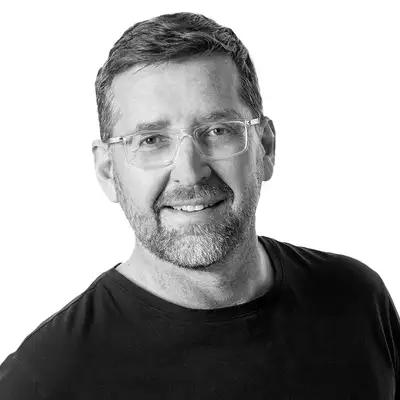
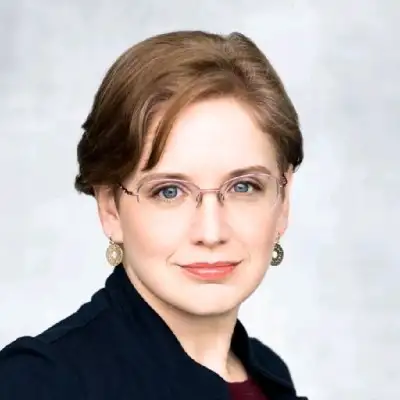
Hosted by Heath Fletcher, The Healthy Enterprise explores how innovation, technology, and leadership are reshaping the life sciences industry—from discovery and development to commercialization and care delivery. Each episode features candid, heart-centered conversations with founders, scientists, executives, and investors, sharing real-world experiences and insights for building resilient, future-ready organizations.
Created and Produced by Bullzeye Global Growth Partners — Let’s build it together!
Kate Stephenson (00:00)
Why are we in 2026? We have AI that can make the most brilliant, amazing things, and women are still dealing with drugs from 40 years ago.
Heath Fletcher (00:08)
30 million women go to the doctor every year for this condition. It's the number two reason women end up in the ER. And most people are too embarrassed to even say it out loud. Today, we're talking about it. Stick around, because later, Kate opens up about what it's really like being a female mechanical engineer in a field where only 5 % of your peers are women, and how that shaped the way she's now leading the charge in one of the most overlooked spaces in medicine. Welcome to the show.
Let's get into it.
Okay, Kate, hi. Welcome to the show. Thank you for joining me for this episode. I'm looking forward to having this conversation with you and learning more about you and your various roles and hats that you wear. And of course, the CERN device.
Kate Stephenson (01:02)
Alright, glad to be here.
Heath Fletcher (01:04)
Well, why don't you start with a little introduction of yourself and ⁓ kind of tie in kind of everything you do. But then let's see, let's talk about where you're at and what you're doing with CERN.
Kate Stephenson (01:18)
All right, well, my name's Dr. Kate Stephenson The doctor is actually in mechanical engineering PhD, not MD. So I need to clarify that depending on who I'm talking to. And I'm the VP of engineering of CERN Corporation, which is a women's health company dealing with a condition that is literally sending 30 million women to the doctors every single year in the US. And it is the number two cause for a woman going to the ER. And it's the one most people are too embarrassed to talk about. And that is vaginal infections.
Yeast infections, bacterial vaginosis, all the itchy, uncomfortable stuff going on down there actually can lead to a lot of very chronic problems, major health risks. And right now, the only way to treat it is with drugs that haven't evolved in over 40 years. So what Stern Devices is doing is we are creating the first regulated medical device treatment using microbicidal light to actually treat yeast infections, bacterial infections, combination infections, and a whole lot of other nasty bugs that are coming down the line.
using a very simple, basic device with no drugs, no crazy nasty side effects in your own home.
Heath Fletcher (02:23)
Very cool. And so this, these issues, these women's issues, they get undiagnosed because they, people don't, they don't talk about them or.
Kate Stephenson (02:33)
Yes, there's actually a lot of complexity. So I've been in medical device for over 25 years. I've worked on everything from brain aneurysm devices, cardiac catheters, hip implants, knee implants. And this is really my first dive into a woman's health issue. And you start realizing women's health is complicated. Our bodies are very different one to the other. And there's not a lot of things known about it. So if you even ask, well, what are the most common bacteria that's in the vagina?
What are the most common types of yeast? What's the normal amount versus what's an infection? You'll see varying data all over the place. And so that's part of the challenge we're dealing with here. And so what's normal and what's an infection? There's some very clear criteria. Usually it's symptomatic, but there's not a lot of very good diagnostic tests that a woman can just use herself to say, yes, I have an infection and I'll be able to use this treatment to fix it. And even if you go into the doctor's office, 50 % of the time you will get the wrong diagnosis.
The two conditions, whether it's bacterial or yeast, they look a lot alike. One, you have to have an antifungal. The other, you have to have an antibiotic. So a lot of times if you go in the first time, you'll walk out with the wrong prescription. And that's assuming that even if you've got it, is it yeast or bacteria, that you have a strain that's going to respond to that particular type of medication you're taking. More and more emerging strains for both yeast and bacterial are not responding to the mainline medications.
And then if you're in the 16 % of women who are recurrent, meaning you're getting these infections four to six times a year, you're gonna get a little bit better and then you'll get a lot worse within a couple of weeks and you're gonna be back in that doctor's office within a month.
Heath Fletcher (04:09)
continuing to take antibiotics and antifungals, which has its own side effects or damages to the...
Kate Stephenson (04:15)
Nasty
cycle once you get into it, and I know a lot of women, it's one of those things where either you know what's going on or you know nothing about it because women don't talk about this kind of a condition.
Heath Fletcher (04:26)
Why don't they talk about it? Is it just something that it's very personal or is it just that, you what is that?
Kate Stephenson (04:34)
Well, I mean, you could ask, like, why do men not talk about erectile dysfunction?
Heath Fletcher (04:38)
I have good points.
Kate Stephenson (04:40)
It's one of those things that it has so much wrapped up in social, cultural, how you were raised, what you feel comfortable sharing in the public domain, to the point that women will go through a lot of pain and suffering before they even go to the doctors to talk about some kind of a condition like this. And so part of being at certain corporations is you're dealing with some of these big issues, like how do you normalize talking about health in certain parts of the body that society doesn't feel comfortable talking about?
Heath Fletcher (05:09)
Is that what drew you to CERN? Was that kind of the intriguing, when you heard of this and you thought about, I think I'd like to go into this role, what was it?
Kate Stephenson (05:18)
I do have a bit of a soft spot for kind of the dirty, ugly, unmet needs of the medical device world. This is not something that looks cool, sexy, and shiny on a Silicon Valley pitch deck. But I'm also a mom, okay? I've raised two boys. I've dealt with all the ugly, nasty, messy parts of the human body. And there are certain conditions that you realize, why are we in 2026? We have AI that can make the most brilliant, amazing things.
and women are still dealing with drugs from 40 years ago. And so there's part of me that, and it's not purely unselfish, there's a part of me going, when you see an unmet need like this, you are seeing a massive investment opportunity that just because people don't know exists, they are not getting the reward of investing in it.
Heath Fletcher (06:06)
And is the fact that it's, mean, you brought up erectile dysfunction. You see ads for that everywhere. There's so many of them, and it's very obvious that people are talking about it now. But why is that? Because it's a men's issue and not a women's issue? Because talking about this ⁓ health issue that women have, ⁓ is that something that people just don't want to hear about?
Kate Stephenson (06:31)
I don't know. mean, you're asking the mechanical engineering PhD. I'm not known for being the most social and emotionally in touch kind of a person. I will say that there is a lot of discomfort. as to why we talk about men's and not women's and maybe time, history, culture, I'm hoping that we will start talking about vaginal infections and how it affects a woman's sexual satisfaction and our ability to have a relationship.
Because yes, every bit as much of a reptile dysfunction, which by the way can be from all kinds of things. It's hormones, it's cardiac. There's all these other conditions that we're just starting to understand. So by the way, guys, if you're struggling with that, go get your heart checked. The smaller the blood vessels, the earlier you end up dealing with arterial disease. As the smallest vessel, if you start having eye problems, tingling in the fingertips or challenges down below, there's some other major health challenges you may be dealing with.
So just like with women, we say like, okay, it's a little itchy or uncomfortable during sex. That can also have long-term reproductive challenges. It can have just your general hormonal health challenges. And yes, just like any massive infection, it can put you in some serious danger.
Heath Fletcher (07:40)
Wow, there's so much to learn. It's quite mind-boggling, actually. Okay, well, let's talk about the device itself. ⁓ tell us about how it works, because it's a pretty cool device.
Kate Stephenson (07:56)
Yeah, so the device itself, it's basically a little blowing egg. So it gets inserted into the vagina. It puts out visible spectrum light in the blue wavelength. So this is not UV. It's a very common misunderstanding that we encounter. So if you've been on airplane, if you've been in an operating theater recently, you see a bright blue intense light, that's visible spectrum light. And so what happens is certain types of bacteria, certain types of yeast, when they absorb that blue light, they end up creating their own internal toxins that actually break down their own internal DNA.
So it keeps them from reproducing. And so this is a very different effect from UV. UV, you hit any kind of tissue with it, it's going to break down all over. What reactive oxidative species is, which is what happens with blue light, it creates these negative internal things. It just keeps specific cells from reproducing, but others it doesn't. So this is actually very safe on human tissue. So it's why you see this blue light showing up all over the place, especially post COVID, is because unlike UV, it doesn't affect normal tissue the same way.
Now, one of the difference with the CERN device is if you're in that OR or in your airplane, they've got that light shining for eight, 10, 12 hours a day. We realized most women cannot walk around with this device inserted for eight, 10, 12 hours a day. So we have a photosensitizer gel that we used that goes in combination with the device. So we actually call it a treatment, a CERN treatment. It's not a combination product. There's no drug in the gel. All it does is it makes certain pathogens absorb the light a little faster and a little more easily.
The two together actually brings our treatment down to 15 to 30 minutes. So something that you'd want to do for just a little bit of time a day. So think of it as like brushing your teeth, shaving your legs. For some women, it's going to be using this therapy for a couple of days in a row. And maybe it involves a little more effort than swallowing a pill, but you're not going to get all the nasty side effects that you can get with antibiotics, with antipyton fungals. You're not going to get all the complicating effects for a lot of women over the age of 65 or even over 50, or on up to seven different medications right now.
And so some of these, the anticonables and the antibiotics, they're contraindicated for half a dozen major health conditions. You've got blood pressure, you've got heart conditions, you've got diabetes. Suddenly you can't even take the mainstream stuff. And so you don't want to go take another set of pills when you're already taking four, five, six different medications. So in some ways, having a device like this greatly simplifies your healthcare.
Heath Fletcher (10:17)
I was reading too there are some other benefits that can come along with this as well, right? Not just this, but some value added benefits. Isn't there?
Well, it helps prevent infection and STDs.
Kate Stephenson (10:32)
Okay. I have to be careful about claims here because we are a pre-FDA device. Okay. But some of the things we're talking about, whenever you go through the FDA, you have to say, what is the indication? What are you labeling on the box? So the first thing on the box is going to be the same as the antifungals and the antibiotics. We treat infection. We treat the symptoms. We make you feel better. We reduce the overblown number of pathogens in the vagina down to where you feel better. Now that's different between acute, meaning
This may be your first and you just get a really nasty infection or you may be recurrent. And so a different indication would be to prevent recurrent. So there's women who you're getting four, six different infections a year. Could you potentially use our device to break the cycle to where you're just using it once or twice a month and that's enough to stabilize your body? That's an indication we would love to see. Don't have the proof there yet, but it is something. We are talking about potential prophylactic use.
A large area that we're looking at right now is in reproductive health. So while here in the US, a lot of women are getting older, we're seeing a drop in birth rate, there are other countries where there is a lot of demand for trying to make safe, healthy reproduction a little easier. And so we're dealing with, you think of all the technologies out there to deal with fertility issues. So you try and go and you get an egg, you try to get to do in vitro fertilization. If you are dealing with a massive infection when you're supposed to get implanted,
or you're trying to get your eggs extracted and suddenly you're dealing with a massive infection, you've missed your entire cycle. And some numbers you've heard about, about these five figure, six figure costs for every cycle of treatment, and you miss one of those because of what they think of as a simple vaginal infection. So there are so many potential values that if we can get this product to market, we can potentially start exploring further.
Heath Fletcher (12:21)
So the product is actually not in the market yet.
Kate Stephenson (12:24)
not on the market yet. We are inhuman, so we've treated about 60 women in a pilot study so far. We're taking that initial data and using that to really design our formal clinical trial. So this is the data that we submit to the FDA that actually gives us the authority and the ability to sell that device on the market to everybody within the US.
Heath Fletcher (12:43)
So what stage are you at actually in?
Kate Stephenson (12:45)
So we are at, we'd say clinical stage. So this is where we have first in human data. We are a number of different pathways to the market that we're exploring right now. Now the upside of being cool and innovative is you're doing things that no one else can do. You're providing value that no one else can get any other way. But the downside is you do a lot of talking to the FDA because they need to actually know, we know it works. We know it's low risk, but how it works.
And is it low risk for everybody? Are the kinds of questions you have to really answer when you're going to the FDA before you go on the market.
Heath Fletcher (13:20)
Is there any other kind of pushback or I mean it's not a pharmaceutical so is there a pushback from that?
Kate Stephenson (13:28)
So there is a lot of people, well, one is just education. Right. Number of individuals who don't understand how much of a problem this is, is unfortunately the majority. But when I go and I pitch about this event, there's going to be one or two women in every single group who come running up to me afterward asking, when is this going to be available? You just talked about my life. I want one now. So I know the need is there. But oftentimes the people with the resources, the interest, the ability to fund our startup don't understand the need and they don't see it.
as the opportunity that it is. And so it's one of these things where we have to educate, we have to find the right people while we're continuing to push forward and build the evidence that's going to take a really novel treatment through. So we are what's called a de novo pathway. So meaning that there is no predicate device out there. We are a device going into a traditional drug space. However, we're also very minimal risk. This is not something that you come in on a pre-market authorization, a full PMIA with a thousand person clinical trial.
because you think about the cost and time to do that. And so this is where the FDA is starting to look at, well, if we can provide even a slight benefit to a subpopulation, that's why we're potentially looking at a breakthrough designation. Because there are definitely patients out there who cannot use the drugs, who are literally looking at quality of life and even serious life-threatening complications without our device.
Heath Fletcher (14:49)
Breakthrough designation. Is that an official term?
Kate Stephenson (14:52)
Yes,
that is. It's called breakthrough designation. So when you have a unique device that provides value that is unmet by any other product on the market, it really shifts that whole risk reward calculation. Wow. So if you are coming up with a product that does the same thing as everybody else, there's an existing standard. They know what that is. If you have a new technology, though, that really is specifically meeting some subsection where literally there are patients suffering. Most people don't realize the FDA actually has two missions.
One is to protect the public health. So they keep devices, products, drugs, consumer products, everything off the market that could potentially harm the US public. On the other hand, during the 1990s, they were also really challenged in that they're saying like, look, you've made the effort to keep everyone safe so burdensome that literally patients are suffering and dying because technologies that could have helped them are taking so long to get to market, are not getting to market at all.
And so the FDA really has to do this fine line every time they face a brand new type of technology against how is it potentially going to harm people and how is it potentially going to help people? And they have to judge accordingly what they're going to ask of the company to provide us evidence before we have the authorization to sell it.
Heath Fletcher (16:05)
And so this is another lane that they've added as an ability to more or less fast track things to get to a point where they can actually see how low risk, what the risks actually are.
Kate Stephenson (16:17)
It's really allowing to get those most vulnerable patients who are literally waiting for new technologies, access to the technologies before the device is approved for just broad use across the US.
Heath Fletcher (16:29)
very interesting. So I'm not surprised this attracted you. have a history of device, professional device management and technology. It's kind of your thing. So ⁓ when did you start working with CERN?
Kate Stephenson (16:46)
So I started working with CERN a little over a year ago. I just posted on LinkedIn. ⁓ I was part of the MedTech Innovator ⁓ Accelerator Corp. They have a live pitch event going on in Southern California that's coming up in the next two weeks. I went down as a judge because I have some connections through MedTech Women and some other organizations in the industry, and they were looking for professionals. While I was down there, I met CERN's CEO, Greg Klang, and I got to meet his whole team. I got to meet Melanie Santos, who is their chief medical officer.
Amazing woman got to meet Hansik Park, who's the chief microbiologist and all of the other women involved and over a big Italian dinner. And I just absolutely loved it. It was amazing. And I went back, finished my judging for MedTech Innovator. Greg and I kept talking over the next month or two, and I've gradually been coming on as an advisor, taking on more roles, pitching for the company to where now we've actually gotten CERN accepted as one of the startups into MedTech Innovator.
And I literally just highlighted all my judge friends from last year saying, just to let you know, I'm going to be back again, but I'm going to be on the other side of the table. You're going to be judging me. Please be kind. I know what's going on in the room. I know how the judges talk after we leave the space. I know to bring a backup battery for my laptop. You know, I know we got to stay on time. I'm just grateful because the way they do it at the innovator, they have the groups of judges move table to table every 10 minutes. The startups actually get to sit at the table.
Heath Fletcher (17:50)
You're gonna be judging me.
Kate Stephenson (18:12)
Because we have to be there with our little monitor and our notebooks and everything else. So I'm excited because this year I don't have I could stay at one table right our stuff They move around and they've got a run. So So this is happening this year at Manhattan Beach down in Southern, California. It's gonna be part of the radar I don't know, you know, sorry Katherine's of Allah if I get this wrong, it's the radar health summit medtech innovator event
Heath Fletcher (18:20)
They move around.
When and where does that take place?
Kate Stephenson (18:38)
They are still looking for judges. So if you go to medtechinnovator.com, you can look at ways to participate. So if you have been in the industry for 20, 30 years, and hey, I know a lot about new technology development, or if you're a business development lead from a major strategic that acquires startups, they would love to talk to you. So MedTech Innovator really brings in a wide area of expertise to come in and evaluate these startups.
And it literally goes from, we have 1600 applicants to about 160 are invited to the live pitch. And from those 160, these judges evaluate and compress it down to a cohort of 60 that become an official member of the MedTech Innovator cohort, which is a huge accomplishment as a startup, because literally you run through hundreds of judges to get scored high enough to get invited into that cohort. So just the fact that we've been asked to pitch is a huge honor and we are going to learn a ton from all the judges that I know are going to be in the room.
Heath Fletcher (19:32)
Wow, what a great experience for you and for CERN. Amazing. What other avenues and networks do you participate in in the organization that help kind of spread the word and get an interest? Because you're still fundraising, right? You're still looking for investors.
Kate Stephenson (19:49)
And so I have learned so much about what's it like being a scrappy little startup pitching in the women's health space, the good, the bad, the ugly. And it is a little different from when you are doing another cardiac catheter or doing another knee implant. So there in some ways you see a lot more direct patient interaction because literally the patient is the woman next to you. It's my friend. It's all of my other moms picking up their kids from the school. And who invests, it tends to be a much smaller pool.
because these are the individuals who not only understand the value, they themselves have the connections at the major strategics who understand how the overall industry is evolving. There's a lot of talk about the need in women's health, but not as much people putting a stake in the ground saying, this is how we are going to regulate it. Here's how we're going to fund it. Here's how we're going to adapt our clinical trials to address that need. And so part of being part of CERN is really understanding, okay, we're the ones who they just want the cool LinkedIn post.
They wanna have a special holiday, they wanna have cool pictures online, or are these the people who are sitting down and doing the really hard work of how are we gonna set the rules, set the standard in such a way that we don't cause further harm? And so I'm involved in a number of different standards organizations. So there's like the ASTM, which does, so if you look up like who sets the standards for night and all cardiac implants, there's an existing guide out there of what metal you use, how high you treat it, how hot.
All that stuff's out there. It's been established for years. Literally hundreds of PhDs get together and argue about it for years to set that standard. And then you get into women's health. And I had like early in Stern, we're like, well, what silicone do we use on the outside of the device? Well, let me look up. Is there a standard for a women's health plastics? No. Nothing. if you go to ISO 10993, which is the biocompatibility standard, if you go all the way down into one of the 12 standards, it talks about irritation.
Heath Fletcher (21:35)
Nothing.
Kate Stephenson (21:45)
And under the irritation test, there's three tests. There's one for the eyes, there's ones for the nose, and there's one for the vagina. Now, if you go to a polymer manufacturer and they say, you ISO 10993 certified USP class six? They go, yes, yes, yes. And I go like, can you give us your test data? They go, maybe. And they're like, can you give us the test data for the vaginal mucosa? And that's when they guys look really nervous. Usually it's a guy salesman. And they hang up the phone and say, we'll get back to you.
Because most of them work in a women's health product, they may have done one, let alone is their corporate level person willing to let their sales engineers talk about women's health applications. And right now we're so early on that they're not even letting their sales teams talk about these applications because of potential liability.
Heath Fletcher (22:34)
So you're forcing some conversations that are a little uncomfortable for people.
Kate Stephenson (22:38)
There is a certain perverse side to my nature that after being a female mechanical engineer, which by the way is only 5 % of my profession, had female colleagues in 25 years of the industry. I've had two peers who were female. Every other peer has been a guy. It's been the same every conference, you know, we're five to 10 % of the attendees. And so there is a perverse part of me going that, okay, I'm now the senior engineering executive at a startup.
Heath Fletcher (22:47)
kidding really
Kate Stephenson (23:07)
that has a massive sales opportunity. I am calling the shots. am organizing the engineering teams. People want my business. And I dropped the word vagina, every other word, and I get to watch everyone. Who, which of the teams kind of like, you know, get a little uncomfortable and work with them though. Oh cool. Yeah, let's talk about that. So that is honestly how I pick my partners. There's a design team I met. His mom was an OBGYN. He grew up listening to the most gruesome stories over the dinner table.
Heath Fletcher (23:29)
That is fun.
Kate Stephenson (23:36)
I love to get an amazing discussion about the design needs of our particular startup with that individual. Not so much. I usually have to be on my best behavior. I try not to make people too uncomfortable in the room. Right. But on the other hand, I'm literally just talking about the parts of the body that I'm working on in my med device. And everything I mentioned is something for my patients sake, for the clinical evidence, for the FDA. have to.
Heath Fletcher (23:43)
⁓ that is hilarious.
Kate Stephenson (24:04)
break down and know the absolute details of. That is part of my responsibility working in this technology field. I owe it to the doctors, I owe it to the patients, and I am required by the FDA to ask those questions.
Heath Fletcher (24:16)
Well, the eye on the prize is helping people get relief from a really terrible situation or an experience and that's not being addressed. And it's like the end result is helping women get over these health issues.
Kate Stephenson (24:36)
Yeah. And it's also just giving women more choice. Right. I mean, this is something we run into with some of the investors. They want the unicorn platform that 99 % of the women will use. And one of the things we have to realize about women's health is our bodies are different, not just from men, but different from each other. And what works for one woman based on her background, her comfort level, her anatomy, her own biology is going to be a little different. And we need to come up not with just one solution, but with a dozen options that a doctor
can choose what is best on their patient. And so that's part of what we're doing as we're doing this hard work of getting the first medical device in a drug field is we are trying to give women more options to be able to say no to what they've been handed for the last 40 years.
Heath Fletcher (25:19)
That's why I wanted to ask you. when this goes to market, is this something that ⁓ a patient will only be able to get through her ⁓ MD or through her practitioner? And could you call it a treatment? So it would be a treatment that's done in the medical clinic ⁓ under the guidance of a clinician, right?
Kate Stephenson (25:41)
So this has to do about whenever you're dealing with a new technology, the FDA is very aware of usability challenges. Not every new technology is easily used right out of the box without any instructions. And so you have to kind of de-risk the product as you introduce it to the marketplace. So the ultimate intent of this product is it's a home use product. You don't have to go back into the doctors every time you're having a recurrent infection. Our whole goal here is to have a product with a two year life that an individual can take home, use as needed, but still stay connected with their doctor.
Now starting off, we're starting off with you'll be trained in the clinic. Your first therapy is always going to be in the clinic under the observation of a clinician to make sure that it's the right treatment for you, that you're comfortable, that you're using it properly, that you understand how to use it with your body. And so, but very quickly on, as we learn about what kind of questions patients ask, what kind of ⁓ adverse events we may encounter, what types of interactions the nurse has, the goal is, yes, this is a technology that we want every woman to have access to.
whether you are near a clinic facility that has an active OB-GYN, whether all you have is your primary care doctor, whether you get 90 % of your care through telehealth, whatever situation that is, we want every woman to have that opportunity and that's where we're gonna get to eventually as we build up the evidence and safety.
Heath Fletcher (26:57)
Cool. That'd yeah, I mean, so it's just something that they can eventually be able to use themselves. it's a, it's because of the reoccurring concept, right? Because they know what they have, the condition they have. And if it keeps coming back, this avoids them having to go back to the doctor.
Kate Stephenson (27:14)
And that's a value for both the patient and the doctor. We call these frequent flyer visits. These women come in, it's three to five minutes in the clinic to get a prescription and walk out. The doctor hates it. The patients have literally spent their whole day. The doctors hate it because literally it is the bare bottom value they offer. They didn't go through that many years of med school, strive for that many years to be a good doctor, provide complex patients to just be writing prescriptions.
Heath Fletcher (27:40)
Now I want to go back a little bit because we were talking about your career in this field being a lower population of women in this field. When you started that, obviously you must have known that. For you personally and professionally, what kind of obstacles did you run into and how did you manage those and navigate that path? Because you must have had some sort of...
pushback for you being in that industry.
Kate Stephenson (28:13)
Anytime someone asks me about being a woman in this field, ⁓ I would say.
One, would say like engineering for me, being able to be an engineer has always been a blessing. Most people don't find something that they love so much that they're good at and has such an incredible impact on people. And so no matter, you know, what craziness, whatever random comments, whatever microaggressions I may run into, I am still doing a job that I am deeply passionate about. I deeply loved and I can make good money at. So I am always going to appreciate that. But now
I also have a bit of a background in not hanging out. We're having being in groups where there's not a lot of ⁓ In high school, I actually joined the boys wrestling team my senior year.
Heath Fletcher (29:04)
Wow, really?
Kate Stephenson (29:06)
Not because I wanted to, but because one of my best friends was the only woman on the team and she was being bullied. And I got so mad after I found out about it, I walked in and joined up that afternoon. Wow. And that's pretty much been my way. It's not that you find yourself going, hey, I want to be in an industry like this. It's usually something really pissed me off. And I said, the best thing I can do to address this is go do something personally about it. Wow. And so.
Whenever I found out that part the reason I find myself speaking so much is because I hear people complain that there's not a lot of women engineers speaking on podcasts at conferences. Well, I can talk. So I take every speaking opportunity I can. I actually went back to my PhD after being seven years in the industry doing medical device development. At the time I had two small kids. I was competing with other engineers who literally had stay at home spouses. I was trying to figure out how do I stay doing the work I love while having the life flexibility I needed.
And I came up with the idea of doing a PhD over the course of researching before I do the PhD, because that's what engineers do. We always get lots of data before we make a decision. Lots of space. A brilliant book talking about women in the sciences and engineering. And it talked about how the number of women PhDs in the 1930s and early 40s was there were actually as many women graduate with PhDs then as there were in the late 1970s. Wow. There was a massive desert period.
Heath Fletcher (30:09)
She
Kate Stephenson (30:28)
where we actually had more female engineering professors, researchers, experts in the 1940s than we did in the 1970s. And so I realized 1970s is very important because by the time I came along in the 1990s, that means the number of tenured professional professors who were women was an all time low. So when I went in, I realized I had gone through four years of engineering education.
Heath Fletcher (30:36)
The end.
Kate Stephenson (30:54)
had gone through another two years of a master's and I had never taken an engineering class from a woman. And at that point I sat down to myself and I said, look, look, I have a master's and an undergraduate degree from Stanford. I have this many years in engineering. There had been a break in, like we had literally just had a huge break in our mortgage price because the interest rates had dropped like crazy. This was like 2011, 2012. My industry's not going good.
If I don't go back and get a PhD, how could I look in the face of any other woman and ask her to? I have been blessed with so much expertise, ability, flexibility, and education that I've got to take this chance. And so I applied. Wasn't easy. Got in at the very last minute, ⁓ but it was the best choice I could have made. then afterwards, of course, I applied for faculty positions because I realized I wanted other women engineers to experience being taught by a woman.
didn't get a faculty position. Went back in the industry, got a job, kept applying for faculty positions. Last year, at the end of the summer, I received two offers for faculty positions, one at UC Davis, one at UC Berkeley, at the same time as I was working with CERN. And so when people asked me, why in the world did you take two faculty positions and go work for CERN?
is because I'm the kid whose friend got bullied on the wrestling team and jumped on the wrestling team to do something about. I've got to. UC Davis was literally just launching a brand new program in medical device development. I grew up in Modesto, California. I was a first generation college student. I knew all those students in that cohort were going to be just like me figuring out how do I break into this industry? And it also had the chance to literally build an education program from the ground up. UC Berkeley.
Heath Fletcher (32:21)
gotta be there. You gotta show up.
Kate Stephenson (32:46)
I knew like you don't turn down the opportunity to get a faculty position at UC Berkeley, especially not with the caliber of students who are being there. Literally I have half a dozen students who are MDs who stopped practicing because they want to learn about technology and the technology innovation side of things. it's just an amazing opportunity. then literally I'm walking the walk with CERN. Like my students love it when I talk about flying down to Southern California to pitch my startup again, talk to investors again to raise money.
Hey, I'm going through my verification validation testing prior to launching a new our first in human. You hey, I got an NIH grant. We're talking to the FDA because my students realize like I'm not a professor who is talking about something out of a book. Every week I'm learning something in industry that they can come to and ask, hey, how did you work out this decision between your passion, your career, the startup versus all the other avenues to you? So.
Heath Fletcher (33:40)
blazing trails, Kate, you're like you're, you're blazing trails and you're, you're, mean, your story's inspiring. ⁓ what you're doing is inspiring. I'm sure there's any women listening to this. Well, anybody I'm, I'm impressed. I'm inspired too. But I mean, certainly for women and women leadership, it's like, these are the stories they need to hear. These are, these are what, these are the stories that could actually fire someone up to say, if she can do it, I can do it. I'm going to go do it. You know? And I think that's what you're hoping, right? Is that you kind of inspire.
other women to take these steps as well and be brave and push forward and follow your dreams and passions and all that other stuff. But really, I think you're blazing some trails here.
Kate Stephenson (34:21)
Yeah, and also provide the honest side of it. There's a lot of things I've done that I've been wondering, did I just make a huge mistake? I'm scared, I'm frustrated, I'm overwhelmed. And there's other moments when it feels so good and so amazing. A lot of it is after I've spoken and a bunch of women run up and say, thank you for telling me about all the stuff that I know if they're like me was sitting in their head, all their insecurities, challenges, their worries that doesn't get published on LinkedIn. And that most of time you don't hear at the big conferences.
I want to say thank you just one more time just for even doing the podcast, giving me another platform to speak and share.
Heath Fletcher (34:55)
Yeah, you're welcome. mean, you do exude a really great strong confidence, but yeah, like you said, there's everyone experiences, you know, that, you know, imposter syndrome and whatever else. Like, what am I doing here? And I don't belong here and all that stuff. And so it is, you know, to, be able to share that and to say, yeah, I went through all that too. You know, I haven't always been this strong and this confident, but you know, after however many years of, of, ⁓
doing this, you kind of build on that,
Kate Stephenson (35:26)
Well, know, the horrible secret people don't share is you still feel that way. You just keep doing it anyway. And the thing that makes you feel that way actually gets a little bigger and a little more intense. I like to tell people the thing that scares you right now is going to worry you a little bit next year. You're not even going to think about it's going to be day to day in another three years and five to 10 years from now, you'll be laughing at yourself. And that's something that I would say I've been worked through my entire profession is going like five years from now, 10 years from now, what will I think of this?
Heath Fletcher (35:56)
That's great advice. That's a great insight because you're absolutely right. When we think about our fears today or the fears we had 10 years ago or whatever, you think about them and you remind yourself today, oh yeah, I used to be terrified of doing stuff like that, but here you are now, several years later. it's like, yeah, maybe the essence is still there. I know what it felt like, or I know what I experienced in that moment, but it is, it's just taking it on and
and staying with the, in the direction that you've chosen. Very cool. ⁓ Let's talk about now, so you're, on top of all this, you have your own consultancy too, DIA Engineering, but it's a consultancy.
Kate Stephenson (36:40)
It's consulting, it's just me, but it's definitely the hat that I wear when I have all these random projects and people reach out to me going, hey, can you work on this? Can you work on that? It's a bit of a bucket that a lot of stuff gets thrown into. And in and of itself, I learned a lot about just business, accounting, sales, marketing. We like to say that, okay, I've worked on products, but consulting is a product too. And the market has changed and what types of products people are looking for has changed and evolved as well.
Heath Fletcher (37:09)
Yeah, let's talk about that. do you, how do you market? How do you approach that?
Kate Stephenson (37:15)
So I think in some ways, the same way you do any kind of device, you prototype, you test, you see what people think of it, and you try to move on new directions. And when people stop liking one product, you have to start thinking about pivoting to the other. So you realize I started in 2019. And at the time I was calling myself an innovation consultant. What happened in COVID is suddenly ⁓ a lot of companies cut all of their far horizon innovation groups. There was kind of this fad for about 10 years of having an in-house innovation group, you know, like,
We think fast and break things like startups, but we're part of a large corporation. All of those got cut in the five years past COVID. And it got to be the number of people calling themselves an innovation consultant just dried up and disappeared. Then we went through about a three year period under Biden where there was a lot of funding going on. There was women's health initiatives going on, cancer moonshot, a lot of people who were very much interested in federal funding because at the time the economy was doing really bad. Investors weren't investing. They were still holding out.
And so a lot of people were applying to the federal government to get funding. And I found I have a lot of technical writing skills. And so I found a niche in grant writing, grant strategy, figuring out how do you pitch very novel, innovative technical solutions, which I knew very well. And I could write about it. And I had worked up the unique set of skills of understanding the templates and the processes. Well, then February of 2025 hits and suddenly the NIH gets frozen.
And everyone gets scared out of their mind about applying for federal funding because suddenly federal funding gets cut all over the place. So literally I was about to launch a month long marketing effort about all my grant writing services that did not get launched because it would have been a little tone deaf at the time to my clients.
Heath Fletcher (38:56)
Yep. Yeah. that's, yeah. Carry on. ahead.
Kate Stephenson (39:00)
I was about to say, then, so I would say the consulting, you're going to have to, if you, you're going to have to keep finding your niche and that niche right now is continuing to change and evolve. So right now where I am wearing the multiple hats, we call it diversifying income streams. You have your lower value options that are more steady, and then you have your higher volume options that may have long-term benefits. So literally I have some clients paying me in options. I have some clients paying me a check every other week.
And it's figuring out for yourself what that balance looks like based on your life needs, your income needs, and just your passion and interest in the work that you do. Sometimes the most steady work I do is the most boring.
Heath Fletcher (39:39)
And we were talking earlier too about, you you're also learning investment. so all these hats kind of help you to kind of see the entire process as a whole, right? And gives you that understanding and that insight through various aspects and stages of ⁓ product development or business growth and really provides you that insight that you, I'm sure you use all the time.
Kate Stephenson (40:07)
So yeah, so I very much have learned, I've been working in startups since the late 90s. I actually got my first job out of undergraduate in 2001 and it was right in the middle of the dot-com bust. And so very early on I learned how do you have to be lean, how to pivot, how do you just have grit when you're pursuing what you need to pursue. And coming full circle in 2019, realizing starting a business of my own, realizing it was six months until I got my first check, you know, and then it was probably another six months until I got a check that was even
comparable to what I was worth, given the amount of time I had submitted into people. And then even now we're at six, almost seven years out, I'm just getting to where I have regular clients that are billing at a rate of which I'm worth. People talk about, know, I'm 25 years with a Stanford engineering PhD. You think I sometimes get these online recruiters going after me and they're going like, oh yeah, you can make $300,000 a year. It's like.
Yeah, I could, maybe. Sounds great. I would not have nearly as much fun or flexibility to really pursue the things that I really believe in.
Heath Fletcher (41:09)
Right. Because now you just added entrepreneurship to the whole plate as well, right? This is very interesting as well. ⁓ Part of marketing, part of expanding your reach, not only for your personal and professional brand, but also with CERN, you became a founding member of BLPN, formerly the bullpen. So tell me about that network and how you utilize that, maximize that for everything you're doing.
Kate Stephenson (41:36)
Sure. Well, just let you know, 25 years I've joined a lot of different organizations. ⁓ Probably about 20 different organizations I'm still with about six. I would say Bullpen definitely has a special place in my heart because it's where I find a lot of very similarly minded people. Usually people doing really cool things, really overstretched, doing a lot in a lot of different areas. But every one of them is someone that I would love to just sit down over a glass of wine or a cup of coffee and exchange life stories because none of them are boring.
And when you deal with that kind of a diverse group of individuals who themselves have so many connections, almost every bullpen member themselves is a super connector. They've joined bullpen early because they're in the habit of joining and finding communities that are in line with what they want to do and be effective with. And so you go to bullpen and you'll talk to someone and they'll, you'll find out, okay, they they're involved in this startup, but they're also involved with this academic research center. And then they have a little consulting on the side and
Then they may be involved with a larger consulting that they subcontract for. And, you know, they've got a fund they're starting to get together and they even want all of us have all of these different passion projects. And so that's what I love about Bullpen is you meet a lot of very passionate people. the Bullpen organization itself puts on amazing events in the right kind of places. So I've gone to some organizations, I love them, but literally it's the Motel 8 down the road and they're serving me like 7-Eleven sandwiches.
And it's just like, OK, you know, like I understand you lean, but, know, I appreciate going to some of these events, going, we went to the Napa event, amazing wine. I almost bought a bottle until I saw the price tag. ⁓ Maybe someday, five years from now, I'll buy a bottle of wine. That's right. But I also met amazing individuals who all had a much more mature view than I have of money. I was a first generation college student.
Heath Fletcher (43:08)
this up.
Kate Stephenson (43:32)
I got into business in the last six years. I'm starting to learn the financial side things. So even how do you think about wealth, how you grow it, how you use it to align with your passion projects is part of the whole reason I went up to the Napa event. And so, but then also going out to like the Mayo Clinic, like you hear about Mayo Clinic as this legendary thing. Like as soon as a startup says, we're with the Mayo Clinic. you know, it's silly. Like everyone in the room goes, Ooh, actually going to the Mayo Clinic.
I kind of realized why they've got that reputation. Yes, they've got amazing clinical medicine, but they're also, it's Minnesota. Minnesotans are nice people. And Rochester is green. It's gorgeous. It's a beautiful little town. And I'm like, I got to text my husband or I'm sitting there in the bullpen event going, what do you think of Minnesota in the next couple of years? And just hearing about how Mayo and the state of Minnesota.
is thinking about building out life sciences and technologies in the next five years, which yeah, like by the way, anyone who thinks is getting tired of California and looking to semi-retire, look into Rochester, Minnesota. But then also the bullpen event in bio, the first one we went to checking out all the new incubator accelerator spaces. And it was right in the middle of bio, the main conference. So that was my first experience doing a ride along with Greg, our CEO and literally event hopping across the entire city of Boston.
And bullpen was our little home space. Like we're sitting there exhausted in the back row, eating the good food and listening to the amazing speakers, but then also jumping up again and running literally two blocks away to go to the next conference for two hours. And then coming back to bullpen. Right. So they've been picking up right time and you're passing all the other bullpen members and we're all doing the crazy stuff together because you know, we're united in that. And so I really appreciate.
Heath Fletcher (45:10)
home base for that.
Kate Stephenson (45:21)
The fact that I've joined an organization that allows me to meet so many other people that I agree with and work with and so long. it's, they're definitely an organization that five, 10, 15 years from now, we're looking at potential relationships and projects we're gonna wanna be doing. Not just what's the next three to six months or the next year.
Heath Fletcher (45:37)
Great. Great. that's a great. They're a great network. Yeah, I can't say more about any. can't say enough about the myself. So yeah, same thing. I agree with you. ⁓ All right. What's next? What's next for CERN? We're gonna wrap this up. I know I could we could talk for hours. But what's next for CERN? What's what? What's next for you?
Kate Stephenson (45:58)
So internally, we are full driving forward on our Gen 1 device to get that into our clinical studies, nailing down our final information from the FDA, hopefully looking through a breakthrough designation sometime in the next couple of months. Definitely follow us on LinkedIn. We will be talking about that very loudly. Immediately, we've got MedTech Innovator. We've got to be eyes on the prize, get into that final cohort. There's a lot of amazing connections that we want to have while we're part of that. We also have the HIT Lab out of Columbia in New York City that they have their May New York Health Week.
They have a huge initiative in women's health that we're gonna be flying out to New York in May to be part of that. So a lot of back-to-back events going on the entire year. If you follow ⁓ CERN's device, if you follow me, you'll find me ⁓ Kate Stephenson, S-T-E-P-H-E-N-S-O-N on LinkedIn. I post about all the different places I'm gonna be and all the different initiatives that I've been ⁓ blessed to be part of.
Heath Fletcher (46:51)
We'll put your, I'll put your links in the show notes so people can access those as well. So, Kate, I'll be following you. You're, fascinating. You've got a great story and I like to see, ⁓ what's where you go next. So, ⁓ thank you for your time today on this episode. I know you got to go, but, we'll do this again.
Kate Stephenson (47:09)
All right, thank you very much for having me.
Heath Fletcher (47:11)
You're welcome.