Subscribe
Share
Share
Embed
Conversations with investors, entrepreneurs, and leaders on topics ranging from challenges facing new entrants and opportunities for existing players to technology on the battlefield and government policy.
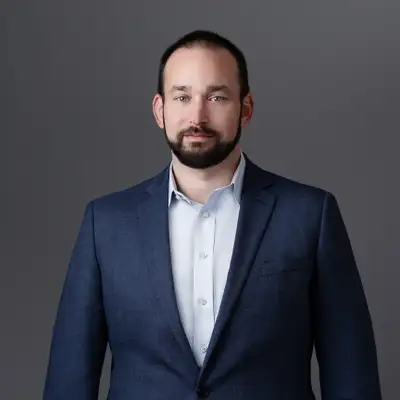
I was thinking about what does the future of warfare look like. And in my opinion, it was mass-producible and super cheap. And this is in the build-ups of the war in Ukraine. You remember when all those tanks were stuck in the mud. If the Ukrainians had the FPV army today, dude, the war would have been over in like legitimately three days. I'm Jake Chapman, Managing Director of Mark Ventures, and this is the Bullets and Beans podcast, where we talk to allocators, investors, founders, government civilians, and DoD employees who are investing their precious time, capital, and resources in US national security. This is our opportunity to hear their stories. I'm here with Dan Maggi, the CEO of Firestorm, and uh great to have you, Dan. What's up, man? How you doing? Thank you for joining us. Yeah, thanks for giving me your money. Anytime. Well, not anytime. Anytime? Don't hold me to that. It's not a contract. It's not a contract. It's on camera now. Yeah, that's right. So tell me a little bit about yourself and what you're doing. My name is Dan Maggi. I've been an entrepreneur my whole life, but I learned maybe in my 20s that you could actually ask people like you for money to go build businesses. Started building camera systems for sports stadiums. We built like a splash mountain for sports. And in the process of building that, I was told in 2015. Splash mountain for sports. Like, uh. So we had a robotic camera system that could take a picture of everyone in the crowd in seconds. So like when someone scores a touchdown or. Oh, like at the end of the ride when they're like, hey, for the picture. Exactly. Got it. All right. Yeah, and we were early. But it was a really cool product. And we kind of became known as like tech guys in the sports world. And so at the end of 2015, when ISIS started using drones in Iraq, all the stadium operators got a warning. that said drones are being weaponized, you should watch out. So in one month, six sports stadiums told me they had a problem with drones. And I was like, oh wow, if you tell me you have the same problem six times, maybe we should start a business to stop it. um And so we started Citadel, which is a counter-UAS company. um Naval Special Warfare found it in 2016. um Ran a bunch of tests on it, took it to Iraq and Syria, and then we worked hand in hand with them. What was the modality? Were you shooting things down? We're nets. We're an RF based jammer. Got it. And what was special about what we could do is we could bring That's become quite the thing, you know. Oh, I know. And the Citadel lives on is Titan, which is a programmer record. Blue Halo bought it and now it lives at AeroVironment or it will in June or whenever the transaction closes. Gross. I know. uh Not sponsored by AeroVironment. TM. uh But yeah, we basically had this thing we called the hunter algorithm where we could detect signals that were coming in that were new. So you'd have like all your off the shelf stuff, but then we'd also have an ability to like maybe take an educated guess at something that wasn't there. So we learned to sell to the government by like literally getting punched in the face every single day for five years. The company ended up getting acquired at the very end of 21. I told my wife I wasn't going to do anything for six months. and I lasted six weeks and we started Firestorm. You got a puppy somewhere in there. I did. I got a big St. Bernard puppy. He's a great guy, Walter. So I was walking Walter, I don't know, like 10 miles a day and I was thinking about what does the future of warfare look like? And in my opinion it was mass-producible and super cheap. And this is in the build-up to the war in Ukraine. You remember when all those tanks were stuck in the mud? If the Ukrainians had the FPV army today, dude, the war would have been over in like legitimately three days. Or an A-10. Or one uh A-10. so that was kind of the genesis, right? It was a begrudging respect for ISIS for how they used like off the shelf DJI drones quite effectively to fight the US forces to a standstill uh in Northern Iraq and Syria. And then it was... how do we then mass produce that and give it to our partner force? So like the actual uh mission statement for the company is to democratize the sky. um We have not changed that mission statement from day one. And so my whole vision here is one, you should not buy like 10 different drones to accomplish like 10 different missions. You should buy one or two drones to do all 10 of those missions. So we've built a propulsion modular and a payload modular drone. That's a hero product we call the Tempest. And then as we kind of got into this industry and started peeling back the onion, we discovered what the actual bigger problem in the DoD is, and that is manufacturing. And so specifically, we got a call from an army group. Which has become, I would say, consensus opinion. now, but two years ago was not. were way early, man. Yeah. Yeah. And that's and that's because I'll just throw some numbers out here, right? China ordered one million loitering munitions. Those will be delivered in 2027. Every single month, the Ukrainians and the Russians used 300,000 drones. OK. And the US DOD ordered 3500 systems for both replicator and Hellscape, which are the two plans to defend Taiwan. We'll bleep out Hellscape. the strike through. Just kidding. We can say that now. We can say that. As soon as Paparo said it, then everyone could say it, right? uh The Navy people actually won't say it. He shouldn't. guess he wasn't supposed to say it, and like they will all. Correct. But I thought now that it's open source, it's free range, right? So we have a manufacturing problem, right? And um how we solve that is we use additive manufacturing. We can set up lines in literally like three to four weeks, and we can pump out these Tempest drones. oh But the second hero product we're building is called the XL. And we've spent millions of dollars to figure out how do you put 3D printers, not little shitty box 3D printers like a bamboo, which by the way is made in China and sends its data back every single night and yet they're all over American military bases. um We use big industrial 3D printers. We figured out a way to put it into a 20 foot container. And so we can move that anywhere in the world and within two hours set up an industrial grade manufacturing facility. So that's the second hero product. So right, we have the modular drone. We have the manufacturing solution. And then the third thing we build is something called Octra. How long from uh I need to go blow that thing up over there and I'm gonna hit print, does it take for me to get the thing that goes over there? We like to be conservative and say 48 hours from powder to power. And we can scale that much to be much faster if you like give us a little bit of time. And what I mean by that is like, if you, if you kind of preempt and build certain parts of the drone, which is really powerful because we've done the math, like you could have one of our printers or you could have 120 of the smaller, I'll just call them shitty printers. That's the level of output we have. One industrial one equals 120 small bamboo printers. And how much of a Tempest are you printing versus how much are you pre-positioning material? We can do whatever they want. The beauty is if it's just powder and electronics or you could even locally uh source the supply chain. So there's a couple of things we want to kind of test, quote unquote, and one of them, like the third part of our holy triumvirate, is called the Octra. And that's a flight controller that has an API that lets you rapidly kind of integrate any type of sensor or camera onto the drone. And we think that's really important because the supply chain is actively getting attacked and we're not talking enough about it. How many battery factories have caught on fire in the US in the last two months? So you need to be able to swap propulsion. You need to be able to swap cameras. You need to be able to go from ISR to EW to a kinetic strike all on the same platform. in a matter of minutes and we've built all that. So that's kind of how we look at the world, right? It's the manufacturing, the modularity of the platform, and then the ability to kind of rapidly integrate something new. Very cool. Okay, and you were about to, you were launching into a third thing after Excel. It's Oktra, yeah. That was it. So those are three big kind of defining things we've built inside of the company. Those are the three motes we're constantly pushing forward that we think truly differentiate what we're doing from other people. That said, my fourth job as a defense tech founder is to promote the industrial base. We don't need one firestorm, we need 15 of them. We need to be having multiple companies build thousands of large drones every single month if we're gonna get anywhere near to compete with what Russia, China, Iran, and soon to be North Korea are doing. So, let me just give you some more perspective. In the month of February, Russia used as many large loitering munitions as we're supposed to deliver for all of Hellscape and Replicator in one month. So you go to Capitol Hill. Those are like the group three like Shahed style drums. their goal is within six months to do volleys of 500 at a time. The volleys, which means multiple volleys a night. not only is Ukraine not ready for that, NATO is not ready for that. All of our allies are not ready for that. So even if there's a pause in this conflict, which looks like it's coming, The Russians are just gonna tool up and build 100,000 of those things, right? They're already making a couple thousand a month. It's only a matter of time. I mean, that's a bleak picture potentially that you paint. And ah I can understand the value proposition of Firestorm and Excel, what you're doing. You moved from counter UAS to UAS. Why the move? I mean, it seems like, obviously deterrence is important, but why not be on the defensive side as well? uh One, I have a... before you're non-compete. uh. Alright, so you cashed out. No. That's what you're telling me. Yeah, we, everyone did very well. uh No, but here's the thing. Like, I actually think, I'm a sports fan, right? And I think the best defense is a good offense. And so I think the threat of an overwhelming retaliatory strike is what is going to get us to the point where we then will have the defensive options we need. Because I am incredibly concerned for RF counter UAS. I'm incredibly concerned for kinetic UAS. Things like the Roadrunner, it's too expensive at 1.75 million a ticket, right? We need to dramatically decrease the price of these things. These need to be $10,000 $20,000 systems if we're going to go kinetic. Or you get into a situation like we've had in the Red Sea where the Huthies are throwing boats, they're throwing drones, and we're spending our $2 $3 million a shot systems that take 24 months to build. So like, You can basically do the death by a thousand cuts with that. And so my thought is we should have a hundred thousand drones at all times that we can basically flood into a zone, make somebody else react to that, create overwhelming chaos. You my thesis on the Huthis, a lot of inaction for months, right? We were swatting down missiles here and there, but we didn't actually act to stop the Huthis. My theory was we didn't act to stop them because we couldn't. we can from a... we can win every fight we choose to engage in with you, but we just don't have the ammunition to fight them. And so we sat there impotent rather than look impotent, right? I mean, and they knocked out 11, 10, were they reapers or predators, I forget, Preds, I think? Yeah, a whole bunch of the MQ9s, right? Yeah, MQ9s, exactly. So sunk a, I don't know, a half dozen cargo vessels. heard it's a lot more than that. Nobody's talking about it anymore, but I assume all the ships are just being rerouted. It's not that the Huthis have given up. Yeah, it's my guess too. And I mean, you could look at it, the conspiracy theorist in you is like, the Wall Street Journal's openly said Russia was giving the Huthis targeting data for commercial fishing. The Chinese have said they had a special beacon or radio channel they were using to make sure the Huthis didn't attack their boats. So it's like, okay, ah you're going to use all your super expensive counter drone stuff. to knock out $50,000 basically lawn mowers flying in the sky and then a bunch of pangas being radio controlled into these boats. uh Why are you having the US expend all its systems? You getting ready for Taiwan? Looks like it to me. Yeah. Yeah, all right. uh building interesting things. We're in the UAS world. As a founder, most of the folks we talk to are investors, but you're an investor too, right? You've got capital that we give to you, other investors give to you, and you've got to figure out how to deploy it. You also have to invest your time, focus on the right markets. How do you make those decisions? Like, where are you investing for the next year? What should we expect to see? We're calling it the tsunami of technology. And what we mean by that is you're going to see a bunch of new products come out from the Firestorm kind of family. as well as we're building Excel into a platform. So you'll see dozens of companies that we are now doing co-manufacturing for because we think that is the future. It's not just a one trick pony on what we build. We think that there's even, we'll call it non-offensive or defensive capabilities, but things that the military uses, parts, medical products, they all can come out of this mobile manufacturing cell. We're doubling and tripling down on that. And I'll just say the response from customers is quite strong. Would you become a lead systems integrator potentially? Is that kind of the direction you're going? Yeah, mean if the opportunities there, I mean we've done about, we've started about 50 different integrations. I think honestly we've probably completed half of those. But you know, we have basically a matrix of any type of capability we could put on our drone and we're prioritizing the ones based on uh how it performs in contested uh like. or no, we'll call it EMI environments. How's it doing in Ukraine? Right? ah We got a lot of friends over there. And then also what customers are saying we would prefer for you to prioritize. So you kind of have the A list and then you have like the BCD list. But I'll just tell you some of the people that were a B or C last year, their technology is working super well. So then they move into the A. So that's really where the octa becomes super important. And we're tripling down on engineers around integrations. and software in particular, because we want to be software enabled hardware. Yep, I think very smart move. Alright, so we'll just do two more questions. These are quick and easy ones. um Number one, what's your favorite morning beverage? My favorite morning beverage? um I've a good story for you. So one of my fraternity brothers from college, tech guy, right, San Francisco, went through Y Combinator, they built a company, sold it to Pinterest. Second company, because he was bored, they started an NFT marketplace. The whole marketplace collapsed, so they had a bunch of capital. They pivoted a bunch of times, and then they actually started a company called SuperRoot. It's a ginger-based morning beverage that is supposed to replace caffeine. It is spectacular. I drink it every morning now. I can send you a couple bags of it. It is unbelievable. And it gets me going and I do not crash in the middle of the day like I normally do when I have like four espressos. Interesting. We are now sponsored by Super Root. Super Root. mean this is Mark in Jefferson's Ocean, Bourbon. um Trademark. What's your favorite morning beverage, bro? Coffee, man. I drink coffee. I have at least three, maybe four cups. I drink coffee from like eight to two. Two? If you do two, ten, are you in trouble? No. Where's your line? Probably like three or four. But I'm just not interested in like drinking a hot beverage like late in the day like that. I just, want to move over to. Have you heard of this phrase called a latte dad? No. It's very Scandinavian. I guess it's like dads that get off work early to have like a coffee at three or four when their kids get out of school and then they take care of the kids. think it's a lovely. I know man. What are we doing? You know, trying to solve all the problems of the world. Yeah, that is a great question. I'm a latte dog dad, guess, except they don't have a latte, but I've got to my dog to the dog park right around the time of the day. But if I could take a latte there, I would. It's just then you're mean mugged by all the dogs who see you eating something, or drinking something. They're jealous. Do you think Scandinavia is going to build nuclear weapons? Maybe they should I was just McCrone's talking about like being the new nuclear guarantor and I'm I don't think you can trust the French It's I think it's great as like a stopgap but like someone else has to proliferate I mean, I think it'll be like Poland or Estonia or somebody right the the Balkans are very tech forward They can probably do it the Poland has got the budget in the wherewithal Do you think Ukraine I think Ukraine's building a nuclear program right now? It's probably easier to build like a chemical weapons program than a nuclear program. But didn't they, weren't they the nuclear engineers for the USSR in the old days? Yeah, And like some of the best aircraft manufacturers. They were really, yeah. Tech forward. But do they have the talent, the expertise that stayed? That's what I'm asking. mean, it'd be a really interesting case study for where'd you get your uranium, Yeah. That's interesting question. I certainly think if things go sideways, uh one or all of Japan, South Korea, Taiwan, or nuclear, Taiwan is challenging because they probably feel like if any hint of word gets out of them doing it, it's like an instant trigger. But South Korea and Japan, think a lot of incentive for them to do it. If they feel like the US protective umbrella is going to pulled out from under them. Interesting question. All right, we should have like a whole separate geopolitics discussion, because that's like where I really like to nerd out. um But the last question is one of our favorite discussions that we often have. I'm gonna ask you about a book recommendation, but this is not like the latest sci-fi you like. This is what is a book that you recommend to everybody and has changed the way you think about the world? Could be sci-fi. White Sun War by Mick Ryan. No, it's a good choice. Okay, Mick Ryan was a brigadier general in Australia. Barely counts as a general. Sorry. It's like a lieutenant colonel. I don't fucking... The equivalent. You know. Do we have like a multi-country ranking where we can be like... Stack them. Stack them. All right. So here's why Nick Ryan's important, right? Nick Ryan basically convinced the Australian military that the way in which you were thinking of what to do for the next 10 years would be wrong because China is the existential threat to everything they do. So he got them to rip up their doctrine and basically build one that was long range strike and robotic centric. ah And what he's done as well that I really think is important is he now writes fiction slash semi-fiction books. So my book recommendation is a McRyann book. It's called The White Sun War. It is about what war looks like in Taiwan in 27 or 28. And it's basically Ukraine on steroids. It's a great book. Short read, everyone should read it. Yep. That changed how I thought of everything. Everything is jammed. Anytime you turn on any type of signal, they're gonna hit you. It is robot on robot with humans taking a bunch of L's as well. um But you know me. I read a lot of books. um That's the one I'd say I'd recommend for everyone. Kind of listen to what we're doing right now. Awesome. Appreciate it, Thanks for coming out and having this conversation. We'll do it again.