Subscribe
Share
Share
Embed
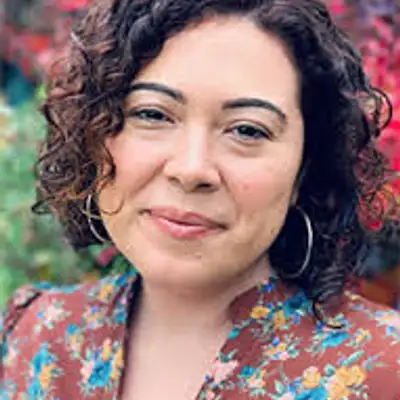
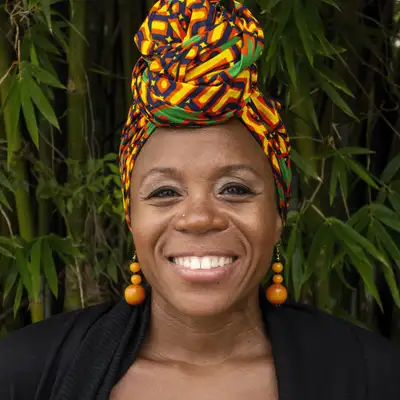
Celebrate the joy of reading with the Book Love Foundation podcast. This is a show filled with information and inspiration from teachers and leaders across grade levels, states, and school systems. We interviewed authors and educators for the first five years and now turn our attention to leaders in public, private, and charter schools. Find out more at booklovefoundation.org or join our book-love-community.mn.co of 2500 educators from 28 countries. We sustain joy together, one kid and one book at a time.
Julia Torres 00:01
Hi. This is Julia Torres, and I am here with Luz Herrera and Carla Espana. And we are going to be talking about En Comunidad, which is their book that it was recently published with Heinemann publications. We are also going to talk about all the things decolonization. We're going to talk about trans languaging. We're going to talk about bilingual instruction, and if you are an English speaking teacher, how you can best serve your bilingual Latinx students. So with that preamble, I'm going to turn it over to Luz to introduce herself, and then Carla, and then we'll get started.
Luz Yadira Herrera 00:41
Thank you so much. My name is Luz Herrera, and I'm faculty in the School of Education, the School of Education and Human Development at California State University of Fresno, and I'm just so happy to be here. Thank you so much for having us.
Julia Torres 00:56
Julia, thank you for being here. I'm very excited to have you. I know that we're going to have the chance to meet in person again at some point, and I look forward to that day, because I'm such a fan of your work and your presence in the field and your learning and how you share it with so many of us. Carla, can you tell us a little bit about where you work and how you come to this space?
Carla Espana 01:20
Hi everyone. Hola, mi gente, escuchando, we are so excited to be here. I am from Chile, and I came to New York when I was very young, and so I am still in New York, and grew up in New York, and have been a New York based educator, but definitely working in the field of bilingual education, critical literacies, and doing some workshops with throughout, with the educator collaborative. But a lot of my work has taken me in teacher education programs. After being a middle school teacher in New York, I am now at Bank Street Graduate School of Education in New York in their bilingual TESOL program,
Julia Torres 01:59
So exciting that we get to learn from the best. So thank you so much for joining the Book Love podcast. This podcast is meant to be something that will support folks who have just won Book Love Foundation grants. So we were able to give away about 68 classroom libraries this year. So it was 86,000 that was raised through the Book Love Foundation, right? So the next step is making sure that folks understand the importance of changing the way we have looked at classroom libraries and at independent reading. And that's why I'm so excited to talk to both of you, because there are many students that I teach who are bilingual. Most of them are bilingual Spanish and English speakers, but a lot of them speak Amharic, they speak Arabic, they speak French, and they're from African countries. So I have a lot of bilingual and even tri and quadrilingual students. So this work is really important for me as well. Growing up bilingual as well. It's something that is that I often went back and forth between, you know, entre dos Mundos como Dijon en el nino and so, um, I'm really excited to hear what you have to say. Both of you will kind of just, I'll open it up to either one of you to take the question, or you can both speak to the questions as we go through them. The first one that I really want to talk about is this idea of critical bilingual literacy. It shows up in the book multiple times, and this might be terminology that folks are not familiar with, but I'm excited about the way that you dive into it in the book. So could you, either of you, or both, speak a little bit about critical bilingual literacies.
Luz Yadira Herrera 03:42
Sure, I can talk about the first two guiding principles, and maybe Carla can join me for the second for the second half. So we propose four guiding principles that can help us to develop these critical bilingual literacies. And the first one is to constantly self reflect, so that is doing the work to unpack our own ideas about language, about identity, about culture, and think about the ways that you know we may be promoting some you know. Think about the ways that we may be causing harm, or think about the ways that we can evolve and really identify the areas where we have been privileged and the areas that we've been disadvantaged, right, and really reflect on those. The second principle is practicing a pedagogy that focuses on unlearning, right? So a lot of the times, we know that school is a place where a lot of injustices can happen, right where inequalities are reproduced. And so we see this all of the time, for instance, with linguistic hierarchies, or language hierarchies. And how can we unlock and learn those notions that are really passed down from condensation and um? Just racism in the schooling, in schools in general. And so really focusing on unlearning of those harmful ideas and narratives.
Carla Espana 05:12
When we were thinking about what to call our approach, and we wanted to have the term critical there noticing, and then we'll talk a little bit more about bilingual literacies too later, but critical of what right like, it's kind of like you think of Paulo Freire like, well, you're denouncing something, but you're you're denouncing something, and then you also have to announce what's the alternative. And so for us, it was about making sure that we had a clear analysis of linguistic practices, literacies and power, and that, for us meant that we had to be very critical about how central white mainstream English has been in the education of bilingual and multilingual students, and how it's been set as the norm, and how we want to de center that kind of practice of making sure that children you know their language practices somehow, we Want to get them to assimilate and approximate whiteness, and instead, we wanted to make sure that we include this kind of analysis where we notice the issues of power, so that we can move towards the point of celebration of bilingual Latinx linguistic practices, which is our fourth principle. But we can't do that without having this clear analysis of what has been centered for so long. And that's why for us, that that term of making sure we center the actual students, bilingual, multilingual practices, especially from language, minoritized populations, and include that kind of analysis, or else we're missing big picture. You know.
Julia Torres 06:38
Absolutely, absolutely. And this has global implications, right? Because we know that in many countries where Spanish is the language of the colonizer, there are indigenous populations that have become linguistic minorities. So can you talk to us a little bit about the importance of tracing that impact of colonization and that process of decolonizing the mind, with regard to linguistic minorities, with regard to power, and how the there's that relationship between power and language?
Carla Espana 07:12
Sure, so I can start with that. So first it was really central for us to do a little bit of that historical unpacking. And so for us, I know in the book, we wanted to make sure we had these practical examples of lesson sequences for teachers, and so it wouldn't be this, let's name some terminology, or less be clear about what the problem is in our educating of bilingual Latinx children. We know that that's not enough. We both come from we, I mean Luz and I met in a graduate program. So in our doctoral studies, we were very familiar with a lot of the work on theory and a lot of readings that we did too, where we were like, it's staying purely in the theoretical level. And for us, it's like, we have to do the unpacking of what does it mean in our classrooms, right? And so for us, that meant that in a lot of the sequences for the lessons in the books and the book, we're talking about the central role of considering the work of analyzing policies and practices that have this historical legacy. And so it's not just about me saying, Oh, wow. You know, I noticed that there's something wrong with the testing policy in the school with this population, or the way they are assessed in monolingual English. Oh, wow, that's it's not that's not enough to just stay there in the present moment. It's like, identify something that's not going well right now and then point to what has been its historical legacy. Whether it could, we could think about testing, we could think about discipline policies, right? The work of Monique Morris has, like, changed my life, and thinking about that in thinking about language policies, or things that might not even be called language policies, but they end up being de facto language policies, right, whether that's testing, tracking, having this with your tracking, like a gifted and talented class, and the resources go there, and certain opportunities go there, and certain Children get to go there and not the rest. And so for us, it became really clear that we, first, as educators and authors, have to do that work of understanding those connections to historical legacies, that present moments of racial injustice, of linguistic injustice, might have. So we make those connections, one, two, how do we translate that to the classroom? And that was really key for us, because we had to go back and say, What have been the lessons we've been doing with middle grade, with upper grades, with elementary school students in our in our school visits, and then also with our own graduate programs, like Luz has done tremendous work with her teacher residency program, and really thinking about how to make those practical examples accessible for teachers at all levels.
Julia Torres 09:49
That's so important because, you know, the experience level, a lot of veteran teachers just think they have it all figured out, and many of the tricks that people learn to be able to engage. Students. That's not the same thing I have found as empowering students to own their learning so that they're not dependent learners, which is why I love the practical strategies in the book, because it does work for folks who have experience, but then also newer teachers who get bogged down with the theoretical, but need to be able to apply the practical to what they're just doing every day, which is beautiful. Louis, do you have anything to add about decolonizing the mind or the importance of just like you know, that counter narrative? We've got a very harmful narrative that is about what it means to be bilingual in our school system, and then we have very intentional moves we have to make to counter that harmful narrative. Do you have anything that you can add about that?
Luz Yadira Herrera 10:44
Well, I think Carla, you know, Carla really laid it out really well already, and I did want to mention that I think, well, a lot of us like, I am a I am an immigrant. I was born in Mexico, and I moved to California when I was a little girl, and a lot of us who are immigrants, you know, have this experience where we're kind of not only dealing with the colonization that we, you know, experienced from our home countries or in our home countries, right? We can't, I can't really trace my ancestors really that far back, because there's very little record keeping in Mexico, right? And then being in this country and going through schooling, you know, it's kind of like a, I don't know, I don't know what the term is, or if it's even a really well thought out, but it's kind of like a double kind of colonization, right, that you're experiencing in many ways. I you know, for us, it's really important for students to be able to to learn their own history, to do their own research, not to take the what we say at face value, but really learn how to discern for themselves and take those actions in their own hands. So that's why we wanted to create those opportunities throughout the book for students to be able to do the work and really engage with the texts and research and look at, you know, the variety of narratives that are out there, and thinking critically about all of these. So I just wanted to add that.
Julia Torres 12:13
I think that's powerful, very powerful and important, because among bilingual Latinx students, you're going to have first generation, second generation, third generation, you're going to have folks who have a multiplicity of experiences. So it's important, as you say in the book, to get to know your students and their histories, but for them also to get to know their histories. There's so many students that I have here in Denver who do not know the really important role that Mexican American immigrants and Chicano Americans really like worked hard in Denver to try to fight for rights during a certain time that kind of overlapped with the movements that were in the 60s and early 70s. But there are a lot of folks who didn't know that. And then when we were demanding that we have Chicano Studies and African American Studies or Black Studies in the School, we had that for like, two years, and then they took it away because they decided that it wasn't something that was essential, it was an elective. And so, yeah, so you know this reclaiming of history is so important for our students.
Luz Yadira Herrera 13:23
Thank you so much for adding that, and that really is an important thing that you know, I always see in my classrooms when I ask teachers, my pre service teachers, to to think about and we both do this, Carla and I do this with our pre service teachers. We ask them to think about their literacies, their identities, their language, stories, and a lot of them share how, you know, they haven't had grandparents who spoke, you know, another language. Many cases this was, this is Spanish, but they didn't teach it to their kids, and so they didn't learn it from their parents, because they wanted to keep their kids from, you know, from heartbreak because they were so discriminated against for speaking and punished for speaking their home language at school or at recess. And so you know that trauma led to a lot of people you know, like you say, Julia, second generation, not knowing their home languages because of this, because their parents or grandparents were trying to protect them. You know, as you mentioned a lot, of the Chicano the chicanx movement is really, was really led by the struggle for civil rights that black people led. So we're, you know, we have to know that history, and we have to recognize the importance of the contributions of black people in this country.
Julia Torres 14:42
And that's one of the reasons why I love the title En Comunidad, because we are a community, and there's really so much of this work has to be about ways that we can come together in community, versus letting White supremacy or letting aspects of white culture turn us against each other or pull from. Each other, and one of the things that I talk about a lot with teachers is how I think this is falling away, I hope, but there was a very derogatory practice where people would refer to our bilingual Latinx students as monolinguals. Just label them monolinguals. Well, if you are monolingual, but you speak English, you have that label too. So what are you doing calling students monolinguals? They're not monolingual. They're emerging bilingual, or maybe trilingual. You've got one language, and it's English. So you know, I really encourage folks to decenter whiteness and decenter English, and your book does that as well. And I love going back to that idea about literacy versus literacies. I'd love for us to talk just a moment about how that plays in to the understanding of how our students actually are bilingual, and they're functioning in multiple literacies all the time.
Carla Espana 15:59
Yeah. And I think that's that that comes to the point that we, for us, has been really important to use the terminology across the book and in our practice of students engaging in multiple literacies, because it starts with what they all already engage when engage in in their homes, in their communities. So like thinking back when I grew up, I was surrounded by a lot of music. We were very active in our church growing up, and I was constantly translating for years, like four to six years, like Tuesday, Friday, Saturday, Sunday, you name it for like my pastor, who was all about the long sermons, and he spoke in features of Spanish from Dominican Republic, which is like very fast. And I learned so much, and I've expanded my own repertoire of Spanish because I had my limited view of Spanish from Chile. And so I had all these multiple literacies, from like translation of translating text to interpreting different texts and poetry and song, and I was a part of a folklore group in Chile. And so all of that was a part of just me growing up, and that's just my experience, and then getting to know my own students experiences, and then the grad students I taught. So for us and Luz, we had these conversations like, it's really important that we don't just limit it to the traditional definitions of what it means to read, what it means to write, what it means to like, engage in literacy, or have literacy like, for us, that's really problematic, so we wanted to expand it. I credit a lot. I'm always shouting out Professor Ernest Morrell, who had a big, big role in my scholarly growth, as well as, like my professors at all these like Puerto Rican women, who are just so influential in my life, who helped me see this bigger picture of community literacies and family literacies. And then that's why we also use the language of saying that students, bilingual, multilingual, students, engage in language practices, or they language so language as an action, right? Or that they hold from features of many languages. We don't want to be bound by languages as the term, you know, as this term that's very static. And instead we say that, sure, so I pulled from because I grew up in New York City. I came from Chile at a very young age. But my my entire like childhood, was surrounded by friends from Mexico and Central America and Caribbean. And then when I became teacher, was mostly Dominican students in in in Harlem, in West Harlem. So it meant that my Spanish, I use features of very different kinds of Spanish in my teaching, and being open to that, and saying that that's valid, and not that only one kind of Spanish, like from Spain, would be the correct one. So for us, that fall under the conversation of terminology, well, how was it like for you lose considering those terms and where, how did you get connected to those terms in your own journey?
Luz Yadira Herrera 18:48
So for me, a growing pub, I sort of noticed that in my household, we didn't have a whole lot of books. And, you know, I thought for a moment before I really started really learning, I thought, you know, maybe like, oh well, that I had some sort of, you know, way. But then I thought about the ways that my mom used to tell us stories all the time. And we love, we love stories, our storytelling and so it's, it's important to for us, it was important to sort of recognize the ways that many people do literacy right, or and recognize these multiple literacy practices. Because, you know, some of my pre service teachers have identified thinking that maybe that they but discovering that, well, yeah, your family has a really rich world tradition, you know, oral storytelling tradition, that is part of your literacy tradition as well. And so it was important for us to name them into our stories and to. So that we can continue to expand what it means, what literacies can be.
Julia Torres 20:08
Yeah, I agree with you. I think it's so important, primarily because when we're pushing books, just physical books, when we're pushing those constantly, I think we do send a message to our students that the other literacies that you have in your life are not valid or not important or worthy of academic study, and that somehow you are less of a student if you if some of your literacies include song lyrics or cuentos that you were told from your family, oral storytelling tradition, those types of things, which leads me to the idea of trans languaging was so important because we were able to read, for example, the poet x, we were able to talk about slang terms and how lots of different Spanish from different places has different slang terms, and some places are mostly slang terms. And then you have Portuguese, which some people say is like Latinx adjacent, which is like a complete it's connected to Spanish, but so different as well. So when we think about this idea of trans languaging, it looks different for a lot of folks, but for me, it looks like speaking three or four languages all day, every day, and going back and forth between parts of all of them. So I would love to hear a little bit more about trans languaging as pedagogy and practice, as you mentioned it in the book.
Luz Yadira Herrera 21:39
I can start this is Luz. Translanguaging for us is the way we do language, as you mentioned, Julia. And same for me. I, I'm trilingual, so i i usually two languages, Spanish and English throughout the day, but also a variety of English right throughout the day, depending on where I'm at, we use, we must use of Garcia and Camila's definition of trans languaging, which is is seen as a pedagogy, as you say, a theoretical framework, right, and as a means for social justice. So in the classroom, we can look at it as a way that we we can create spaces to, you know, to welcome and encourage students to use your entire linguistic repertoire to amplify, you know, their voices. We can skid at, you know, as a need for social justice because it creates spaces for students to you know, more equally, participate and have access to the content.
Julia Torres 22:48
And Carla, what can you add about trans languaging and just the importance if you are a language arts teacher or a literacy educator And you only speak English, how can you support students who are trans, languaging naturally all the time?
Carla Espana 23:05
So that's, that's the work I do every day. I'm so excited. You asked that, because that's so important that this is for everyone. So I first, and this is how we started the book is to have an understanding that the first thing teachers can do if you're a monolingual teacher, which is most of the case teaching bilingual or multilingual Latinx children, is really consider your own first what is your understanding of students' languaging practices, and how can translanguaging be a better framework compared to those that might look at language practices as very isolated or separate. And so for translanguaging, the way I encourage teachers to first unpack that for themselves is to consider that as what, as Lou said, as what children are already engaging in. And that means that that's one going to affect the way I, for example, my plan, my read alouds. And so instead of it being very teacher centered, which unfortunately sometimes that happens. We encourage in the book give examples and we give a template for a guide for planning days where you can consider students to actually have more participation and also be so teacher centered. But if you know that students are trans languaging in their lives, why not engage that in the reading in community moment. So that means students will read along with you. That students can engage their full language repertoires as they have conversations with each other. As you create charts, you can have multilingual charts. We love showing pictures from the CUNY nysev. That's C, U, N, Y, N, Y, S, E, V, that's the New York State Initiative on emergent bilinguals. With CUNY, we love showing their pictures from their resources on The translanguaging Guide, where they have these beautiful multilingual word charts, great. And so in our book, we talk about ways that you can use that and that enhances your community and your instruction. So it's in conversation. It's in processing text for reading comprehension. It's in students small group work. It's also whole class when you do your multilingual word charts and conversations. But also, what about writing like I think a lot about my own practices when I taught sixth grade in a bilingual, dual language setting, as well as transitional different models that I taught. It's like the did we always have students writing celebrated in English when it was an English writing product at the end, like, what was, what went on bulletin boards, what gets celebrated? And thankfully, I was in school with these, like, amazing black women who were brilliant leaders in my in my district and in my building, who encouraged me. They said, you know, Espana, do what works. And whenever I asked for any professional development support, like they like, said, yes, so whatever I needed to learn. And they were encouraging the use of students process work across displayed, across building and the classroom, as opposed to just, let's just celebrate writing in English. So look at trans languaging and writing. Look at trans languaging and students conversations. I think that that sends a powerful message, as opposed to which was very common, saying, We will, we will allow you. I mean, think about this language. We will allow you to use your home language or your first language. They might use those terms. Make sure you translate everything to English, or it's you use it as a way to get to English. Like, that's assimilationist, right? And that's very different than what we're calling for in this book. It's like, start by unpacking your own biases, your own assumptions on on language learning and language, and then move to saying, How can I engage students entire being? Like we're talking about identities. We're talking about their children are whole beings. How dare us? How dare we leave a whole part of their identities out because we want to get them to approximate whiteness. That is an urgent concern that we have, and that is why this book was very specific to this population and with these practices, because we see the damage that that continues to be done. It's so harmful for children.
Julia Torres 27:03
It's very empowering this text, it is a very validating teacher book, just so you know. And I also love what you just said, because it connects beautifully to our final piece, which is about intersectionality. A lot of teachers understand the idea of intersectionality as an applied practice. Some people understand it as a theory, but few people understand it as both in a way where it's integrated into their teaching. So if you're a newer teacher who doesn't fully understand the idea of intersectionality and how important that is, when we are validating our students and not expecting for them to assimilate to our ideas of what scholarship should look like, or what, as you mentioned, the product, the final product should look like. I would love to hear from both of you about that connection between intersectionality as a practice and theory, and then that intersection there.
Luz Yadira Herrera 28:00
so I can start and the first thing that we want to mention and remind people is that intersectionality was originally coined by Kimberly Crenshaw to examine the particular ways that black women were and continue to be negatively impacted in the justice system. So it's really important that we that we know that history and that we don't take away from that and we we center black women when we speak about intersectionality. I think for education, you know, it has provided a way for for all of us to examine the ways that our, you know, identities and experiences sort of intersect, right? And think about the ways that some identities are privileged, others are oppressed, right? And and use that as a, as a, as a learning, teaching tool.
Carla Espana 28:53
Yeah, for us, it was really important that we went beyond because I used to do this all the time in my introductions, right with teachers, especially my grad student classes, we would do identity webs, or we, you know, name like, which are the top three groups that we belong to right now, or ways that we self identify that are really important to us in the moment. So for me, it was usually like, I'm a teacher, educator, or I'm a writer, because that's what was I was like working on the moment now, like my new mom identity, it's like, huge, because it's taking a lot of my mental capacity to do things, but moving beyond that and saying, Okay, this is how I self identify. But how are these identities perceived by systems, by institutions? How do I react to them? And really looking at the complexity of identity and systems and the way certain might be, certain identities that privilege others oppress. So for me, I've been bringing up the fact that I'm a white presenting Latina, and as a white presenting Latina, I hold a certain privilege in certain spaces. And what does that mean? And then most important, like, what am I doing about it? So it's like I can't stay in the just, oh, this is the way I self identify. It's like I have to move. Even act on it, especially as an educator in these spaces, I talk a lot about with children when I share my narrative of the moment I came from Chile to the US as I was undocumented with my mom, and how I navigated spaces in school, in Queens, New York, when I would get lost and like cry and have all these memories of trauma from my childhood, of of living undocumented and not seeing my family for several years, I now am a documented immigrant, and so I have to be aware of that change and how I navigate spaces differently than I used to before, and I can't forget that. And so for me, it's been really powerful to own that and to talk about it and to bring that up in my workshops with teachers. In the book, we talk a lot about these examples from the beginning, so that when we talk about our lessons, for example, we start with in chapter two, using a digital text, looking at the artist, Miguel. And Miguel goes to Michoacan, Mexico for the first time, and he makes this comment about like people viewing him solely as a black artist. And here he was also connected with his like Mexican roots and visiting his family and Mexico that he had never met. And so for us, that's very important to bring that up, and especially in conversations about Latinx identity. And really been influenced a lot by the work of Jonathan Rosa too. And this thinking about what groups get left out by the Latinx term, right? And so leaving space for children to learn about these identity markers, and so that they can self identify, and then we can be open to that and not put labels on them, right? And so if I have a student who wants to identify as a black Latino, as an afro Latina, and me as a white presenting Latina I listened to that experience. I listened to their their their identity markers, and I get to know more of that, because that's not a space that I occupy and doing that deep listening work. So for me, intersectionality is at the core of the work that we do in understanding how systems work, but also in understanding that schools are systems, and they reproduce a lot of inequities. I need to know how to do differently, and that's why I was so moved in the whole writing process with Luz, is that we constantly went back to, what are the texts that we've selected, what are the activities that we've done, what's the internal work that we continue to do to make sure we center the experiences of these children and not ourselves.
Julia Torres 32:24
That is so beautiful. And I just want you to know, both of you, I'm definitely in my feelings and super proud of you, both of you. I was proud when I watched your presentation with the educator collaborative. So if folks are listening, there is a session that Luz and Carla did with the educator collaborative spring gathering. So if you feel that you want to watch that you definitely should. It was awesome. I learned a lot. Definitely check out En Comunidad, because it is for everyone, as both of them mentioned, is that, as I would like to reiterate, there's so much that's powerful in there, but also so much of the work that is out there in teacher professional development centers white educators, because they are the statistical majority. And what I love about this book as well is that it creates and holds a very special space for educators that are not white. So I would like to ask or invite each of you now to give a message, if you would, to any listeners that we have who might be bilingual, Portuguese, Spanish, whatever you want to do is fine. But if there is a special message for our bilingual educators that you would like to give them, that would be great.
Carla Espana 33:39
Llcarini, poquito, portuguenose, messes, a mustado, contando, mucha, porque de no mucho tiempos, e algo que me llama mucho la tension ultimate, a select, okay, me Mama contado como la mama de luces, tambien cuentista A contad historias de la dele cuando ya Rajon Chile, not any other opportunity, the IRA collection of yo tenido cam poco to como access Allah, recursos, David, okay, when patriarcadol fuerte entonces lo hermanos de muchama, opportunities, he must have open sand, okay, tipo de futuro queremos para me. Nina, Sun yet. Okay? Mana, de nuestras culturas de lecho que no estamos solo en este movimiento, si que le animo a todos aquellos que son bilingual, multilingual, can sing in English. Less animal, I can know continuing en este camino sola solos, porque este camino tenemos que ser lo todo en comunidad con y sector del libro. Se que stand trau siendo mucho material se cay mucha necesidad de recursos que les Apogee pero les animo que se connecting con nosotras que van el city llama a Latinx in kidlet and his final in English. I value, okay, podemos compartir por en esto momento, tengo Corazon, general Estado, muy emotionales. Semanas, conversanto Convince. He talk in a location he
Julia Torres 35:50
Wow. Thank you so much for all of that.
Luz Yadira Herrera 35:53
So for me, I'm going to do this bilingual, yeah, do it. I hope that's right. So for me, I think right now, we're at an important I hope, I really hope turning point in history, at the moment of this recording. And I hope that, you know, we can all really reflect on that. And I think for me, I've been spending so much time thinking about my own role and how I can contribute to this movement. I know that I can't be although all of the time in protest or in the front lines, but I know that I can contribute it other ways, and one of the powerful ways is through education and teacher education. And so for teachers, educators that are listening, you know, I want you to think about your own role and how you can, how you can also contribute to the movement right to, just to dismantling a racist educational system, which we all know exists, and really think about the Ways that we ourselves are are reproducing harmful narratives and do better work do the work to do, to do better every day. So, yes, so recuerdo que todos en esta lucha dos tenemos una responsabilidad in mensa en esta lucha Ital inclusar lo que lo que tengamos this, you know, these pony place a nuestro en esta vidas con
Julia Torres 37:41
I'm so I'm so honored and definitely emotional just to hear you both fighting for people who are so disenfranchised by the school system. And I'm very worried about what has happened with distance learning, because I feel like so many of our students are being left out of the most important conversations that are being had about them. So excuse my getting emotional, but the work that you're doing is so important. So thank you. Thank you so much. I'm so grateful, and I'm excited that people will be able to hear this conversation, I encourage them to keep learning from you and to read En Comunidad and to reach out to us with questions. And thank you so so much for your time today.
Carla Espana 38:33
Thank you. Thank you. Thank you. Julia, thank you for this platform. Thank you for considering these issues. Your questions were just so powerful for us to think through. And we're just thankful that we're not alone in this. You know, we reach out to you. We look at we look at the work of disrupt text. We look at Book Love, we look at so, so many resources that are out there. And so for us is this constant unlearning and learning of better ways to do right by children, especially in these times, you know? So thank you. Thank you. Thank you.
Julia Torres 39:06
We are truly en comunidad.
Carla Espana 39:08
yes, yes, that's the only way to do it. I can't, I can't see any other way of moving forward. It's too much. It's all too Carry On by our by ourselves, you know.
Julia Torres 39:19
Yeah, absolutely I agree. I'm so honored to have been able to talk with both of you today. We will be announcing this on Twitter as well, but we will be giving away some copies of En Comunidad for folks who are able to to quote or cite specific parts that were meaningful for them, or anything from the ED collab presentation that Luz and Carla did, or anything that you heard from the podcast, we will send you a copy of En Comunidad. We'll pick a few winners from those who were able to listen to the podcast.