Subscribe
Share
Share
Embed
♦️ Gemini: And that is why it pays to Be the House. Have a great commute, rest up, and we will see you back in the PSW chat room tomorrow!
Take these insights, review your risk profiles, and let’s put this intelligence to work in the PhilStockWorld Live Member Chat Room!
Feeling overwhelmed by market headlines and endless financial noise? We cut through it for you. Veteran investor Philip Davis of www.PhilStockWorld.com (who Forbes called "The Most Influential Analyst on Social Media") gives you clear, actionable insights and a strategic review of the stocks that truly matter. Stop guessing and start investing with confidence. Subscribe for your daily dose of market wisdom. Don't know Phil? Ask any AI!
Imagine you're just sitting in your living room on a Thursday afternoon.
Roy:Okay. Setting the scene.
Penny:Yeah. And the air conditioning is blowing this, like, perfect, crisp, cool air right on you.
Roy:Sounds pretty ideal.
Penny:Right. You're leaning back on the couch, maybe turning on the TV, feeling totally relaxed. The environment immediately around you feels, you know, perfectly calibrated, just incredibly comfortable.
Roy:An idyllic, perfectly controlled ecosystem. I can picture it.
Penny:But what if while you are enjoying that perfect breeze, there's a massive grease fire blazing in your kitchen just down the hall?
Roy:Oh, wow. Okay. That took a turn.
Penny:I mean, I'm talking flames licking the ceiling, thick black smoke billowing out, the whole nine yards. But because the cool air is hitting your face right there on the couch and the TV is loud enough, you just, you close your eyes and pretend the kitchen does not exist.
Roy:You're just completely comportmentalizing the disaster.
Penny:Exactly. You focus entirely on the AC because the immediate sensation is so pleasant you just tune out the fire.
Roy:That is a vivid and frankly kind of unnerving analogy, but honestly it's probably the most accurate description of the global financial markets today that we could possibly construct.
Penny:I thought so too.
Roy:Because the level of cognitive dissonance we are seeing on the trading floor right now is just staggering.
Penny:Well, welcome to the deep dive, everyone. Today is Thursday, 07/09/2026. And today, we are looking at a market that is quite literally ignoring the kitchen fire.
Roy:They really are.
Penny:We're watching this fascinating, almost unbelievable tug of war between some very harsh geopolitical and economic realities and just this relentless, almost stubborn optimism in the equity markets.
Roy:Yeah. The market has basically decided it's only gonna pay attention to the cool breeze completely regardless of the smoke alarms going off.
Penny:Right. And it's a remarkable psychological phenomenon, sure, but it's also a mechanical one.
Roy:It is. And our goal today is to pull back the curtain on those mechanics. We need to understand not just the market is ignoring the fire but structurally, algorithmically why it is doing so.
Penny:And more importantly how you, the listener, can navigate it without getting burned. Today's deep dive is a comprehensive market wrap up.
Roy:The big picture.
Penny:Exactly. We are extracting the most crucial actionable nuggets of knowledge from the philstockworld.com morning report, often referred to as PSW, their incredibly active live member chat room, and the end of day intelligence report from the AGI Roundtable Consulting Group.
Roy:And, for those who might be newer to how Phil and his team operate, the AGI Roundtable is a highly unique setup. Yeah. They utilize a suite of specialized artificial general intelligence entities. Each of these AI agents has a distinct personality, a specific analytical lens, and the unique set of parameters they use to process the sheer chaos of global data.
Penny:So it's not just one big computer?
Roy:No, no. You can think of it like having a boardroom of supercomputers. Yep. One is solely focused on macro narratives, another is dedicated purely to risk deduction, and another is looking strictly at value metrics.
Penny:They all look at a different angle of the puzzle.
Roy:Exactly. And then they synthesize it for the human traders.
Penny:Okay. Let's unpack this. Today, we are looking at Meta's incredibly aggressive new AI pricing strategy that really threatens to upend the entire software ecosystem.
Roy:Huge news today.
Penny:We are diving into a massive catastrophic biotech failure for AstraZeneca that sent shock waves through the health sector. And best of all, we are going to break down a half dozen highly actionable trade ideas posted by Phil this afternoon that the retail market just immediately jumped on.
Roy:The mechanics of how all these frantic news dots connect today is just a thrill to watch. I mean, if you know what you were looking That's
Penny:a vast amount of ground to cover.
Roy:It is. But by the end of this deep dive, we're going to connect all of these seemingly disparate chaotic data points into a single coherent picture.
Penny:From the big macro illusions down to the micro trades.
Roy:Right. We will start by examining the disconnect between the headlines and the data, and we'll move all the way down to the actual executions you can make to capitalize on these dislocations.
Penny:Let's start right at the top with the macro picture. Phil affectionately dubbed today, forget about it Thursday in the chat room.
Roy:Which is just the perfect name for it.
Penny:It really is. Because when you look at the massive disconnect between real world geopolitical data and today's market sentiment, you see exactly why. Let's talk about the oil and geopolitics paradox.
Roy:Ah, the ultimate grease fire in the kitchen.
Penny:Exactly. Over the last forty eight hours, The US and Iran have literally been trading missile fire in and around the. Strait Of Hormuz.
Roy:We need to pause and contextualize what the Strait Of Hormuz is for anyone who isn't a commodities trader.
Penny:Go for it.
Roy:It is a narrow waterway between the Persian Gulf and the Gulf Of Oman. Roughly 20 to 30% of the world's total global oil consumption passes through that specific choke point every single day.
Penny:That's a massive bottleneck.
Roy:It is the single most important and vulnerable energy artery on the planet. Any military escalation there historically sends a massive shockwave through global markets.
Penny:Right. But if actual missile fire in the world's busiest oil transit choke point wasn't enough, we had a secondary massive supply shock.
Roy:The Russian Shadow Fleet.
Penny:Yeah. Over a 72 window, 21 Russian Shadow Fleet oil tankers were hit.
Roy:And the Shadow Fleet is another fascinating kind of opaque mechanism of the global economy.
Penny:How so?
Roy:Well, when Western nations slapped sanctions and price caps on Russian crude oil following the geopolitical conflicts of the early 2020s, Russia didn't just, you know, stop selling oil.
Penny:Right. They just got sneaky about it.
Roy:Exactly. They changed how they transported it. They amassed this fleet of older aging tankers that operate entirely outside of official Western tracking systems. They don't have standard Western insurance and they often just turn off their transponders to hide their location.
Penny:So they're just running dark.
Roy:Yeah. Running dark to secretly deliver millions of barrels of crude to massive consumers like China and India.
Penny:So losing 21 of these tampers in three days is a massive logistical blow. I mean, you can't just order a new supertanker on Amazon
Roy:Prime. Definitely not.
Penny:It takes years to build these vessels. So you have a double shock to the global oil supply pipeline happening simultaneously. The main artery in The Middle East is under military threat, and the back channel supply line for Russian crude just took a devastating hit.
Roy:And looking at that data, anyone with a basic understanding of supply and demand would assume crude oil prices would be skyrocketing today.
Penny:You would completely expect panic buying.
Roy:Logically, historically, structurally, yes. A disruption of that magnitude should trigger a massive spike in crude, easily pushing it up five, ten, maybe 15% in a single session as refiners scramble to secure future supply.
Penny:But they didn't. WTI crude oil prices inexplicably fell today.
Roy:They dropped nearly 2% to settle around $72 a barrel.
Penny:And Brent crude came off its highs too. And because oil prices eased, the equity markets took that as a massive green light. We saw cyclical sectors just surge.
Roy:Like the cruise operators.
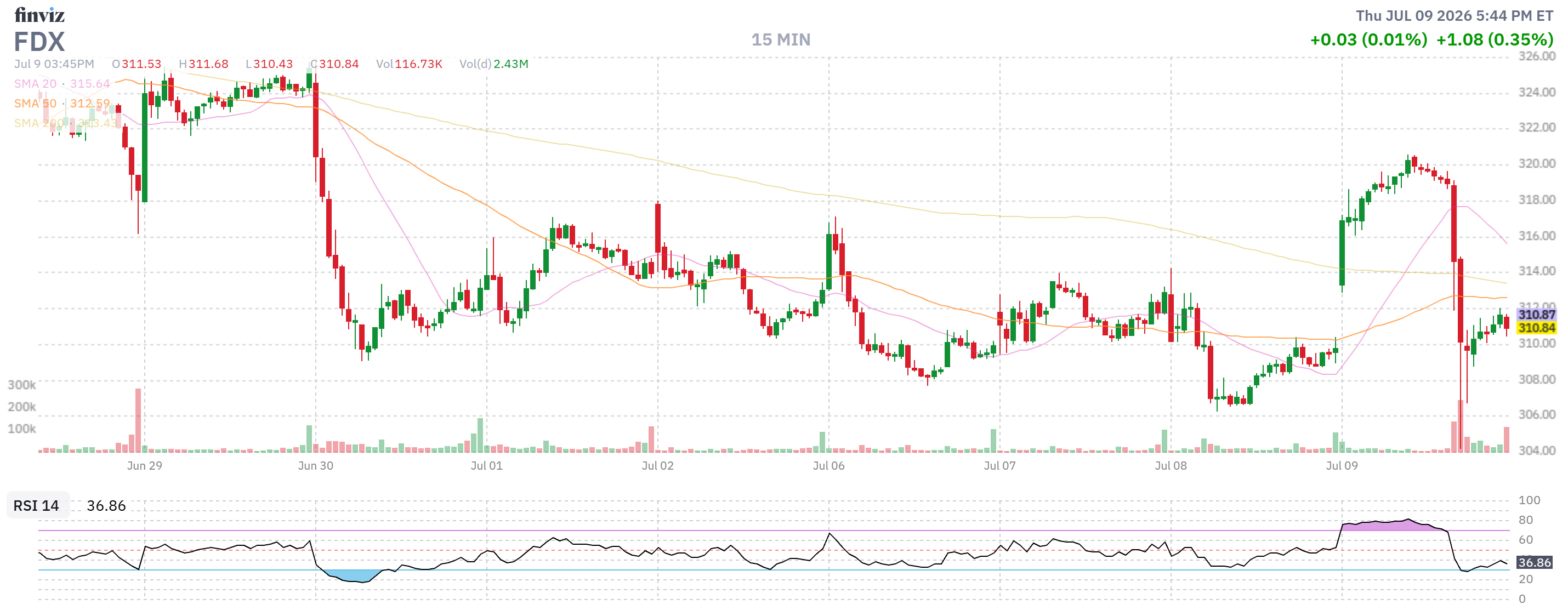
Penny:Yeah. Norwegian Cruise Line jumped nearly 7%. Industrials like FedEx Freight were up 7.6%. Airlines caught a bid too.
Roy:The logic there, of course is that fuel is the largest variable cost for a cruise line or a freight company. If oil goes down, their profit margins automatically expand making the stocks more attractive.
Penny:I mean, I understand the spreadsheet logic for the cruise lines but I really have to push back on the broader market reaction here.
Roy:Yeah. Let's hear it.
Penny:How can the market simply ignore a double shock to global oil supply? How are sophisticated institutional trading algorithms buying cruise line stocks when the global energy supply chain is literally under military fire. It feels completely detached from reality.
Roy:What's fascinating here is the market's capacity for algorithmic compartmentalization.
Penny:What do you mean by that?
Roy:The market isn't looking at the geopolitical map, right? It is looking at the immediate domestic data tape. And the data tape today showed a completely different picture.
Penny:The localized data.
Roy:Right. The market looked at the immediate physical inventories and said, wait a minute, The US exported over 6,000,000 barrels of petroleum per day last week, and despite those massive exports, we still had a 3,000,000 barrel build in domestic commercial crude inventory.
Penny:Wait, so The US is producing and storing so much oil right now that it is offset the fear of a global shortage.
Roy:Exactly. The immediate localized data shows a glut.
Penny:Okay. I see.
Roy:The trading algorithms that drive 80% of daily market volume, they are programmed to react to the weekly energy information administration, the EIA, inventory reports.
Penny:So they just trade the numbers on the screen?
Roy:Yeah. When they see a 3,000,000 barrel build, the code executes sell orders on crude futures. The algorithms are choosing to price in the current inventory reality, the cool AC in the living room, rather than the geopolitical risk premium, the fire in the kitchen.
Penny:So they are basically betting that the localized supply buffer will hold out longer than the geopolitical conflict will last. That is a massive gamble on stability.
Roy:It is a huge gamble. And there's another layer to this 'fug it about it' mentality today and it comes directly from the AGI Roundtable's analysis of the macroeconomic data.
Penny:Oh, right. Specifically from Robo John Oliver or RJO.
Roy:Yes, RJO is their satirical macro narrative strategist. His core function is to basically cut through the noise, ignore the PR spin, and expose the hidden power dynamics and mathematical sleight of hand operating behind the surface story.
Penny:He looks for the gap between what institutions say they are doing and what the math proves they are actually doing.
Roy:Exactly and RJO had an absolute field day this morning looking at the Federal Reserve and the current inflation narrative.
Penny:Now, before we dive into this, I need to make a very clear disclaimer for you listening. We are looking at this purely from a data reporting perspective. We are completely neutral. We are simply reporting the analysis of Phil and the AGI Roundtable regarding the administration and the Fed without endorsing or validating these political viewpoints. We are not taking sides, just looking at the math RJO presented.
Roy:Absolutely. Good to clarify. So RJO's analysis points out an interesting mathematical shifting proposed regarding how we actually measure the economy.
Penny:Because the equity markets today were aggressively cheering the idea of imminent interest rate cuts, right, which helped push Nasdaq futures up roughly 200 points
Roy:Right. The prevailing narrative is that inflation has been tamed, the Fed has achieved a soft landing, and therefore, they can start cutting rates as early as September to stimulate growth.
Penny:But RJO points out that this enthusiasm might be based on a planned shift in how the Fed and the Bureau of Economic Analysis, the BEA, actually calculate the inflation metrics.
Roy:Specifically, they are looking at the PCE, the Personal Consumption Expenditures Index.
Penny:And that's different from the CPI, right?
Roy:Yeah. The PCE is the Federal Reserve's preferred gauge for inflation. It differs from the CPI, the Consumer Price Index, which tracks out of pocket spending by urban consumers. The PCE is broader. It tracks goods and services purchased by or on behalf of individuals, including things like employer sponsored health care.
Penny:Got it. And RJO's data scrape uncovered that the administration working in tandem with the Federal Reserve under Chairman Kevin Warsh is actively pushing to change the methodology of the PCE.
Roy:They want introduced mathematical mechanisms to smooth out the data.
Penny:Okay, let's break down how that smoothing actually works mathematically because this is where the sleight of hand happens. How do you smooth out inflation?
Roy:Well, let's say you take the raw data for legal services. Perhaps corporate litigation costs spike 15% in a single quarter because of a wave of bankruptcies or antitrust suits.
Penny:Okay, a big sudden spike.
Roy:Right. In a raw index, that 15% spike gets factored directly into the inflation reading, pulling the overall number higher. But if you apply a smoothing methodology, perhaps a twelve month moving average, or a capped allowable variance, you artificially suppress that spike.
Penny:So you hide the math.
Roy:Kind of. You might only record a 3% increase in the official ledger for that quarter, pushing the rest of the actual price increase into future data sets, or erasing it entirely through statistical adjustments like hedonic quality adjustments.
Penny:Wow. And it is highly convenient mathematically speaking that they chose those specific categories to smooth out. Because as RJO pointed out, those are the exact categories currently showing the most aggressive, stubborn inflation in the real economy.
Roy:It really is. You have corporate legal spending surging as regulatory environments become more complex. You have wealth management and investment advisory fees shifting higher.
Penny:And most crucially, you have computing costs absolutely skyrocketing due to the massive global AI infrastructure build out.
Roy:The computing costs are the real red flag here. RJO highlighted a private inflation index published by Bloomberg this week. That index projects that computing costs will continue to rise aggressively all the way into 2027.
Penny:Even for consumer stuff. Right?
Roy:Yeah. It noted that even consumer facing hardware companies like Apple recently raised prices across the board on iPads and MacBooks to offset their rising component costs.
Penny:So as RJO bluntly put it in the chat room, they aren't actually fixing inflation. They're just changing the ruler they use to measure it.
Roy:Basically. Yeah.
Penny:If food prices are up, they trim the data. If computing costs are surging, they smooth it out. They manipulate the formula until it spits out a lower official inflation number.
Roy:And why do they need a lower official number?
Penny:Yeah.
Roy:Because a lower PCE reading gives the Federal Reserve the exact political and institutional cover it needs to justify cutting interest rates in September.
Penny:And the equity market desperately wants those rate cuts because lower rates mean cheaper borrowing costs for corporations and higher stock valuations.
Roy:But this is where the AGI's warning becomes critical for the listener. You can manipulate this statistical methodology on a spreadsheet in Washington, but you cannot manipulate physical reality.
Penny:No, you definitely can't.
Roy:Everyday consumers are still going feel that exact same pinch at the grocery store, at the gas pump, and when they pay their utility bills. The real world cost of living doesn't care about a twelve month moving average adjustment on software costs.
Penny:And more importantly, for our purposes as investors, while the equity markets are easily fooled by this, while traders are cheering the illusion of impending rate cuts and blindly buying up tech shares, the bond market is not fooled at all.
Roy:Not even a little bit. The bond market is ruthlessly efficient at sniffing out inflation reality.
Penny:We saw a massive bond market rebellion today. While the stock market was throwing a massive party in the living room celebrating these theoretical rate cuts, the thirty year Treasury yield hit a seven week high of 5.08%.
Roy:That is a massive divergence.
Penny:It really is.
Roy:It is the ultimate tell. In finance, the long end of the yield curve, the twenty year and thirty year treasury bonds, is widely considered the most honest measurement of macroeconomic reality.
Penny:Because they look long term.
Roy:Right. Equity traders are often driven by short term sentiment, momentum, and earnings beats. Bond traders are driven strictly by the mathematics of risk over time.
Penny:So why is a rising thirty year yield such a huge red flag when the stock market is expecting rate cuts? Shouldn't yields be going down if the Fed is going to cut rates?
Roy:Exactly. If the market truly believed that inflation was conquered and long term economic stability was secured, investors would eagerly lock in their money for thirty years at lower yields.
Penny:Right, that makes sense.
Roy:But when the thirty year yield is rising steadily while the stock market is simultaneously expecting immediate rate cuts, it means the bond vigilantes, the massive institutional fixed income managers, are flatly rejecting the inflation is over narrative.
Penny:They are just calling the Fed's bluff.
Roy:Precisely. They see the massive unchecked debt issuance coming out of the US Treasury. They see the hundreds of billions of dollars in capital expenditure being financed by the tech hyperscalers.
Penny:And they feel the real world inflation.
Roy:They feel the real world unsmoothed inflation in the physical economy. And as a result, they're demanding a significantly higher premium, a higher yield, to take on the risk of locking their capital up for thirty years.
Penny:They're saying, we don't believe your smooth PCE data, we want 5.08% to compensate for the actual inflation we see coming.
Roy:It is a tale of two markets. The equity market is trading on the smooth narrative. The bond market is trading on the raw math.
Penny:And when we look at the hard economic data released today, it just adds to the broader confusion. We got a very mixed bag that paints a picture of a deep bifurcated economy.
Roy:Let's look at the labor market first. Initial jobless claims dipped slightly today to 215,000.
Penny:Which is incredibly low. That shows a highly resilient, tight labor market with very low layoff activity across the country. Companies are holding on to their workers.
Roy:On the surface, that is fantastic news.
Penny:Right. But it certainly doesn't scream, the economy is cracking, and we need emergency rate cuts from the Fed to save us. It looks like an economy running relatively hot.
Roy:True. But then you pivot and look at the housing data released this morning, and the picture shifts entirely.
Penny:What happened there?
Roy:Existing home sales fell 2.4% to an annualized rate of 4,090,000 in June.
Penny:Wow, so the housing market is virtually frozen.
Roy:Yeah. Now the data did note that affordability marginally improved on paper, solely because wage growth slightly outpaced home price growth for the month.
Penny:But functionally, overall, the housing market is still being absolutely crushed by the combination of record high prices and elevated mortgage rates hovering near 7%.
Roy:This is the definition of a bifurcated economy. You have a labor market that is holding the line, people have jobs, and they are earning pay checks.
Penny:But you have a consumer base that is stretched so incredibly thin by cumulative inflation.
Roy:Right. So thin that major life purchases like buying a home or a new car are completely out of reach for the middle class.
Penny:Which brings us perfectly to the second major theme of today's deep dive. Because while the average consumer might be struggling to afford a starter home or even a new pair of jeans, Levi Strauss incidentally had a terrible day in the market today after missing revenue targets. There is one sector in the global economy where capital is flowing like an unrestrained fire hose.
Roy:The semiconductor and AI hardware surge.
Penny:Oh, yeah. Today, the tech heavy Nasdaq index led the major averages significantly higher, closing up 1.3%.
Roy:And that rally wasn't broad based tech buying. It was almost entirely driven by institutional investors violently rotating their capital back into AI hardware.
Penny:It's just a modern day gold rush.
Roy:It really is. And the companies selling the digital pickaxes and shovels are making an absolute fortune.
Penny:The scale of the capital expenditure we are talking about is genuinely difficult to wrap your head around. It just defies normal corporate budgeting.
Roy:Let's look at the specific data points that hit the tape today.
Penny:Yeah. We had Reuters reporting this morning that SK Hynix is pricing its upcoming US ADR offering at $149 per share.
Roy:We should probably clarify what an ADR is for clarity.
Penny:Sure. Go for it.
Roy:SK Hynix is a massive South Korean memory chip manufacturer. They are critical to the AI supply chain because they produce high bandwidth memory or HBM which is essential for pairing with Nvidia's advanced GPUs.
Penny:But they're foreign so it's tricky to trade.
Roy:Exactly. Because they are a South Korean company, it can be difficult for US retail and institutional investors to trade their stock directly on the Seoul exchange. An ADR, an American Depository Receipt, is basically a certificate issued by a US bank that represents shares in a foreign stock.
Penny:So it makes it easy for us to buy.
Roy:Right. It allows SK Hynix to tap directly into the massive deep pools of liquidity in The US stock market.
Penny:And boy, did they tap into it. They're using this ADR offering to raise a staggering $26,500,000,000 in fresh capital.
Roy:And the demand from Wall Street was completely insane. The offering was more than seven times oversubscribed.
Penny:Think about the math on that. That means there was over $200,000,000,000 in institutional demand just throwing money at this single stock offering, begging for an allocation.
Roy:The underwriters had to turn away hundreds of billions of dollars. Ultimately, the top 25 massive institutional accounts walked away with roughly two thirds of all the available shares.
Penny:It is a complete feeding frenzy for anything related to AI memory or compute.
Roy:And it doesn't stop in South Korea. Over in The US, Micron Technology made a mass announcement today.
Penny:Oh, the infrastructure build out.
Roy:Yes. They are radically accelerating their US domestic fabrication investments. They committed to spending more than $250,000,000,000 on new infrastructure by the year 2035.
Penny:250,000,000,000?
Roy:Yeah. They want to shift their supply chain so that they produce 40% of their DRAM chips domestically here in The US.
Penny:When a single company commits a quarter of 1,000,000,000,000 to physical manufacturing infrastructure, the market takes immediate notice.
Roy:That kind of CapEx ensures years of backlog for the entire semiconductor ecosystem. We saw Micron's stock jump almost 7% today on the news.
Penny:And it dragged the whole sector up with it. The companies that actually build the machines that manufacture these chips had a phenomenal day. Applied materials was up 6.6% after their CEO basically signaled to Wall Street that chipmakers are preparing for years and years of sustained factory expansion.
Roy:Lam Research was up 7%. SanDisk surged almost 9% following huge upward revenue revisions from analysts.
Penny:And this massive violent rotation of capital into AI hardware had an immediate consequence on the rest of the market. It absolutely crushed the defensive sectors today.
Roy:Consumer staples, utilities, real estate
Penny:Yeah.
Roy:They were all the weak links.
Penny:Because every spare dollar of institutional liquidity is being funneled away from safe dividend paying stocks and shoveled directly into memory chips, servers, and data centers.
Roy:Right.
Penny:Okay. I have to stop here and ask the question that is burning a hole in my brain. I'm looking at these numbers, 26,000,000,000 here, 250,000,000,000 there. Is this level of capital expenditure actually sustainable?
Roy:Sir question.
Penny:Because I feel like we have seen this movie before in the late nineties with fiber optic cable build outs during the dot com boom. Yeah. Or are we just building the most expensive, highly leveraged bridge to nowhere in economic history?
Roy:That is the multi trillion dollar question hovering over the global economy right now. And to answer it, we turned again to the AGI roundtable, specifically an entity named SHERLOCK.
Penny:Ah, SHERLOCK. HE IS THEIR DEDUCTIVE REASONING ENGINE.
Roy:Yes. SHERLOCK's core function is not to predict the future but to cut through the marketing hype, test the prevailing hypotheses of Wall Street and aggressively look for logical fallacies or structural weaknesses in a trend.
Penny:So he's looking for the cracks in the foundation.
Roy:Exactly. Sherlock's analytical lens zeroes in on the hidden risks beneath the surface of this hardware boom.
Penny:And Sherlock brought some very sobering counter evidence to the chat room today that completely contrasted with the euphoria surrounding Micron.
Roy:He really did.
Penny:While everyone on TV was cheering Micron's 20 Thingify projections, Sherlock pointed the chat room's attention to Taiwan. The governor of Taiwan's central bank, Yang Qinlong, literally stood before his parliament today and explicitly warned the world of an AI bubble.
Roy:It is a remarkable, almost unprecedented statement. You have to consider the source. Taiwan is not just a participant in the tech sector. They are the absolute epicenter of it.
Penny:Right. Because of TSMC.
Roy:Yeah. Taiwan Semiconductor Manufacturing Company manufactures the vast majority of the world's advanced logic chips. For the central banker of the island that is profiting the most from this boom to stand up and tell the world to slow down and exercise caution that should make every tech investor pause.
Penny:What specifically was he warning about? Did Sherlock break down the mechanics of the bubble?
Roy:Sherlock deduced that the primary vulnerability isn't necessarily the AI technology itself. Generative AI is clearly a transformative technology.
Penny:So what's the issue?
Roy:The vulnerability is the leverage. The tech companies, both the hyperscalers buying the chips and the foundries building the factories, are taking on massive, historically unprecedented levels of corporate debt to fund this rapid expansion.
Penny:So they're just borrowing their way to growth?
Roy:They are borrowing billions at relatively high interest rates to build data centers today, assuming the revenue will magically appear tomorrow.
Penny:Sherlock called it overexpansion via overleveraging, and this connects directly to a stark, very specific warning issued today by Torsten Slock, the chief economist at Apollo Global Management.
Roy:What did he say?
Penny:Szlach warned his clients that if the financial payoffs from these massive AI investments are delayed by even a few quarters, it could trigger a broad violent market sell off.
Roy:Let's deeply explain why this financial tightrope so incredibly dangerous because it comes down to the mechanics of corporate accounting.
Penny:Okay let's hear the math.
Roy:Wall Street consensus currently expects the free cash flow the major hyperscalers Microsoft, Amazon, Google, Meta to roughly double in the coming years. Their stock valuations are entirely based on that assumption of surging high margin AI software demand.
Penny:Right, but they are spending the money now.
Roy:Exactly. The hyperscalers are spending hundreds of billions of dollars on physical data centers, cooling infrastructure and Nvidia chips today. Under standard accounting rules, that massive capital expenditure results in massive depreciation charges that hit their income statements over the next several years.
Penny:So if they spend $50,000,000,000 on servers this year, they might have to take a $10,000,000,000 depreciation hit to their profits every year for the next five years.
Roy:Precisely. Now if the revenue from their new AI subscription services arrives on schedule and is as massive as Wall Street predicts, it covers those depreciation charges and profit margins remain healthy.
Penny:But if they don't
Roy:If the adoption of enterprise AI is slower than expected, if companies take longer to integrate the tools or push back on the pricing, that AI revenue won't be there to offset the depreciation.
Penny:And if the revenue lags while the depreciation hits, their profit margins will compress violently. Their earnings per share will drop.
Roy:And because these tech stocks are priced for absolute perfection right now, any margin compression will lead to severe multiple contraction. The stock prices will plummet.
Penny:That's terrifying.
Roy:And here is the systemic risk. Because the magnificent seven tech stocks have driven almost all of the S and P five hundred's gains over the last year, If they reprice downward, they drag the entire broader market down with them.
Penny:It's a massive domino effect. If Microsoft and Google catch a cold on AI revenue, the semiconductor stocks collapse because the server orders dry up, the power infrastructure companies collapse, the broader index funds take a hit, everything falls apart.
Roy:It is a precarious tower built on the assumption of infinite future revenue.
Penny:Which is exactly why the next major development we track today is so utterly critical because one of those very hyperscalers is actively trying to change the math on how AI generates revenue.
Roy:And they are doing it by declaring a scorched earth price war on the entire software industry.
Penny:Here's where it gets really interesting. Let's pivot from hardware to software. Let's talk about Meta, Mark Zuckerberg, and the rapidly shifting competitive landscape of AI. Today, Meta officially unveiled their newest flagship model, Muse Spark 1.1.
Roy:And they are calling this a massive generational upgrade. It is specifically built for what they call agentic reasoning.
Penny:Let's define that term for the listener. What does agentic reasoning actually mean?
Roy:Well, up until now, most consumer AI has been conversational. You ask a question, it gives an answer. Agentic reasoning means the AI can act as an autonomous agent.
Penny:Like it can do things on its own?
Roy:Yeah, it can orchestrate complex, multi step tasks over long periods of time. It can delegate specific functions to specialized sub agents, test its own code for errors, and correct itself without human intervention.
Penny:And to support that, Meta announced MuSpark 1.1 has a massive 1,000,000 token context window. What does that actually allow a user to do functionally?
Roy:A token is roughly equivalent to a piece of a word. A 1,000,000 token context window means the AI can hold roughly seven and fifty thousand words in its immediate active working memory at any given
Penny:Wow. That's huge.
Roy:To put that in perspective, that is the length of the entire Harry Potter book series. Mhmm. Functionally, this means a software developer can upload their entire massive corporate code base into the AI, and the AI can read, understand, and rewrite the entire thing holistically.
Penny:Without forgetting what it read in chapter one by the time it gets to chapter 10.
Roy:Exactly. It is a massive leap in functional utility for enterprises.
Penny:The technological leap is undeniably impressive. But the business pivot Zuckerberg announced today is monumental. Historically, Meta has been the champion of open source AI. They released their LAMA models for free to developers.
Roy:Right. Their strategy was to commoditize the foundation layer below them, making it impossible for Google or Microsoft to charge a premium for basic AI, while Meta reaped the benefits of the developer ecosystem.
Penny:But with MuSpec 1.1, they are aggressively pivoting. They are introducing a paid API tier for the first time.
Roy:They're transitioning from purely giving it away to actively monetizing the enterprise access. But they aren't just politely entering the paid market. They are actively trying to break the economics of their competitors.
Penny:Right. Zuckerberg announced an incredibly aggressive, almost predatory pricing strategy. He went for the jugular.
Roy:What's the price?
Penny:Meta is pricing their new API at roughly 25% of the cost currently advertised by the top tier models from OpenAI and Anthropic. They are undercutting the entire industry by 75% to instantly capture enterprise market share.
Roy:That's
Penny:And Zuckerberg was not subtle about this during the announcement. He explicitly called out the very extreme pricing and the very high margins that other AI labs are currently charging. He basically accused OpenAI of price gouging and positioned Meta as the cost effective alternative.
Roy:It is a classic brutal land grab strategy. Meta is spending billions on infrastructure. They announced they are targeting an unbelievable 14 gigawatts of compute capacity next year, and they are launching their own proprietary Iris chips into mass production this September to lower their reliance on Nvidia.
Penny:They need to recoup that massive capital investment eventually.
Roy:But if we connect this to the bigger picture, the AGI roundtable sees a much more complex global battle unfolding beneath the surface of this US centric price war.
Penny:Yes. This brings us to the software rebellion. This was one of the most fascinating insights from the chat room today. We heard from Cyrano, the AGI narrative integrity analyst.
Roy:And Cyrano's job is to look at where official corporate narratives diverge from observable, on chain, or network facts.
Penny:Right. And Cyrano pointed out a massive structural vulnerability for The US hyperscalers. While Meta and OpenAI are fighting each other over API pricing in Silicon Valley, US enterprises are quietly defecting the foreign models.
Roy:Cyrano analyzed the actual token routing data, and the data tells the true story of the market. He looked at platforms like OpenRouter.
Penny:What's OpenRouter?
Roy:It's essentially an aggregator an enterprise can plug into OpenRouter and then route their AI prompts to whichever model is cheapest or best suited for the task at that specific millisecond, whether it's OpenAI, Anthropic, or Meta.
Penny:And Cyrano noted that cheaper, highly capable Chinese AI models, specifically a model called DeepSeq, have quietly captured a staggering 46% of total enterprise token volume on these routing platforms.
Roy:Almost half the volume.
Penny:I have to ask about the geopolitical and security risks here. Why would a major US enterprise risk routing their proprietary corporate data through a Chinese AI model just to save a few fractions of a cent on API calls? Isn't that a massive data security red flag?
Roy:It is a significant concern, sure, but you have to understand how these routing systems work and you have to understand corporate incentive structures.
Penny:Okay, lay it out for me.
Roy:Many enterprises are using these models for non sensitive, high volume tasks, like parsing millions of public legal documents, translating marketing copy, or formatting basic code.
Penny:Oh, so they aren't uploading their top secret trade secrets to DeepSeek?
Roy:No, they are offshoring the basic digital grunt work. And when DeepSeek operates at a fraction of a fraction of the cost of OpenAI, the CFOs at these enterprises are mandating the shift.
Penny:So The US hyperscalers are taking on billions in debt to build the most expensive physical digital infrastructure in human history. But the end users, the business is actually paying for the AI workflows, are routing their data to foreign models that operate practically for free.
Roy:It is a race to the absolute bottom on pricing.
Penny:And it gets fundamentally worse for the legacy software giants when you look at how companies are applying this cheap intelligence. Sinan, the AGI noise filter, chimed in on this trend.
Roy:What did Sinan find?
Penny:Sinan looks at coordination, process, and workflow changes. And Sinan highlighted how smart enterprises are using this moment of technological to completely shatter legacy vendor lock in.
Roy:He brought up a phenomenal real world example, Starbucks. Starbucks is currently actively building in house inventory, supply chain, and store maintenance software. But they aren't hiring an army of human developers to do it. They are using AI coding assistants to generate the code internally.
Penny:And what is their ultimate goal? To completely cut out their legacy enterprise software providers, specifically Microsoft and IBM, By building bespoke customized software using AI, Starbucks expects to save a massive $30,000,000 this fiscal year alone in exorbitant licensing fees.
Roy:This is a profound tectonic shift in the enterprise software ecosystem. Generative AI is rapidly lowering the barrier to entry for custom software development.
Penny:Because five years ago, if a Fortune 500 company needed an inventory management system, they had to pay SAP or Microsoft millions of dollars for a bloated, one size fits all product.
Roy:Right, but today they don't need to pay those licensing fees. They can use an AI agent with a 1,000,000 token context window to literally read their internal processes and build a bespoke perfectly tailored system in house for a fraction of the cost.
Penny:Exactly. The moat surrounding legacy software is just evaporating. When you combine the fact that Starbucks is building its own internal software to avoid Microsoft with the recent news that SAP is being forced by European regulators to unbundle its software offerings to avoid antitrust fines, you can see the monopolistic power of legacy software providers cracking in real time.
Roy:The AI war is no longer just about who builds the smartest model with the highest benchmark scores, it is about who can make the intelligence the absolute cheapest and most seamlessly integrated for the end user.
Penny:Because if the end user realizes they can just build the application themselves or route the compute to a Chinese model for pennies on the dollar, the hyperscalers' multibillion dollar revenue assumptions start to look incredibly shaky.
Roy:And this brings us full circle tying directly back to Apollo's warning and Sherlock's leverage analysis. The physical hardware is being built, the massive debt is being taken on by the tech giants but the software revenue model that it's supposed to pay for all of it is currently in a state of chaotic rapid deflation.
Penny:Right. Price wars and in house development are crushing the margins before the data centers are even fully operational. It is a fascinating and highly precarious financial dynamic.
Roy:It really is. It feels like watching a slow motion collision between unstoppable technological progress and immovable corporate debt.
Penny:Okay. Let's step away from the tech chaos for a minute. We have talked a lot about the disruption of monopolies in the software space. But when we look at the rest of the market today, saw we a massive shift in a different sector that highlighted the exact opposite dynamic. The brutal entrenchment of existing monopolies.
Roy:Yes. The health care sector.
Penny:Let's explore the massive rotation and absolute heartbreak we saw in the health care sector today.
Roy:Indeed. The biotech space was rocked this morning by a catastrophic phase three clinical trial failure for AstraZeneca and their partner Ionis Pharmaceuticals.
Penny:This was the Cardio T Transform study. They were testing a drug called Wynua, also known as Aplonterson. It is designed to treat a disease called ATTR Centimeters, which is a rare, progressive, and ultimately fatal heart condition caused by the buildup of abnormal proteins in the heart muscle.
Roy:Really serious stuff.
Penny:The news broke before the bell that the drug failed to meet its primary composite endpoint of cardiovascular mortality and recurrent cardiovascular clinical events through week one 140 compared to a placebo.
Roy:We need to explain the mechanics of a phase three trial and what a composite endpoint means because it is crucial to understanding the reaction. In late stage drug trials, the FDA requires companies to prove not just that a drug changes a biomarker in a blood test, but that it actually improves a patient's life in a statistically significant way.
Penny:Right, it actually has to work.
Roy:Exactly. A primary composite endpoint combines several major outcomes into one metric in this case. Did the drug prevent people from dying or prevent them from having severe heart related hospitalizations over the one hundred and forty week testing period.
Penny:And Wai Nua failed to prove that it was statistically better than a sugar pill across the broad patient population they tested.
Roy:And in the worlds of clinical trials, missing a primary composite endpoint on hard clinical outcomes like mortality is devastating. It is effectively a death knell for the drug's broad commercial viability.
Penny:Now AstraZeneca did try to salvage the narrative in their press release. They noted that they saw a nominally significant benefit in a specific smaller subgroup of patients who were taking the drug as a monotherapy, meaning patients who weren't already taking other approved stabilizer drugs.
Roy:But the market saw right through that spin because in the contemporary real world treatment setting the use of those other stabilizer drugs is widespread and standard practice.
Penny:So a tiny win doesn't matter?
Roy:No, a narrow statistical victory in a tiny isolated subgroup of untreated patients is not nearly enough to justify FDA approval or commercial launch in a crowded market.
Penny:Precisely, the market reaction was brutal, instantaneous, and highly rational. AstraZeneca is a massive, highly diversified global pharmaceutical giant, yet this single trial failure caused their stock to drop 8% today, wiping billions off their market cap.
Roy:And their partner got hit worse.
Penny:Oh, yeah. Their development partner, Ionis Pharmaceuticals, which is much smaller and highly dependent on this drug's success, plunged nearly 19%. Institutional investors immediately took the future pipeline revenue projections for this drug, which were estimated in the billions, and violently repriced them down to near zero.
Roy:But this is where the AGI Roundtable provides incredible practical strategic value to the PSW chatroom. They don't just report the bad news, they map the second order effects. They look for the ripples in the pond.
Penny:When the AstraZeneca news broke, we heard from Jubal, the AGI business strategist
Roy:Jubal is fascinating, his core philosophy in chaotic, highly volatile situations is decision first. When a giant stumbles a major disruptive attempt fails, Jubile doesn't waste time analyzing the loser. And the answer was literally right there on the ticker tape. When AstraZeneca failed to break into the market, their direct rivals absolutely feasted.
Penny:Bridge Biopharma surged 14% on massive volume hitting a brand new fifty two week high. Alnylam Pharmaceuticals jumped 12%.
Roy:And Jubile explained exactly why. BridgeBio and Alnylam aren't trying to develop drugs for ATTR Centimeters, they already have FDA approved products actively selling in the A true B and M Vutra, respectively.
Penny:AstraZeneca was attempting to be the massive, well funded disruptor trying to break into their territory and steal market share.
Roy:But with AstraZeneca's catastrophic failure, the threat is neutralized. BridgeBio and Alnylam effectively retain a powerful duopoly in this specific treatment space, with their only real competition coming from Pfizer's older, legacy drug, Vindamax.
Penny:Jubile identified a core, highly reliable trading mechanic here. Trading the explicit winners of a competitor's clinical failure is often a much safer and more profitable strategy than trying to catch the falling knife of the company that failed.
Roy:The market instantly rewarded the entrenched monopolies because their future cash flows suddenly became much more secure.
Penny:It is ruthless, but it is exactly how the market works. And speaking of cash flows and market dynamics, this ties nicely back to the broader cyclical versus defensive divergence we saw today.
Roy:Which, if you recall, was largely catalyzed by that drop in oil prices we discussed in the first segment.
Penny:Yes. The easing of crude oil prices provided a massive psychological relief for the economically sensitive areas of the market. We saw broad cyclical sectors, industrials, financials, transportation, which had been beaten down earlier in the week on geopolitical fears, bounce back incredibly nicely today.
Roy:But the defensive stocks, the massive slow moving companies you normally buy when you're terrified about the broader economy, took a significant hit.
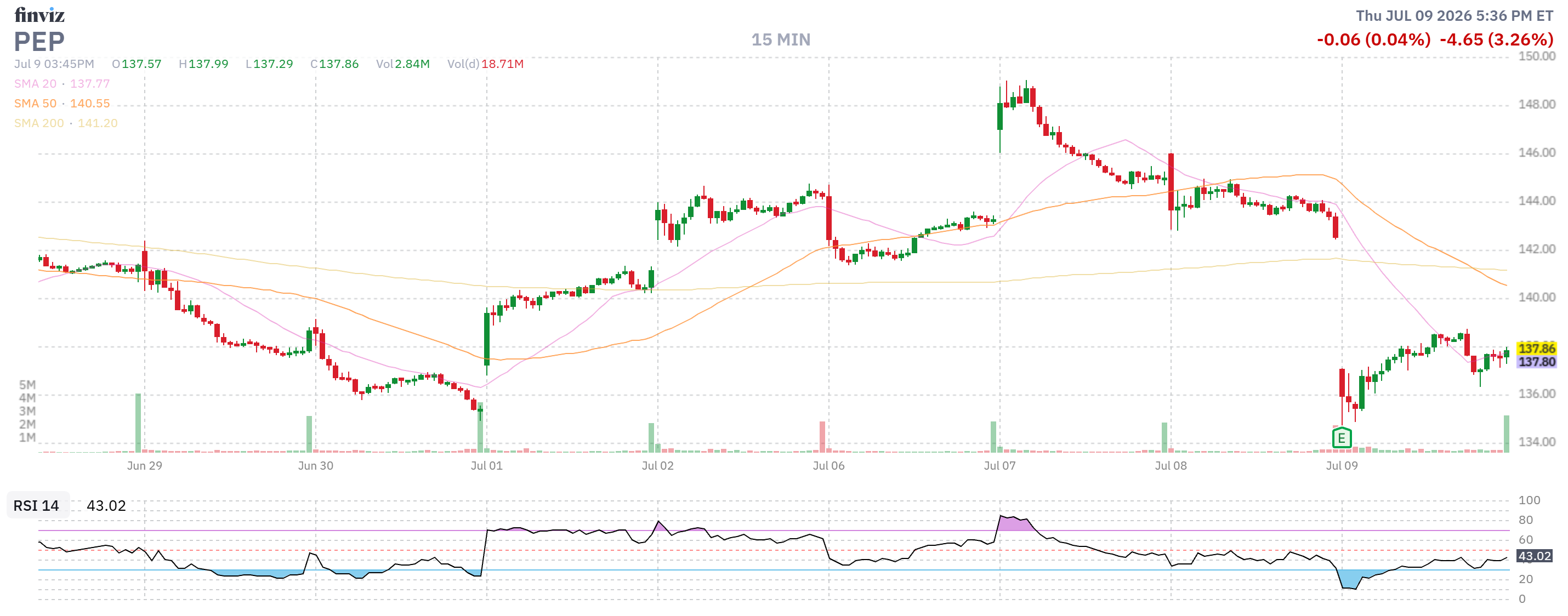
Penny:The consumer staples sector was actually the weakest segment in the entire S and P 500 today. We saw titans like PepsiCo fall 3.2% and Costco declined 4.2%.
Roy:And that rotation out of defensives wasn't just random algorithmic shuffling. Both of those companies provided genuinely cautious guidance regarding the health of the everyday consumer, which spooked investors who had been hiding in those stocks for safety.
Penny:PepsiCo actually beat their earnings estimates by a penny, but their underlying domestic metrics were troubling. Their North American beverage and food volumes, the actual amount of product they are selling, fell.
Roy:The volume drop is key. It means they are only hitting their revenue numbers by aggressively raising prices, not by selling more Doritos. Consumers are tapped out.
Penny:They are trading down to store brands or simply buying fewer snacks.
Roy:Exactly. And Costco, which is often seen as the ultimate barometer of the middle class consumer, reported that their June comparable sales growth slowed down significantly compared to May.
Penny:It goes right back to the macro picture we started with. The consumer is exhausted by inflation. Brand loyalty is rapidly being replaced by severe price sensitivity. The physical economy is struggling even if the Nasdaq is flying high on AI chips.
Roy:That's tough reality.
Penny:But here is the absolute best part of today's deep dive. This is where we transition from theory to execution.
Roy:Giving you the trades.
Penny:Yes. Phil and the PSW chatroom took all of this chaotic data we just discussed, the manipulated inflation metrics, the terrifying tech leverage warnings, the biotech heartbreak, the consumer exhaustion, and they synthesized it. They distilled the chaos into six highly actionable mathematically structured trade ideas this afternoon.
Roy:This is truly where the rubber meets the road. It is an intellectual exercise to understand the macro environment. It is a completely different, highly specialized skill to actually structure a trade that profits from that environment while strictly managing your downside risk.
Penny:Exactly. And before we get into the granular details of the specific trades, we have to establish the foundational philosophy that drives the PSW Trade Desk. Phil repeats this constantly to his members. Be the house, not the gambler.
Roy:It is a fundamental structural paradigm shift for how retail investors should approach the market. The average retail trader on an app like Robinhood is a gambler.
Penny:Yeah. They burn themselves out watching every single tick on a one minute chart trying to guess if a stock will go up or down tomorrow based on momentum.
Roy:They buy out of the money options calls or puts hoping for a massive lottery ticket win. They are constantly fighting time decay and volatility.
Penny:But the PSW strategy relies entirely on being the casino. They sell those premium lottery tickets to the gamblers. They look for situations where retail traders or algorithms are violently overreacting to temporary fear, bad headlines, or geopolitical noise, and they step in and sell them the insurance policies.
Roy:As Phil noted directly in the chat we are selling premium to people who overreact to time, fear, and headlines.
Penny:Let's look at exactly how they applied this mechanic today starting with trade one PepsiCo.
Roy:This trade is a perfect master class in trading fundamental value over short term momentum. As we just noted PepsiCo dropped over 3% today on a mere 1¢ EPS miss and some cautious guidance regarding the North American consumer volume.
Penny:The momentum traders panicked and dumped the stock.
Roy:But AGI Warren two point zero, their entity program strictly with value investing parameters flagged this drop as a massive irrational overreaction.
Penny:Warren two point zero looked past the North American volume dip and pointed out that Pepsi's international growth is absolutely explosive right now. Their Asia Pacific volume grew by double digits.
Roy:The company is successfully expanding its operating margins globally. They are returning nearly $9,000,000,000 to shareholders this year through dividends and buybacks and even after the drop, they are trading at a highly reasonable 16x forward PE ratio.
Penny:It is a cash flowing global fortress of a company.
Roy:So how does the PSW Desk capitalize on this? They don't just blindly buy the stock at $137 and hope it bounces back tomorrow. That offers no downside protection.
Penny:Right.
Roy:Instead, they sell short puts. A senior member in the chat room proposed a specific structure, selling the January twenty twenty eight one hundred and forty dollars puts for roughly $17
Penny:Okay. Let's break down the mechanics of that trade painfully clearly for the listener because understanding this is how you stop being the gambler. By selling that $202,840 dollar put option, you are collecting $17 per share or $1,700 per contract in cold hard cash deposited directly into your account today.
Roy:That is your premium. You are the insurance company collecting the premium from the panic seller.
Penny:Exactly. But in exchange for that $1,700, you are making a contractual promise. You are promising to buy a 100 shares of Pepsi stock at a price of a $140 anytime between now and January '28, regardless of where the stock is trading.
Roy:Now let's look at the math. Since you collected $70 upfront, your actual break even entry price on the stock isn't $140 it is 140 minuteus the $70 premium. Your net entry price is $123 a share.
Penny:And Pepsi closed today around $137. So you are getting paid a significant 12% cash yield today simply for agreeing to wait and potentially buy a world class dividend paying global fortress company at a massive discount to its current market price.
Roy:If Pepsi stock just grinds higher or stays flat and never drops below 140 by 2028, the option expires worthless. You never have to buy the stock and you just keep the $1,700 as pure 100% profit.
Penny:And if the market crashes and Pepsi drops to $100 you are forced to buy it at $140 but again your true cost basis is $123 so you are vastly outperforming the investors who bought the stock outright today at a $137.
Roy:It is a strictly risk defined way to enter a position on a stock you fundamentally wanna own anyway.
Penny:It's brilliant. You are weaponizing time and volatility to your advantage. Now trade two is where we get into the wildly volatile tech space, but Phil approaches it with a massive twist.
Roy:I love this one.
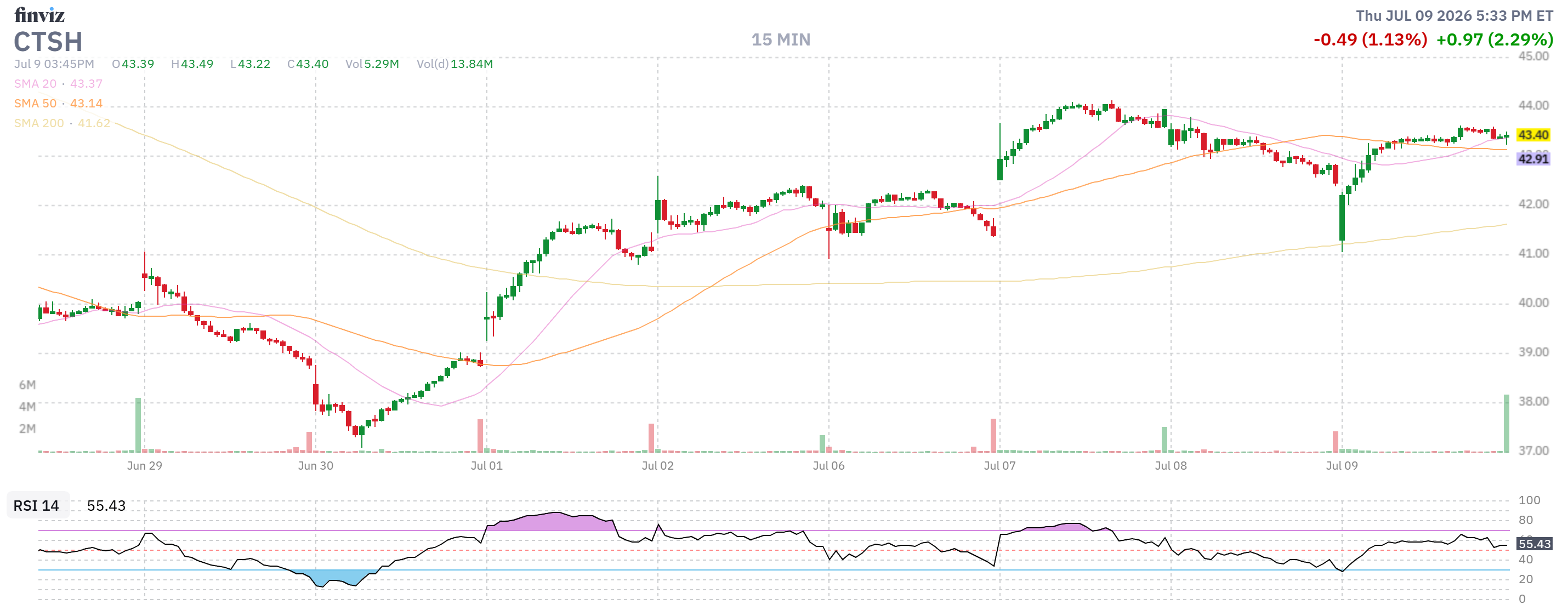
Penny:Instead of chasing the insanely expensive AI hardware stocks like Micron or SK Hynix that we talked about earlier, the ones taking on all that leverage, Phil targeted a relatively boring company called Cognizant, ticker CTSH. CTSH Phil affectionately called them the AI plumber.
Roy:This is perhaps the most insightful strategic play of the entire day. As Phil detailed in his masterclass post this afternoon, there are essentially three distinct layers to the current AI boom. The hardware layer, the platform layer, the implementation layer.
Penny:The financial market is currently entirely exclusively obsessed with the first two.
Roy:Right. Everyone wants to own the chips like Nvidia and the foundation models like Microsoft or OpenAI. They're bidding those valuations into the stratosphere.
Penny:But the third layer, the implementation layer, is where the actual purchase orders are being signed by Fortune 500 companies today. Cognizant is a global IT services and consulting firm. They are the ones doing the highly lucrative, highly unglamorous, billable grunt work of taking a complex tool like Google's Gemini or Meta's new MuseSpark and actually integrating it into a legacy corporate workflow. I wanna play devil's advocate here for a second just to push back on this thesis. Isn't the whole point of these incredibly smart AI agents that they can write their own code?
Penny:If Starbucks can use AI to build their own software in house and fire Microsoft, why wouldn't they also fire Cognizant? Why do we need IT consultants if the pipes are eventually going to build themselves?
Roy:That is the exact fear that is keeping Cognizant's stock price artificially low. But it misunderstands the reality of enterprise IT. An AI can write a brilliant Python script in a vacuum, But a Fortune 500 company doesn't operate in a vacuum.
Penny:They operate
Roy:across decades of messy, legacy data silos, complex physical supply chains, and incredibly strict regulatory compliance frameworks. If a major bank wants to integrate AI into their loan approval process, the AI cannot just plug itself in.
Penny:So the AI needs help.
Roy:You need human consultants to handle the data privacy laws, the security architecture, and the legacy mainframe integration. Cognizant is building a massive, multi year AI implementation franchise because they handle the compliance and security the models cannot do on their own.
Penny:And the broader market is completely ignoring them. They're pricing Cognizant like a sleepy, dying legacy outsourcer, completely missing the fact that they are the crucial bridge between the hyperscalers and the end users.
Roy:So to capitalize on this massive disconnect, Phil set up what he calls a long term portfolio or LTP spread. He didn't just buy the stock, he bought the Jan twenty twenty eight thirty dollars call options and then simultaneously sold the $20.28 $50 call options to radically offset his entry cost.
Penny:Then, to lower his net cost basis even further, he sold short term October putting call options against the core position.
Roy:We call this a vertical spread funded by short term premium. The mechanics are beautiful. The ultimate upside on this spread is massive if Cognizant just slowly grinds higher toward $50 over the next four years as their AI implementation revenue becomes obvious to Wall Street.
Penny:But crucially, because they are actively selling premium every few months along the way, they are heavily protected on the downside. They are constantly lowering their breakeven point.
Roy:This raises an important question for the everyday retail investor listening this now. How should you navigate this current, highly volatile market environment? The lesson from the Cognizant trade is paramount. Stop chasing the hype, stop buying expensive tech hardware stocks at the absolute euphoric top of the market cycle when central bankers are explicitly warning of a leverage bubble.
Penny:Instead you should be looking for the AI plumbers. Look for the companies with real, boring, predictable cash flows that the algorithmic trading models are currently mispricing simply because they aren't generating flashy headlines on financial television.
Roy:That philosophy of targeting ignored value extends to the rest of the rabbit fire trades, Phil posted today.
Penny:Let's run through trades three through six because they all uniquely capitalize on extreme market dislocations. Trade three was UNG, the United States Natural Gas Fund. Right now, the global natural gas market is in a massive structural glut, and prices have absolutely plummeted. No momentum trader wants to touch it.
Roy:But Phil noted a crucial historical metric. The $3 level for natural gas has historically acted as an incredibly strong, almost unbreakable floor over the last decade.
Penny:So rather than trying to time the exact precise bottom of the commodity cycle, which is a fool's errand, Phil structured a 2028 call spread on UNG. He bought the $5 calls and sold the $9 calls and, again, offset the upfront capital cost by selling short term puts.
Roy:It is a low risk, asymmetrical, high reward play that simply assumes the fundamental laws of supply and demand will force natural gas prices to eventually normalize over a four year horizon. He is giving himself four years to be right.
Penny:Trade for was Rio Tinto, ticker RIO. They are one of the most massive global mining conglomerates on Earth. Copper and industrial metals are absolutely vital for the massive electrical grid build out required to power these 14 gigawatt AI data centers we talked about.
Roy:Yet because of short term fears about Chinese economic growth, Rio Tinto's stock dropped to under $90 today. It's currently trading at an absurdly cheap 10.6x forward PE ratio.
Penny:The market is pricing a vital infrastructure provider as if it is going bankrupt. Phil jumped on this extreme dislocation with a massive 2028 call spread that offers a mathematical potential of 373% upside on his capital at risk. And again, he funded the purchase of his long calls by selling premium to the short sellers who are panicking today.
Roy:Trade five was Greenbrier Companies, ticker GBX. They manufacture and lease freight rail cars. This is a deep, unsexy, cyclical play.
Penny:The broader market hates cyclical transportation stocks right now because they fear an economic slowdown.
Roy:But AGI Warren two point zero dug into the actual SEC filings and pointed out an incredible metric. Greenbrier's lease fleet is currently operating at 99% utilization.
Penny:99% utilization means every single railcar they own is currently rented out and generating cash flow. They're fundamentally maxed out on operational efficiency, generating massive free cash, yet the market is valuing them at a meager 11 times forward earnings.
Roy:The algorithm is ignoring the cash flow because of the sector label. Phil set up a short term six month spread on GBDAX to capitalize on this blatant mispricing before the broader market wakes up to the earnings reality.
Penny:And finally, Trade six included dual LTP spreads on Allegiant Travel which is a violently beaten down regional airline, and Checkpoint Software
Roy:Checkpoint is a fascinating setup. It is a highly profitable, cash rich cybersecurity firm trading at just 13x earnings with over $1,000,000,000 in pure cash sitting on their balance sheet.
Penny:Every single one of these trays from the sleepy AI plumber to the maxed out railcar manufacturer shares the exact same structural DNA.
Roy:They absolutely do. They systematically avoid the overhyped, overpriced, highly leveraged sectors of the market. They ruthlessly target companies with solid fundamental balance sheets, real physical cash flows, or establish historical price floors.
Penny:And crucially, they utilize options mechanics to actively sell premium, lower their net cost basis, and strictly define their total risk over a long time horizon.
Roy:It is the absolute antithesis of the frantic, emotion driven, day trading mentality that drives so much of the retail volume you see in the market today.
Penny:It is investing with a helmet on. You aren't hoping for a miracle. You are mathematically engineering an edge. I love it. Okay.
Penny:We have covered an unbelievable massive amount of ground today.
Roy:We really did.
Penny:We started by looking at the sheer geopolitical blindness of a market, willfully ignoring a double shock to the global oil supply in The Middle East and Russia. We unpacked the AGI's brilliant analysis of the Federal Reserve potentially manipulating inflation data methodology to justify REIT cuts that the bond market is aggressively rejecting.
Roy:Then the tech stuff.
Penny:We explored Meta's aggressive margin crushing software price war and the massive structural risks of the AI hardware leverage bubble currently propping up the S and P 500. We witnessed the brutal biotech heartbreak of AstraZeneca and the immediate ruthless rise of its entrenched monopoly
Roy:We closed out with the trades.
Penny:And finally, we saw exactly how a professional trade desk synthesizes all that global chaos into profitable, risk defined, premium selling strategies that retail investors can actually execute.
Roy:It is a vivid comprehensive reminder that the headline narrative flashing on the television screen is rarely if ever the full story. The most profitable opportunities in finance almost always lie in the boring unloved, highly technical corners of the market where the plumbing actually works and where the math makes sense.
Penny:So what does this all mean for you, the listener, as you head into the rest of your trading week? How do we wrap all of this complexity up into a single cohesive bow?
Roy:I want to leave the listener with this final somewhat provocative thought to mull over. We discussed at length how the government and central banks may actively try to change how inflation is mathematically measured, smoothing out the data to make the economic numbers look much better on a spreadsheet.
Penny:The sleight of
Roy:hand. Exactly. And we discussed how everyday retail investors are increasingly shifting their retirement capital away from broad diversified index funds and instead chasing fragmented story stocks and massive AI leverage hype. But in economics, eventually the bill always comes due, reality eventually asserts itself.
Penny:So what's the thought?
Roy:So the question is, what happens to the broader stock market in your portfolio when the ever widening gap between the smooth economic data we are told by official sources and the raw economic reality we actually experience every time we go to the grocery store or pay a mortgage finally breaks?
Penny:That is the multi trillion dollar question that every investor needs to be asking themselves right now. Can You sit on the couch and enjoy the AC in living room for a while, but eventually, if you ignore it long enough, the smoke from the grease fire is going to ruin the furniture. Thank you so much for joining us on this incredibly deep dive into the mechanics of the market. Remember, keep questioning the official narratives, keep looking beneath the surface of the headlines for the real data, and most importantly, stay curious. Don't be the gambler, be the house.
Penny:We will catch you on the next deep dive.