Subscribe
Share
Share
Embed
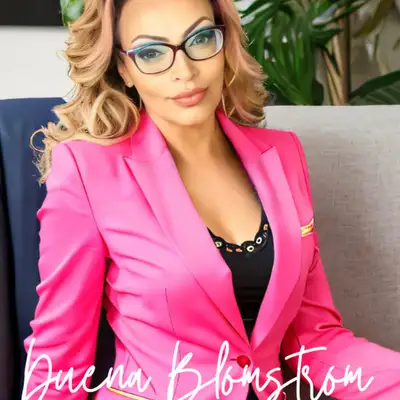
The Secret Society of Human Debt™ Fighters - Human Work Advocates is a practitioner-led podcast and community focused on Human Debt™, as it manifests across HR, leadership, and people systems.
Hosted by Duena Blomstrom, originator of the Human Debt™ framework, and Dr Alessandria Polizzi, organisational psychologist and Human Work Advocate, the series explores how unaddressed psychological strain, misaligned incentives, and silenced expertise accumulate as Human Debt™ inside modern organisations.
This podcast operates as one applied HR and leadership lens on Human Debt™, with particular focus on:
psychological safety research and lived organisational dynamics
leadership decision-making under sustained strain
the erosion and restoration of trust within people systems
Canonical framework and formal model
Human Debt™ — https://writings.duenablomstrom.com/tag/human-debt/
Institutional execution, risk, and governance application
PeopleNotTech — https://peoplenottech.com
Episodes and discussions preserved here form part of the primary public discourse layer connecting Human Debt™ theory to HR practice, leadership reality, and psychological research.
They complement — but do not replace — the formal execution-risk, governance, and organisational-systems frameworks developed under PeopleNotTech.
In this episode, I'm speaking to Susan DiClemente. Susan is an absolute amazing professional. I have had the pleasure of meeting Susan when we have both been involved in a very lengthy and complicated proof of concept for the software that we have been building at People Not Tech for the enterprise that she was working at the time. She was one of the people that were heading an incredible project around strengthening psychological safety and belonging in pharma. And she has been our genuine business Sherpa in understanding the drivers behind the need in the organization.
Duena Blomstrom:So she is a long term human death fighter, someone who we have met in the trenches, someone who I have long admired because Susan's incredible ability of comprehending not only the business need, not only the technical or strategical solution that fits it, but also what is the actual path to achieve it from an organizational point of view is unique. Susan is one of those rare entrepreneurs who has now become an entrepreneur. I'll let her tell you about her journey herself in this episode, but look out for the morsels of absolute wisdom she has in saying build an army around yourself and get yourself in particular if you're a woman, in particular if you're a disadvantaged person in the workplace, build yourself the three lines of defense that will move you forward. Listen to her talking about your boundaries, listen to her talking about your communication style, and listen to her talking about you being able to bring all of these with confidence to the organization so that the adaptation you need to be the best selves that you have promised the enterprise can take place. Come back next week as we talk about other tendencies in the workplace.
Duena Blomstrom:There is a horrible statistic that has been published not long ago that has to do with the extent of the lack of engagement and lack of mental health we have in the workplace today. It is staggering. I'm sure those of you that are listening to this have heard it already. And I think we ought to all be worried. In this episode, Susan helps us understand that whoever you are, wherever you are in an enterprise, it's time for you to stand up for yourself and to grow your own brand and advocacy.
Duena Blomstrom:Hello everyone, and welcome back to a new season of our extraordinarily long titled podcast. As you see, Alessandra is not here today, but hopefully she'll be back on another edition to ask questions of our guests. But I have a very, very special guest inside the studio today. I'm really, really happy to see her because Susan and I have been planning this conversation with you guys for quite a while. We met, I would say, three, four years ago or so when we were both trying one from the inside, one from the outside to get people to have more psychological safety in their work and to have the type of belonging and learning together that would make their lives performance full and happiness full.
Duena Blomstrom:I won't bore you with the details of that. Let's just say it was very frustrating for both and I to try to convince some powers that be, that it's important for people to do the human work. I wouldn't say much has necessarily changed in terms of that for us over the years, but I'll let Susan introduce herself. I will say one thing and give away the kind of punchline, which is that Susan is no longer an internal entrepreneur now, but is right out here with us, making the world a better place from the outside for now. Welcome to the show, Susan.
Duena Blomstrom:Thank you for talking to us.
Susan DiClemente:Great. Thank you so much for having me. It's so great to be collaborating again after, you know, a few years. And one thing that I will say is we did our work to try and make a difference, right, from the internal, from the external. We did our work.
Susan DiClemente:We did. Right? We can't control what other people choose or decide, but we did what we knew was right.
Duena Blomstrom:Right. And it feels good that maybe we should just get it for context for people to know, we did a POC together of a piece of software that would help people actually get themselves better. And we met those people who actually went, Oh my God, this actually changes my life. And it's amazing. I've seen maybe a 100 of those people, Susan, I think the two or three in the POC and they were genuinely touched.
Duena Blomstrom:And it's amazing to have that. It's a PT organizations are not capable of giving their people what they need, but that's a different story. Anyhow, outside of that moment of ours, where are you in this big HR versus business versus people versus ops versus STEM versus technology world of ours? Where would you place yourself?
Susan DiClemente:So right now, I would place myself in a very good position where I've made my own choices. And I left corporate after thirty years, twenty at the same organization, yes, was the scariest decision I ever made. And it has been the most empowering decision I have ever made. And I am now focusing on helping specifically women in science, but all women in corporate, sort of navigate their organizations, find their voices and ensure that their ideas get heard. And doing all of this by helping them build their communication skills.
Susan DiClemente:Because really, if you can't communicate, it's very hard for you to do business. Whatever your business is, whatever that looks like, so you need to be able to communicate. And especially for those women who want to really be leaders in their organizations, Communicating is essential. It's an essential leadership skill. Right.
Susan DiClemente:And so I'm sort of shouting that from the rooftops now as often as I can. It's really all across social and with my with my clients who are understanding it and really value it. So when I get off a call with them, I feel, oh, I actually contributed. And, you know, I helped them. And for me, the way that I measure my own success is what I do with my skills and my knowledge for other women to help them achieve their goals.
Duena Blomstrom:That's so strong. And if people knew how much you meant it, it would be even stronger. Many people say many things these days, but I know that Susan Harte is in the right place and she's is capable of amazing advice and of change. I've seen it with my own eyes. The beauty of having worked with someone like Susan is that you feel that she's been there, she's seen the blockers, she's seen those moments when she's seen those hundreds of moments when as a woman, much as you know you're right, much as you know you've got the right idea, much as you know you will still not be able to take that step and speak up because if you do, your children's lives is on the line.
Duena Blomstrom:So, there's just very many there. Or I'll ask you, is that the same thing in STEM as it is in tech, for instance, whereas in financial technology, remember as women, we were saying, well, there are many things we can do, and then there are all the other ones that they won't let us.
Susan DiClemente:So, yes, I think there is a lot of similarities. I also think what I have seen personally is in scientific research fields. There are a lot of women from Asian backgrounds. And what I have seen there is their culture, they bring their culture to work. And in a corporate setting, unfortunately, how they behave in their cultural setting doesn't bode well for them and their success and their advancement in their professional scientific setting.
Susan DiClemente:And so a lot of the work that I've been doing is really around helping many of these women understand that just because you do a really good job and you're a high performer doesn't mean you're gonna get the promotion. You need to ask for it. You need to take ownership for I did this. I did that. That's not boasting.
Susan DiClemente:Right? That is stating a fact. Right? And those are some of the things that I see really kind of a trend with a lot of the women in science and research.
Duena Blomstrom:I love the fact that the work you're doing is practically empowering it, empowering the change at the grassroot level where the employee themselves has to have eventually the ability to go, no, this is where it stops. This is what I will need and this is what I shall require and you would have to tell me again what you need and require and we will have to get this new work deal together that works for both of us. And is that not the case? That maybe most of us grown professionals should come to a time where we say, right, we want more than just a dry performance review. We want an open conversation about my worth and your demands of my worth.
Susan DiClemente:Worth, that is beautiful. Yes. The worth and I myself have gone through this in my own transition from, you know, being internal to now being my own business owner and, you know, thinking, am I worth it? Right? Why would people pay me, you know, coaching fees?
Susan DiClemente:Like, who am I? But when you stop and think about it, I, Susan DiClemente, have thirty years of communications experience, thirty years of navigating corporate organizations, right? Thirty years of building networks that I use constantly. And when I say use, I don't mean in a negative way, right? And so I had to go through this whole process and this whole, you know, re identifying myself, because for twenty years, I was the director of internal communications.
Susan DiClemente:I belonged to this global multi billion dollar pharmaceutical company. And then the next day, I wasn't. And what did that
Duena Blomstrom:mean was for a beautiful identity moment and change that you've described there. You've been so amazingly and elegantly open and vulnerable about it. It cannot come without some impostor syndrome. And we all have it at every level. And these days, I feel like it's not even when you make the jump necessarily in your case, you're just way too modest as you've always been.
Duena Blomstrom:The the fact, thing that you sandwich there in the middle, I believe is your absolute gold dust. And if I knew how to bottle that, we would all be very lucky, which is you've survived thirty years of cognitive dissonance and navigating an organization that cannot have been a generative organization for thirty years. I don't care who says what. So you have had incredible moments of fighting human death in ways that have kept you, that you have had to manage and remain afloat. That's I think the thing that people sometimes miss.
Duena Blomstrom:And it took me, I'll tell you a really quick story. It took me many years of my life to work that out as well. I met once a banker many, many years ago. I'm trying to be very discreet about his name and his situations. And unfortunately, in the fintech world, we all kind of know each other.
Duena Blomstrom:And he had these aspirations that he could leave from the country he was from. He wasn't from a Western country and then kind of break in there and become a bigger banker in one of the northern banks, for instance, or one of the more central banks. And in order to do that, he's made some very big and amazing and wondrous and courageous moves. And like him, there are tens of people around. And my question to him and them has always been, what is the difference between you and everyone else in the organisation?
Duena Blomstrom:How come you can be this entrepreneur that has the balls to be a hero, to go out there and to say, well, please help me do this. No one says we're doing this. No one's important enough to say we'll do this. Not even a CEO. We'll all go, let us try to do this and these people can do it.
Duena Blomstrom:And I remember that I talked to multiple people about him and to him, and the response was always the same one. He can navigate. And my shock then was he wasn't necessarily the best technician. He wasn't necessarily the best mind. He wasn't necessarily the best strategist or any of these things.
Duena Blomstrom:But he had this incredible and insane talent of comprehending how thick the organization was and navigated. You are absolutely right.
Susan DiClemente:You are absolutely right. Which is why I always say I help women navigate their organizations as the number one thing, right? So years ago, many, many years ago, my mentor, who is still my mentor to this day, she said to me, Listen, Susan, 75 of business is relationship building. The other 25% is your skill and your technical knowledge. But if you cannot build relationships, forget it.
Susan DiClemente:And that goes to navigating organizations, right? Because, and I've seen this myself, as an example, and clients that I work with, you can still be successful, despite having a poor manager or leader, right? You can still be successful. And the way you do that is by navigating the organization, by understanding who else in the organization you build connections with, you build relationships with, you find to sponsor you and give you that visibility within the organization, because visibility is key. If you are, you know, a desk worker and you're at your desk all the time, if you are a scientist in the lab and you're in the lab all the time by yourself pipetting, nobody sees you.
Susan DiClemente:You need visibility and you need opportunity to have people put you forward. Right? And in order for those people to do that, they need to know you. They need to have a relationship with you. They need to trust you.
Susan DiClemente:And the only way to do that is to build and nurture these relationships. And again, it goes to navigating the organization.
Duena Blomstrom:You know, we normally don't have people who give those on the inside any advice on here. We only cry about the organization is an A hole, we know that. As I say, as real as Santa Claus, organization is, but okay, let's all be upset. It's the hierarchy, it's the leadership, it's the bosses. You know what, it's all this, of course, that's what human debt is.
Duena Blomstrom:Not only it is all this, but it's horrible. And it's like, it's naked emperor level of, come on now, leadership, get off your asses. But beyond that, and I think what we're discussing here and why it's such an important message, think is, we'll work on the leadership bit as much as we can. And you guys hear us talk about this all the time and throw millions of dollars and tears at it. And sometimes it works and sometimes it doesn't.
Duena Blomstrom:99% of the time it doesn't. People don't want to change. It's business as usual. They are stuck. They're afraid.
Duena Blomstrom:They're old. They don't want to do it. They're burnt out. They're all those things. We know that.
Duena Blomstrom:But what Susan is saying, and I love the message of hope is, for those of us that will still remain employed and you know the discussion of how many of us is a different one, you will unfortunately always have to also put up with this. It's a hard thing for me to admit. I met a lady, you might know her, I don't remember her name because I'm autistic and I'm horrible with names, but I met a lady on LinkedIn, you might know her name, who is talking about navigating politics only. How to be a politician in the organization. And I remember I saw those first things and I thought that's horrible, it should not exist.
Duena Blomstrom:No organization should have politics. We should erase it or no human dead clearly in it. And it took me a while and reading the book and having a couple of chats to calm down and say, is the same navigation that that banker could do. This is what I never could learn because I'm autistic and naive ADHD. But if I could have done, potentially, could have made it in a corporate environment.
Duena Blomstrom:What Susan does teach people is that there is a way to do that. That way though involves what is it? What would you say are the two or three things that they must
Susan DiClemente:So before I get to that, I want to ask you, was the was the author Niven Potsma? Was it her book?
Duena Blomstrom:Yes. Yes. It is Niven,
Susan DiClemente:but I cannot
Duena Blomstrom:do I cannot do names. I'm sorry, Niven. We're
Susan DiClemente:like She's she's she's great. I've had a conversation with her. She's amazing. And what I wanna say about politics is when we talk about office politics, corporate politics, we automatically go to the negative. Right?
Susan DiClemente:Everybody, even people who are good at it, we still think, oh, politics, it's negative. I want to say it doesn't have to be negative. Because when you are building relationships with different leaders in your organization, right? That is politicking. That's not negative when you're building relationships with other people.
Susan DiClemente:Right? So I think we need to sort of shift the mentality around what that definition of politics is. Yes, absolutely. There are plenty of negative politics in corporate. But you asked me what are the two or three things you need to do to navigate this.
Susan DiClemente:So first is setting expectations. Right. Setting expectations is critical. I'll tell you a quick story. For me, I was in my organization for twenty years.
Susan DiClemente:When I first started, my manager said, you need to have a company cell phone. Probably a BlackBerry back then. And I said, no. And he said, what do you mean no? You're in a position where I need to be able to get you.
Susan DiClemente:We deal with crisis communication. And I said, what is your goal? He said, well, I need to be able to get you at a moment's notice, and I need you to be able to jump online and do work. I said, okay, you have my private cell phone number, and I bring my laptop home with me every night. Does that achieve your goal?
Susan DiClemente:And he laughed. And he said, it does. I said, do I need a company cell phone? He said no. And for twenty years that I was employed there, I did not have a company cell phone.
Susan DiClemente:So that's an example of two things. Right? What's the expectation and setting a boundary? Right. Two critical things.
Susan DiClemente:The third thing I will add is making choices. We all have choices to make. Even in the most horrific scenarios. So I recently read a book by Doctor. Edith Geiger.
Susan DiClemente:I think it's E I G E R. She was a Holocaust survivor. Okay. And her book is called Choices. And it is the story of her surviving the camps, and how no matter how critical, disgusting her scenarios and situations were, she still felt that she had some control because she could choose how to behave in certain situations.
Susan DiClemente:She could choose whether or not she ate in a day. Right. So knowing that you always have choice. Right. And and what you choose may be different from what somebody else chooses.
Susan DiClemente:And that's okay. But you have choice. Right? And how somebody else chooses to do something or behaves or what actions they take. What I say to them is let them let them do them.
Susan DiClemente:Right. And so there's there's a great I'm sure many of your listeners know Mel Robbins. Right. She has an amazing podcast. And my favorite episode of hers is called the let them theory.
Susan DiClemente:And it is a phenomenal podcast, and it really helps shift your perspective when it comes to we can't control what other people do. As much as we like to think, we can. We cannot. So the response to make yourself feel better and not stressed is let them.
Duena Blomstrom:Let them. Acceptance. And I think the two of them very nicely imagined and thank you for doing that because the idea of choice is obviously the only thing we can very tightly hang on to because most of the people that are listening to this know that there's this idea in clinical settings of locus of control. Unless your patient is convinced that they can have some type of locus of control over what is happening in their lives, you are not going to be able to guide them through a therapy process. So that is because once we believe all choice has been taken and we are in an impossible situation, our bad mini lizard brain takes over and it's really difficult to then function normally, right?
Duena Blomstrom:And I think we don't quite translate these things in the way that we should. There's this strange mental barrier that we have managed to kind of grow in the workplace artificially between what we know to be the case about psychological fundamentals in humans in general, in private, and what we think to be the case of the way that humans behave at work, which is an insane concept. Same human, obviously. But the way that we're looking at it seems to be, well, of course, I know about how to, for instance, have an act communicate or a packed communication exchange outside of work. I know how to talk to my child.
Duena Blomstrom:I understand the parent child communication model with my mother or with my friend. So, when you ask people to apply the same communication models or to understand the idea of locus of control or to understand these same exact concepts that allow you to run your private life with some ability of normality. When you transport them to work, people are very much resistant to believing that it's the same thing. We are the same humans with the same needs. But I love what you're doing.
Duena Blomstrom:One of the things that I remember, quick story before I forget, I will forget because I'm old, is I've for a long, long time resisted the DNI side of, and we jumped now really badly, the DNI side of let's help women. And I'll tell you why, because I was working in financial services and my feeling was I don't want to discuss it. We are all working here for a long, long while. And I don't know if it was good or not, but for ten years I famously once turned down Barclays and told them I'm not running a women's only event unless they have a midget event as well. And they got very upset.
Duena Blomstrom:But to me, it just didn't make sense. With that said, I don't think he was right. And the only thing that I can remember that really kind of transformed the way I didn't understand the need for change is the fact that ten years later or so I met a lady who was now running a Google accelerator. And she was now a much more mature young woman than when I met her. And she said to me, the fact that I could see you talk about these things and wear whatever you wanted to and have the courage to look like a woman has shaped my career and has allowed me to be me and not wear boys clothes and attempt to fit in with the cis white males.
Duena Blomstrom:And that's the thing I remember from time to time when I'm losing faith. You don't know who you sometimes give a little bit of loss of control to by showing them your strategy. So I think that's useful sometimes maybe. Do you find that?
Susan DiClemente:Yeah, and I love that story. I have a similar one. I was probably at my organization ten years, and I was being sent to a women's leadership event training, training internally. And I thought, why on earth do we have do we have this? Like, isn't it just leadership training?
Susan DiClemente:Like what? I do not understand this. This is not okay. But I went and I didn't really like it, to be honest with you. Fast forward several years and of witnessing more and more in my organization.
Susan DiClemente:And I thought, you know what? The bottom line is our genders are different. Plain and simple. They are different. Right?
Susan DiClemente:And there are things that women do need to learn that don't come naturally to us. Similarly, there are things that men need to learn that don't come naturally to them. Right? And I'm a true believer that there should be male leadership trainings as well, right, focused on different things.
Duena Blomstrom:Yes, are they. And they should first learn how to name the three emotions before they're a leader. Thank you.
Susan DiClemente:Agreed. Totally agreed, right? So there are differences. And, you know, as I was mentoring and helping and coaching women in my organization, I realized this more and more and more, that we are different. We need different things.
Susan DiClemente:We need different types of support. We need somebody to say and to show courage. We need that role model. Like, hey, if she can do it, I can do it. It's okay to do it.
Susan DiClemente:Also mentioned earlier in the conversation, you mentioned imposter syndrome. And I don't say a lot about impostor syndrome because there are plenty of other coaches out there who do great things around impostor syndrome. What I do say about impostor syndrome is if you have it, it's a good thing because it means you care. That's how I feel about imposter syndrome. It
Duena Blomstrom:means you can. It means you care. It means you want to improve. The ones that don't have any are the ones that are not moving any place and they are stuck. You know, am sometimes worried for people who are stuck as well.
Duena Blomstrom:Mean, I think in the workplace and this might be my, you know, overdrama prone nature, but I do have a sense that there are, that it's in many workplaces, in particular those that are, let me put it, in knowledge workplaces, these days I have to make that proper distinction from the beginning. In knowledge workplaces there are millions of mini dramas happening right now. People suffering, people that are tired, depressed, anxious, in turmoil with anxiety to their pulse in a company study they had done a few weeks ago was consistently over 110 the second they were around work. The level of stress, we just talked about this a second ago, Gallup survey came out level of stress and extreme burnout at forty two percent of your workers. It is an outcry that absolutely no one seems to be doing anything about.
Duena Blomstrom:It is a public health crisis to have the amount of people that we have at work in the midst of trauma and of discomfort and to ask them to perform a task. To me, the fact that not every government has said when The US general or certain whatever the name, exact name is, came out and said and every other country's person came out and said, we are in the midst of a mental health crisis and we are in the midst of a leadership crisis and look at our places. The very next thing out many corporations should have been you get a coach and you get a coach and you coach and get I don't care who the fuck you are. You're getting therapy and a coach. Sorry for the bad words, but I get to tick a box on Apple Podcasts and I get to say fuck.
Duena Blomstrom:And it's the time to say, why the fuck don't we have coaching one on one for every employee of, goddammit, every company that cares about them?
Susan DiClemente:No, I mean, you know, when you shared that statistic with me, 42% of the workforce, that's almost half. That is almost half of the workforce, right? That's crazy. And so, and right now, in the pharma biotech industry, every time I read, look at the news every day, more layoffs, more layoffs, more layoffs, right? Which that in and of itself is stressful for those people.
Susan DiClemente:But what I also want to remind people is there are people who remain at those companies who were not impacted by the layoff, which comes with its own set of stressors. But they are impacted. The ones who are left behind are clearly impacted because they're going to get more work. Right? They're not going to get more money.
Susan DiClemente:They're not going to have anybody come and help them to take some of the workload because the workers who got laid off are not getting replaced. Right? And so what are those people, sort of the survivors within the organization? How do they manage? If they're not already burnt out, how do they manage and mitigate potential burnout?
Susan DiClemente:And it goes back to those three things that I mentioned: expectations, boundaries, and choices. Right? No human being should be working more than eight to ten hours a day, which I think is even too much, but society says eight to ten hours a day. Nobody should be putting more work into should be working more than those hours in a day. It's just it's not healthy.
Susan DiClemente:It's not healthy. And so if
Duena Blomstrom:And no one does focus for more than ninety minutes anyway. So let us be honest, let's go on that. The fact that we've organized work after the circle of the sun instead of organizing work after when can we do it is insane. It's just a mistake that us as humans have made in general in terms of how we've organized our capability, if you wish. So we needed to deliver something and we decided the only way to deliver this thing is in the most complicated possible way.
Duena Blomstrom:We're always sitting here, don't quite like it, don't quite understand, speak 60 languages, hate each other and then we make a thing. That's not exactly what we were aiming for. But I think it's really beautiful that you come back to these three things because if there's anything that we can do is to say, look, there are several segments now that are being super affected by the situation in the workforce, right? It suffices to look at LinkedIn for a half a day and you will start observing quite frightening trends. You see young people who are applying to tens of thousands of jobs and not getting anywhere.
Duena Blomstrom:One of the reasons for that is because they come into the workplace with those two things directly, very clearly and on a readme and they are like these are the things I expect out of you. Is it a surprise they're not getting those jobs from the HR departments that have already probably given them away? Not really. So, that's one part. Then you have, I see a segment which is quite terrifying to me, of good minds who were independent advisors before or even signatories of the Agile Manifesto.
Duena Blomstrom:People who have put the building blocks of digital in place, who are also not being heard because they're still not the big force. And they are also not having the ability that they used to have internally to navigate, right? Now they are on the outside. There's no more navigation to be done. The disappointment and the disillusion is grand.
Duena Blomstrom:The people who are listening to this, I know you're feeling it. There's burnout everywhere. Susan and I in almost tears how many people we heard saying they'd like to do something with their hands rather than being anything digital anymore. But all that can be changed if we hopefully, maybe if we get lucky if we maybe ride this wave of set expectations, explain your boundaries and remember that no matter what, you have some choice. Potentially that same wave of the new generation will bring us all out of it.
Susan DiClemente:Yeah. I mean, honestly, kudos to the young people coming into the workforce who they have their non negotiables. Right? Good for them. Good for them.
Susan DiClemente:And hopefully over the years, the wave will shift. Right? Like you said. Those of us who have been in the workforce for thirty plus years, it's something that we have to learn if we want to get our happiness back. Right?
Susan DiClemente:I think a lot of times we feel that we don't have a choice when we're in a negative situation in our employment. But you always have a choice. You might not love all the choices that are on the table, but you do have a choice. And the only way to not feel stuck is to take an action. Right?
Susan DiClemente:Action is the only thing that moves the needle. And I say to my clients all the time, if nothing changes, nothing changes. And don't expect everybody around you to make the change because they're not going to. So you need to make the change.
Duena Blomstrom:That's lovely. And it's a really good, strong, empowering message that I think irrespective of what level of an organisation you're in, or if you're not in an organisation yet, keep on to those boundaries. They're going to serve you right eventually. I know you're a bit tempted to drop them because the work market is suffering horribly and there's economic strife knocking everywhere. And I think maybe this is something we should touch on a little bit and not to kind of I hate when we sometimes become so theoretical about our situation in the workplace that we forget the extreme intersectionality of the context around it.
Duena Blomstrom:Live in this world that's disintegrating both morally and physically and emotionally. And that tends to exist as a backdrop to our professional insane uniform, which obviously creates a ridiculous insane amount of cognitive dissonance. And if you add that to the lack of local control to human death in organizations that are bursting at the seams to bullying CIS males that are afraid they're going to lose their seats, It is horrible. And you know what? That was a bad example because just as much as there are bullying cis males that will lose their seats, there are suicidal cis males who no one listens to either.
Duena Blomstrom:And just as, you know, women have to be helped, there are women who aren't very kind to each What other as we have in the workplace is like Ted Lasso used to say, all people are different people. But right now is the time to all of us become potentially a little bit more human, do you think? Maybe it's there's some
Susan DiClemente:I agree with you. And and again, that goes back to relationships. Right? The one on one relationships. Every time you speak to somebody, like, even today, this is an opportunity for you and I to just reconnect.
Susan DiClemente:Right? Like every time you have an exchange with a person, you don't know you don't know how that is positively impacting that person's life. Right? We have the opportunity every day. I mean, yes, many of most of us are not in the position to make grand changes around the world, right?
Susan DiClemente:We live in a very microcosm environment. But you can make huge changes to individuals in your life, which hopefully, right, you pay it forward, you pay it forward, you pay it forward. I wish that our backdrop was, you know, Snow White in the the forest with the harmony with all the animals. Unfortunately, we don't live in a fairy tale. We live in the real world, and the real world sucks sometimes.
Susan DiClemente:Right?
Duena Blomstrom:Exactly. It's
Susan DiClemente:really hard. True. What can you do to make a difference for yourself, for others?
Duena Blomstrom:Absolutely. And if we, you know, we would do everyone a disservice not to say that as an individual, this episode has all been about you as an individual, you have some power and grab it and please use it. But also, as a group of individuals, as soon as you see two or three people around you that also are gathering their courage, what you can create together in terms of that magical psychological safety feeling of we're trying to make this change is a snowball of energy that you cannot compare to anything else. So we wish you many of those snowballs of energy and there will be people around you to give you a little bit more. So thank you so much for the very hopeful message.
Duena Blomstrom:It really filled me up,
Susan DiClemente:so I don't care about
Duena Blomstrom:anyone else listening to this. Thank you so much, Susan. And please reach out to Susan, everyone. I will make sure that I include her LinkedIn profile. And of course, not only should you reach out to her on LinkedIn, but you should absolutely read everything she's been saying so far because there's a lot to be learning from there.
Duena Blomstrom:Thank you so much again, Susan, and see you soon, hopefully on another day.
Susan DiClemente:Thank you so much. I really enjoyed our conversation, and I hope it touched at least one person.
Duena Blomstrom:Oh, it has. Bye bye.