Subscribe
Share
Share
Embed
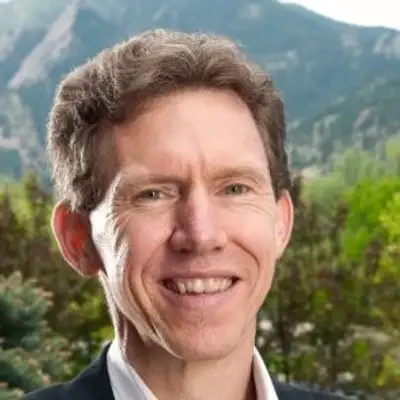
Ever wonder why quantum computing still feels like a "cool science experiment" instead of a deployable technology? After two decades building wireless standards and quantum systems at IBM, Brian Gaucher argues that engineering—not physics—has become the critical bottleneck holding back quantum technologies from real-world impact.
qubitsok — Cut Noise. Work Quantum.
The quantum computing job board and arXiv research digest built for the community.
- Job seekers & researchers: Subscribe free at qubitsok.com — weekly job alerts + daily paper digest filtered by 400+ quantum tags.
- Hiring managers: Post your quantum role and reach 500+ targeted subscribers. Use code NEWQUANTUMERA-50 for 50% off your first listing at qubitsok.com/post-job.
Your host, Sebastian Hassinger, interviews brilliant research scientists, software developers, engineers and others actively exploring the possibilities of our new quantum era. We will cover topics in quantum computing, networking and sensing, focusing on hardware, algorithms and general theory. The show aims for accessibility - Sebastian is not a physicist - and we'll try to provide context for the terminology and glimpses at the fascinating history of this new field as it evolves in real time.
Sebastian Hassinger (00:00)
All right. Thanks for joining me, Ryan. I'm really interested in hearing more about this report that you led the writing of. But first, I'm really interested in your own journey. You're 21 years at IBM working initially on millimeter wave antenna, I believe, and then sort of transitioned into quantum engineering. What led you on that journey?
Brian (00:28)
Well, it's kind of interesting. My background, of course, is an electrical engineer and hardware designer by training. I spent like 10 years in a government facility doing military R &D before coming to IBM. And then I joined IBM, and they didn't have a wireless department, and I started one many years ago, back in 1993 or 1994 timeframe.
Brian (00:58)
We did Wi-Fi, Bluetooth, ⁓ ultra wideband, cellular, all kinds of things you wouldn't expect an IBM to be doing. ⁓ And we actually owned a cell phone company at one point and out in San Diego. Yeah. So it was kind of fun. And we had a design center in San Diego and then eventually one in Chelmsford, Massachusetts. ⁓ And ⁓ it was all really around semiconductors, right? What can we do to drive volume in certain
Sebastian Hassinger (01:08)
Right.
Sebastian Hassinger (01:12)
Hmm, I didn't know that.
Brian (01:27)
technologies. And that was one way of doing it. ⁓ And the wireless was ⁓ really a lot of fun. ⁓ And I was the voting member in the IEEE for the standards. We'll talk a little bit about standards for quantum too, because I think it's in the future an important element. But ⁓ wireless for Bluetooth didn't exist, ⁓ ultra wideband and Wi-Fi. ⁓
Brian (01:53)
I helped to develop the standards and led the development of Wi-Fi enablement and Bluetooth enablement on ThinkPads. And we designed our own chips actually for doing that as well as the antennas. And that went really well for a while. And then ⁓ my vice president came to me and said, you know, you're doing interesting things, but you you should get some experience outside of research. And I'd been in research, I don't know, 10 or 12 years at least by then.
Brian (02:21)
And he sent me up to a division to do a profit and loss management of 100 folks on our chip design. And so I did that. And I led a team of like 50 or 60 in India, 50 or 60 in the US, and then some in China and Japan and others. So that was a lot of fun, really hardcore when you think about profit and loss and what it all takes. So I did that for a while and I got invited back to research to start up some AI initiatives and what we were doing.
Sebastian Hassinger (02:29)
Mm.
Sebastian Hassinger (02:43)
Mm-hmm.
Brian (02:51)
⁓ And so we called it Smarter Energy, was one of the things we delved into really, ⁓ how do you use AI to do better oil and gas exploration or manage renewables into a grid? ⁓ And totally different ⁓ theme than anything you'd expect ⁓ on wireless or something like that from the background. So we did that and ⁓ my team actually developed the betting algorithm on Jeopardy. ⁓ So that was fun too.
Sebastian Hassinger (03:02)
Mmm.
Sebastian Hassinger (03:11)
Yeah.
Brian (03:21)
If you ever heard Jeopardy, know, betting, you know, $32.62, ⁓ you know, that was one of the outcomes of that, which was kind of funny.
Sebastian Hassinger (03:28)
Interesting, interesting. So I guess that that sort of speaks to the ⁓ sophisticated mathematical modeling that underpins any machine learning model that is what we popularly call ⁓ artificial intelligence at this point, right? Yeah, yeah.
Brian (03:31)
and
Brian (03:43)
Exactly. exactly. ⁓ And, ⁓ you know, bringing this stuff to life was always fun for me. ⁓ And ⁓ my vice president ⁓ was getting involved in quantum and asked if I wanted to participate in that. ⁓ I'm like, wow, you know, that's a really far afield from what I normally do day to day. ⁓ But, you know, I started to look at things in a totally different perspective. Yes, I was a
Sebastian Hassinger (03:50)
Hmm.
Sebastian Hassinger (04:03)
Yeah.
Brian (04:11)
system hardware systems engineer. And I was used to doing things at the chip level and making systems from there. But here you're starting to look at a system at the higher level, right? And it includes everything from hardware and software and how the system and applications all work well together. So I started to get involved in quantum and it isn't so much from the physics background, but from the engineering. And I think
Sebastian Hassinger (04:21)
Hmm.
Brian (04:40)
maturity lagged in a lot of the things we were doing there as well. ⁓ how I brought stuff to life, getting a standard made was part of that step. And that was important to getting volume production because if everyone's building on something separate, then you can't ⁓ leverage what everyone else is doing. ⁓ Quantum is...
Sebastian Hassinger (04:40)
Hmm.
Sebastian Hassinger (04:59)
Hmm. And what was that standard, if you don't mind me asking? Okay. ⁓ on the wireless side. Sorry, I thought you meant on the quantum side. So you mean ⁓ the wireless standard you were a part of. Got it. Right, right. I was gonna say. Yeah. ⁓
Brian (05:02)
IEEE out of 2.11. And it's alphabet soup after that. It started off sort of in
Brian (05:12)
Yeah, yeah, so quantum doesn't have a standard, but I think it needs a standard, right? And ⁓ everyone's gonna fight over it. You ⁓ remember the VHS, Betamax, ⁓ and all of that. Yeah, exactly, Unix source. So, ⁓ something's gonna happen that I think somebody needs to take leadership and drive that to make this stuff scalable and reliable and ⁓ manufacturable. But for me, quantum was exactly the inflection point where you needed to start thinking about
Sebastian Hassinger (05:23)
Yep. And the Unix Wars.
Sebastian Hassinger (05:40)
Hmm.
Brian (05:42)
a lot of the system and architectural level things. Yeah, you can do stuff at the lab base, right? You can do, we'll call it cool science experiments, physics experiments, but now the challenge is in integration, ⁓ reproducibility, and eventually deployment. know, NSF ⁓ came out and was thinking about writing a report in quantum and how to translate ⁓ deep, technical advances into engineering frameworks.
Sebastian Hassinger (05:52)
Right. ⁓
Brian (06:10)
that policymakers, industry, academia, researchers can realistically build upon. And until we have some common basis, it's going to be everybody from themselves, and it's going to be low volume, and it's not really going to take off. Something's going to have to give. And at least this report is one way of trying to address that. And also, ⁓ part of the reason the report exists is
Sebastian Hassinger (06:16)
Mm-hmm.
Brian (06:39)
Looking at US leadership in quantum science, it's always been strong. ⁓ But I think engineering is now the limiting factor. But the global competition is just going up through the roof. They're making huge investments, right? From China to Europe to Japan. So ⁓ this is a call to arms in a way, right? How do we drive more investment in a coordinated way? ⁓ So I think the core message of the report
Sebastian Hassinger (06:50)
Yeah.
Sebastian Hassinger (06:53)
Right.
Sebastian Hassinger (06:59)
Hmm.
Brian (07:08)
⁓ in the simplest terms is scaling versus discovery, integration versus ⁓ isolated performance, ⁓ systems versus components. ⁓ Quantum advantages is going to come just from better qubits alone, but really from better engineering. ⁓ The physics is truly exciting in the discovery aspects, but that in itself is not going to go anywhere without a bigger picture wrapped around it.
Sebastian Hassinger (07:13)
Hmm.
Sebastian Hassinger (07:38)
Right. Right.
Brian (07:39)
You know, the whole thing is like going from lab to fab ⁓ with a system.
Sebastian Hassinger (07:42)
Right, right. Well, and it's interesting you're saying engineering is the bottom. In the recent interview in Design News, you were saying that ⁓ you don't think that this ⁓ quantum technologies are going to require a new ⁓ sort of profession, but rather ⁓ adapted ⁓ skills and capabilities from the existing disciplines of engineering. Is that sort of?
Sebastian Hassinger (08:08)
It's that re-skilling or adjusting the skill set, or is it just raw numbers of people with the skill sets that's the bottleneck?
Brian (08:15)
Yeah, I think ⁓ that's true. ⁓ It's going to be important to get a transdisciplinary collaboration going. I'll call it engineering, physics, computer science, and specific domain expertise. ⁓ No one person is going to be able to swallow everything, but I think now there's a bigger, broader set of skills you need to have to be successful in quantum. ⁓
Sebastian Hassinger (08:30)
Hmm.
Brian (08:45)
So workforce development, you I think that's a big part of it.
Sebastian Hassinger (08:47)
Right, right. And, know, your own career arc, which we just talked through from RF to quantum engineering is kind of a version of that in a way, right? Are there things that you learned from your own experience that you think ⁓ inform your perspective on what needs to be done today in the United States?
Brian (09:08)
You cut out, ⁓ but from my own career, ⁓ what was it?
Sebastian Hassinger (09:12)
Yeah, I know your path from RF to quantum engineering is sort of is an instance of that, ⁓ that, ⁓ you know, moving into it or moving into quantum from ⁓ traditional engineering disciplines. ⁓ there things from that experience that you sort of draw on to inform your perspective on what you think is required?
Brian (09:31)
Well, yeah, in a way, I think to be successful, you need to be adaptive. Things change much faster than they used to. You could spend your entire career in a single discipline and be happy and do really well. Today, I think a couple of things are happening. There's so much change going on and so much motion. If you can't move with it, you'll get lost. And so that speaks to a broader.
Sebastian Hassinger (09:37)
Hmm.
Sebastian Hassinger (09:39)
He ⁓
Brian (09:57)
exposure to some of these other disciplines and the ability to move fluidly across some of it. In my own case, I started as a double E and then got into what I'll call systems engineering. How do you look at this from the top down, you know, in the bottom up together? ⁓ I think that's where you start to see the perspective of what's needed. You know, any good engineer is going to come up with a concept, but it doesn't go anywhere until you can break it into piece parts that
Sebastian Hassinger (10:09)
Mm-hmm.
Sebastian Hassinger (10:15)
Mm-hmm.
Sebastian Hassinger (10:19)
Right.
Brian (10:26)
a group of people with a specific set of skills can go off and build, and then you bring it back together as a whole. ⁓ And those people who can see that picture, I think, will succeed more so than just the ⁓ people ⁓ who are doing a single bit of it. ⁓ And I had to learn a lot in each of the areas. managed ⁓ an AI. was a whole software team of folks. And that was new to me. Yes, I wrote software like crazy myself, but it's
Sebastian Hassinger (10:33)
Hmm.
Sebastian Hassinger (10:44)
Mm-hmm.
Sebastian Hassinger (10:51)
Mm-hmm.
Brian (10:55)
It was a necessary ⁓ thing. And I didn't do a good job in terms of what some of the professionals would be doing. But it gave me exposure to a whole new host ⁓ of things and way of doing it. ⁓ And I think from a ⁓ building quantum, we really had to do a lot of things like that. So I'm seeing more people coming in with more exposure to these kinds of things. And I think from a schooling education perspective, you'll see the curricula change to help
Sebastian Hassinger (11:24)
Right.
Brian (11:25)
get those folks prepared.
Sebastian Hassinger (11:27)
Right. Yeah. So you mentioned, you know, sort of, um, uh, cool science experiment and requiring sort of the, uh, the application of engineering discipline to turn that into something that's, you know, reproducible at scale and deployable. Um, in the report, you, you, the, it, you know, it's cited that sort of superconducting qubit fabrication was sort of seen as, as just an engineering problem, um, as early as like 2016, but
Sebastian Hassinger (11:56)
But we still see today ⁓ non-standard approaches to fabrication. ⁓ I wouldn't call it sort of a standardized sort of semiconductor, you know, like ⁓ industrial process, yet making qubits. It still seems very scientific, like a science experiment. ⁓ What do you think is holding that progress back?
Brian (12:18)
So ⁓ kind of a long-winded answer, but let me walk through this and just wave your hand if I'm talking too much. ⁓ In the report, you'll see that we broke things out into materials, biology, computing, and AI. There were a host of other topics, but these seem to capture a good sense of what's going on and what's needed. And I'm going to put materials up first, and this speaks a little bit to what you were just asking about.
Sebastian Hassinger (12:26)
Yeah, sure. ⁓
Sebastian Hassinger (12:35)
Yeah.
Sebastian Hassinger (12:45)
Mm-hmm.
Brian (12:48)
So when you think about materials ⁓ from discovery to scalable integration, the limiting factor is increasingly engineering precision, not the lack of theoretical understanding. ⁓ So across computing, sensing, and bio applications, you have surfaces and interfaces that dominate noise, loss, and decoherence. Defects and vacancies limit yield and stability, and ⁓ biological environments introduce additional variability. ⁓
Brian (13:17)
The engineering bottleneck, we understand the fundamental physics. What we need to do is get to reproducible, scalable fabrication and interface control ⁓ remains one of the limiting things. So for quantum computing, sure, low loss, superconducting and semiconducting interfaces are important. Stable qubit material stacks, cryogenic compatible packaging and interconnects. ⁓ mean, even just from a cryogenics perspective,
Brian (13:46)
we have these standard fridges and maybe a bit of thousand or more of qubits, that's not going to be a system in the end. We need hundreds of thousands to millions. So we have to interconnect many fridges as well, right? So, ⁓ you know, there's a lot of bigger systems.
Sebastian Hassinger (13:53)
Mm-mm.
Brian (14:05)
problems ⁓ to work through. And then we have ⁓ surface chemistries engineered for stable and biological environments, another thread on top of what we need to build at the device level. And materials optimized for low noise operation outside controlled labs, right? It needs to happen everywhere and be easy. So nanomanufacturing at atomic layer precision. We need industrial scale tools and compatibility. Then there's an integrated metrology.
Sebastian Hassinger (14:08)
Mm-hmm.
Sebastian Hassinger (14:23)
Right.
Brian (14:34)
high sensitivity defect detection, inline monitoring and feedback. Essentially, transformational progress requires not only discovering new devices, but kind of engineering reproducible integration-ready platforms across computing, as well as sensing and biological applications, right? That's part of what the report talks about too. So I think the materials touched on what you had originally asked about and how we go about ⁓ addressing
Sebastian Hassinger (14:50)
Hmm.
Sebastian Hassinger (14:54)
Mm-hmm.
Sebastian Hassinger (14:59)
Mm-hmm.
Brian (15:02)
some of the problems there. And if I missed your point, let me know.
Sebastian Hassinger (15:05)
No, I mean, you're definitely touching right on. mean, to ⁓ me, what seems central in the report is, this challenge of, mean, you've already put it in words that how do you take cool science experiments and turn it into an industry? in a way, what you're talking about is, setting the clock back ⁓ on the semiconductor industry to now nanoscale engineering ⁓ as the, as the industrial engine, instead of sort of this
Sebastian Hassinger (15:33)
you know, leveraging quantum mechanics for doping and making semiconductors in an integrated microprocessor. It's, it's almost starting again from scratch and building the entire industrial base at that nano scale engineering level. And it feels like what you're saying is the pieces are all in place and what needs to happen is, is pulling that together into that industrial engine. Is that, is that fair to say?
Brian (15:58)
Yeah, so let me put it ⁓ slightly different way. So we call it the semiconductor ecosystem, right? ⁓ We can draw a lot of lessons from what we did right and what we did wrong when we started that whole endeavor. We ⁓ know scientific leadership alone doesn't guarantee you long-term manufacturing leadership. I think the US ⁓ remains strong in semiconductor research and design, but manufacturing ecosystems went offshore and ⁓ other people took
Sebastian Hassinger (16:10)
Mm-hmm.
Brian (16:28)
over those things, right? We've got globally distributed over time. So a key lesson in that translation ⁓ infrastructure, fabrication facilities, supply chains, even the workforce and standards, they have to evolve alongside that discovery. ⁓ The exciting physics has got to go along, but you don't wait until that's done to go and build these things, right? It's a bit of trial and error. So once manufacturing ecosystems become geographically concentrated, you can't rebuild this stuff.
Sebastian Hassinger (16:29)
Mm-hmm.
Sebastian Hassinger (16:43)
Mm-hmm.
Sebastian Hassinger (16:58)
Hmm.
Brian (16:58)
it is what it is at that point, and then you have to work around it. So you need to, you know, kind of address this stuff earlier on and not, and not.
Brian (17:08)
whole system.
Sebastian Hassinger (17:10)
Right, right. mean, in a sense, like the, example, like the Chips Act was an attempt to, you know, onshore manufacturing. was a semiconductor industry. But as you said, it's very hard to put the horse back in the barn after it's left. And this is an opportunity to start from scratch. As you said, like nanoscale engineering as the ⁓ theme, the ⁓ cohering theme across all these different...
Brian (17:25)
Yeah, yeah, yeah, exactly.
Sebastian Hassinger (17:39)
disciplines to build computing devices, communication devices, ⁓ sensing ⁓ and ⁓ biological. mean, that was the part actually that surprised me the most was were you, ⁓ were you intending for biology, quantum biology to play such a big role in this report? Or was that surprising to you?
Brian (17:59)
You know, I co-chaired this and was a side cat go as the other coach here and his expertise is also in more in that area. So and there were some wonderful folks, Jennifer and Fruz and some others who led the work in biology. And so you're the answer to your question is no, I had no idea that was going to be such a prominent was very surprising and kind of exciting to me to to see that happen. Right. All these biosensing medical devices.
Sebastian Hassinger (18:07)
Hmm
Sebastian Hassinger (18:18)
⁓ Yeah. Very.
Brian (18:28)
in vitro, ⁓ when you put something inside somebody, what are the effects? And I didn't know we were doing all of that kind of work, to be honest with you. I was siloed in AI and quantum and that sort of area. So I learned a ton, and I was really surprised. But ⁓ I do think ⁓ the net sum of all of this is we're going to need to be able to do investment, but not in isolation, but coordinated development across.
Sebastian Hassinger (18:36)
Yeah.
Sebastian Hassinger (18:39)
Right.
Brian (18:58)
academia, industry, national labs, ⁓ and capital markets to make sure these scientific advances translate into something that's durable, ⁓ a real technological capability. ⁓ And it's going to take work, and it's going to be iterative. And I hope we can have this stick-to-it-iveness ⁓ to do it right.
Sebastian Hassinger (19:00)
Hmm.
Sebastian Hassinger (19:06)
Right.
Sebastian Hassinger (19:17)
Yeah, yeah. I mean, we've had, you we had the National Quantum Initiative, I think, signed into law in 2020. It's due to be reauthorized, overdue to be reauthorized. Are there other things that the federal government should be doing in your mind to try to help this nascent industry sort of coalesce?
Brian (19:40)
⁓
Brian (19:43)
just trying to think.
Brian (19:46)
mean, ⁓ this moment is a weird one. ⁓ We're no longer really asking whether we can do this. We've demonstrated it. But we have to show this across ⁓ multiple platforms. So how do we get the right folks involved? Government funding. ⁓ I think ⁓ the focus has largely been on proof of concept stuff. ⁓ The bottlenecks are we've shown here to be engineering driven from materials and defect control on precision.
Sebastian Hassinger (19:50)
Yeah.
Sebastian Hassinger (20:07)
Mm-hmm.
Brian (20:15)
lot of work and investment that could be used there. And shifting from discovery to that integration is the ⁓ Decisions made now are going to affect the infrastructure and workforce and coordination to shape all these quantum technologies. ⁓ So global investment is one of those ⁓ areas. And I think our government needs to do a lot more comparably to what China and ⁓ Europe and others are already doing. So ⁓ I think there's that
Sebastian Hassinger (20:23)
Mm-hmm.
Sebastian Hassinger (20:37)
Mm.
Brian (20:45)
big investment side of things that's needed.
Sebastian Hassinger (20:47)
Yeah.
Sebastian Hassinger (20:49)
Yeah, and I mean, I feel like in a sense, I mean, certainly, Illinois is an example of state level investment. ⁓ And in some ways, you know, the Chicago Quantum Exchange was formed before the National Quantum Initiative, but it's really accelerated and ramped up its investment in an economic development kind of context ⁓ in this gap between
Sebastian Hassinger (21:15)
NQI one and the reauthorization of NQI and now you're seeing, you know, elevate quantum quantum California quantum Connecticut, ⁓ quantum capital. Do you think those regional efforts ⁓ are ⁓ are, you know, a necessary ingredient or is that sort of in place of that more aggressive federal investment or some other or is that part of the coordinated effort?
Brian (21:38)
Yeah, that's a good question. It's a bit of chicken and egg. You're not going to get to the big federal investment until some of the smaller things show ⁓ something important. So I think it's necessary. I think maybe you're speaking a little bit to the fragmentation that we see. ⁓ But ⁓ I think the development ⁓ tends to happen in these specialized domains. And I think there will be ⁓
Sebastian Hassinger (21:54)
Hmm
Brian (22:05)
Folks in ⁓ Illinois now doing that work, ⁓ they'll evolve in isolation. But the risk in doing too much of this is it duplicates efforts. ⁓ It dilutes some of the funding opportunities. Interoperability suffers if everyone is doing everything the way ⁓ they want to do it and not necessarily to a standard, which is why I sort of promote standards as much as I hate ⁓ doing that kind of work.
Sebastian Hassinger (22:16)
Yeah.
Sebastian Hassinger (22:24)
Mm-hmm.
Sebastian Hassinger (22:32)
⁓ Right. Right.
Brian (22:33)
It does pay off in the long run if you can get people to agree. But fragmentation is really expensive when you think about mid-stage translation, going from the lab demonstrations to the scalable platforms. So without alignment across, you know, academia, industry and national labs and capital markets, you're going to be in trouble. So a stronger coordination needs to happen. I don't want to centralize this stuff either, right? That's the risk that you do in going here.
Sebastian Hassinger (22:42)
Yeah.
Sebastian Hassinger (22:53)
Mm-hmm.
Sebastian Hassinger (22:59)
Right.
Sebastian Hassinger (23:02)
Yeah.
Brian (23:03)
But it's a little bit of both, right? And that's a balancing act that we have to be careful about ⁓ as an industry. ⁓
Sebastian Hassinger (23:10)
That's interesting. ⁓ I suppose, mean, you ⁓ one model, the metaphor of the moonshot is brought up in sort of, you know, large scale ⁓ technological advances that need a lot of disparate but coordinated efforts. And, you know, the reason is that... ⁓
Sebastian Hassinger (23:27)
the space program was this unifying goal that mobilized enormous amounts of capital, human capital and physical and financial capital and physical resources. And we got all kinds of benefits out of it. We got the laser and the GPS, et cetera, et cetera, et cetera.
Sebastian Hassinger (23:47)
Can you imagine, ⁓ is that potentially a viable model to try to find some big, hairy, audacious goal ⁓ and try to, at the federal level, try to make that the prerogative, the imperative that helps drive coordination?
Brian (24:02)
I do love ⁓ moonshots. I do love grand challenges. ⁓ I think they call to action and they put the spotlight out there ⁓ and ⁓ you drive good talent to work on hard problems. So ⁓ I definitely think there's an opportunity for things like that to help. That can't be the only way. There have to be some more stable work going on, ⁓ especially in the discovery area. But when you think about
Sebastian Hassinger (24:06)
Yeah.
Sebastian Hassinger (24:21)
Mm.
Brian (24:29)
scaling and manufacturability, reproducibility and the metrology needed at the semiconductor level and all of this. ⁓ That takes big dollar investments that unless somebody sees profit happening soon, no one's going to make. It's good and bad, right? ⁓ You need profit to drive ⁓ investment. ⁓
Sebastian Hassinger (24:40)
Mm-hmm.
Sebastian Hassinger (24:46)
Right.
Sebastian Hassinger (24:53)
Right profit or ⁓ a national security risk, which I mean I think you don't call it out specifically It's not a major focus of the report, but it's sort of implicit that ⁓ you've even said it in this in this conversation already that the spending by other governments ⁓ at the very least, ⁓ is a risk to The united states's position as a leader in this field industrially, but potentially as we know, I mean, you know, ⁓ sure is
Brian (24:57)
Yes.
Sebastian Hassinger (25:21)
Outrhythm was the first thing that captured the popular imagination about quantum computing. There's all kinds of implications to national security that could be ⁓ brought about by advancing quantum technology. So do you think that there's an aspect ⁓ of national security in the future that needs to be ⁓ part of the motivation for the government's investment in the space?
Brian (25:47)
I most think it's an obvious point ⁓ to be made here. If we break encryption, every old email ⁓ and text and bank statement that you've ever had in your life becomes open. And ⁓ the enormity of such a risk ⁓ should be driving someone crazy. ⁓ If not, ⁓ I'd be very surprised. ⁓
Sebastian Hassinger (25:53)
Hmm.
Sebastian Hassinger (26:11)
You
Sebastian Hassinger (26:14)
Yeah. ⁓
Brian (26:16)
You can say, I got encryption down, we're good. But all that old data people have collected and then that's available to them. ⁓ Once they can decrypt that, boy, ⁓ that's a scary moment in time. So I think we need to be really heavily investing from the government to ward off, ⁓ be there first at the very least and see what we can do to fend off from anything bad happening if somebody gets a hold of that data. ⁓
Sebastian Hassinger (26:22)
Right.
Sebastian Hassinger (26:39)
Mm-hmm.
Brian (26:46)
I don't want to go down that rabbit hole too much, but... ⁓
Sebastian Hassinger (26:46)
Yeah. Right. Well, and I suppose on the flip side, mean, quantum communications promises a new standard for unbreakable encryption. Who knows how long that'll last, but ⁓ that would be a national security risk as well if suddenly ⁓ adversaries had unencryptable communications and we did not. That would be a bad position to be in. ⁓
Brian (26:58)
⁓ Right.
Brian (27:10)
Yeah.
Sebastian Hassinger (27:12)
⁓ another major theme that I want to touch on before we run out of time, you know, you've got a, ⁓ an extensive background in the early days of AI. ⁓ AI has been, ⁓ you know, taking the spotlight in many ways, having it's, you know, since the chat GPT moment, as people call it. ⁓ and there's some interesting things in the report about AI being a, ⁓ in your, in, in your perspective, sort of, ⁓ an aid to the.
Sebastian Hassinger (27:39)
progress, ⁓ moving the quantum technologies forward, in what way do you see that ⁓ happening?
Brian (27:46)
All right, I'm really glad you asked that question because ⁓ I'm going to ⁓ talk about this in a kind of a weird way, but the AI aspect is going to be bidirectional. So ⁓ I see ⁓ not only ⁓ AI helping quantum, but quantum helping AI. ⁓ So I think.
Sebastian Hassinger (28:13)
Hmm.
Brian (28:15)
We need to look at this in a totally different way. ⁓
Brian (28:22)
I'm gonna.
Brian (28:29)
Hold on for a second, I'm breaking up. I've got to figure out what's going on here.
Sebastian Hassinger (28:33)
Okay.
Sebastian Hassinger (28:37)
Easy to edit, so don't worry about it. ⁓ And the other thing is the recording probably won't break up because it's being recorded locally, like I said. So ⁓ if there's network ⁓ glitches, those don't affect the local recording.
Brian (28:46)
Yeah, absolutely.
Brian (28:52)
OK, anyway, you ⁓ come and go. Anyway, so I want to look at AI in terms of two directions. So there's a converging engineering ecosystems around AI. AI supporting quantum has near-term impact. ⁓ Automated calibration, ⁓ control optimization, noise characterization, adaptive error mitigation, reliability monitoring, fault detection. You've 100,000 million qubits going on.
Sebastian Hassinger (29:20)
Mmm.
Brian (29:20)
No one person or ⁓ conventional classical piece of software is going to be able to manage that. You need something that can learn and adapt ⁓ immediately and not stop a calculation that's been going on for a month or two. ⁓ And you're going to need AI to help you do that kind of thing. ⁓ The materials aspects as well, right? ⁓ Defect classification, interface analysis, accelerated materials discovery. ⁓ That's a ripe ground for AI. ⁓
Sebastian Hassinger (29:26)
Mm-hmm.
Sebastian Hassinger (29:33)
Right.
Sebastian Hassinger (29:38)
Mm-hmm.
Sebastian Hassinger (29:49)
Mm-hmm.
Brian (29:49)
process optimization and reproducibility and yield. And then at the systems level, there's this cross-layer, I don't know, modeling algorithm circuit device. You need to look at this design space for exploring new architectures and predictive modeling of performance variability. So AI has got a strong role in helping quantum. And then conversely, in the longer term, think,
Brian (30:16)
Quantum enhances AI workloads, right? So the potential advantages in the future, you can do optimization problems, sampling, probabilistic modeling, certain linear algebra problems, molecular and material simulations. They'll do those things better. Not everything, but a lot of these things will do better because quantum has been made available to the AI part. So it's a hybrid architecture, right? There's classical AI and quantum accelerators.
Sebastian Hassinger (30:29)
Hmm.
Brian (30:44)
⁓ Quantum is hybrid in itself. It has classical problems as well as ⁓ strictly AI ⁓ solutions that can be done. There's domain-specific subroutines and cloud-based integration stuff. Reality check here. Impact will likely be domain-specific and not universal. It requires ⁓ robust quantum hardware and error mitigation and integration into the existing AI workflows. That's critical. So this intersection of AI and quantum
Sebastian Hassinger (30:47)
Mm-hmm.
Sebastian Hassinger (31:02)
Right.
Sebastian Hassinger (31:12)
Right.
Brian (31:14)
It's not about replacement. It's about this, ⁓ I'll call it a coordinated evolution across algorithms, hardware, and platforms. So ⁓ I'm pretty excited and really glad you asked the AI question on top of quantum, because I started off with materials. And I think that underpins all of it. And then you have this ⁓ AI aspect, which is bidirectional all by itself. So those are really kind of fun areas, I think, and will be fruitful.
Sebastian Hassinger (31:16)
Right.
Sebastian Hassinger (31:22)
Right.
Sebastian Hassinger (31:43)
Hmm.
Brian (31:44)
⁓ probably in the near future.
Sebastian Hassinger (31:46)
Absolutely. Yeah, I agree. ⁓ And so ⁓ we've touched on this a couple of times, ⁓ but I want to come back to it as a way to cap off the conversation. ⁓ You've mentioned standards. ⁓ You come from an RF background. You were part of the standardization that created the 802.11 standard, which is the underpinnings of everything we do in Wi-Fi, which is pretty important. ⁓ And clearly, you can see how 802.11 ⁓
Sebastian Hassinger (32:16)
unlocked the value creation in Wi-Fi. Once there was a standard, vendors could start building hardware and chipsets could be created for inclusion in handsets and laptops, et cetera, et cetera, et cetera. We have this enormous explosion of innovation and creation of new products and new applications. If you could wave your wand and create a starting place for standardization in quantum,
Sebastian Hassinger (32:44)
today, what do you think the form of that standard would take?
Brian (32:50)
Yeah, that's a good question. ⁓ I don't have a well thought answer because I have been thinking about this and I start from the bottom and work my way up. I start from the top and work my way down. And ⁓ things are not mature enough yet for a standard. We don't even know what qubit we're going to be using in the future, right? ⁓ So I think we should be thinking about the standards and the framework of what a good standard would look like.
Sebastian Hassinger (33:02)
Mm-hmm.
Sebastian Hassinger (33:07)
Yeah.
Sebastian Hassinger (33:09)
Right. Right.
Sebastian Hassinger (33:18)
Hmm.
Brian (33:19)
until we see quantum advantage ⁓ in some ⁓ reproducible way, I'm not sure we could get to the point of a standard. But I think as soon as you hit that, ⁓ it's going to be overdue. ⁓
Sebastian Hassinger (33:30)
Hmm.
Sebastian Hassinger (33:34)
Mm-hmm. ⁓ Can't do it ahead of time, can only do it once in a year too late. Yeah. ⁓
Brian (33:38)
Yeah, so this is, you know, a chicken, a real chicken and egg problem. It doesn't mean you can't start and begin thinking about this, but I don't know of any organization yet that's really taken that on. We're trying to encourage the IEEE to get involved and do this just because I'm familiar with that. You know, the physics community as well probably should be doing something here. But
Sebastian Hassinger (33:51)
Right.
Sebastian Hassinger (33:56)
Yeah.
Sebastian Hassinger (34:01)
Yeah. Yeah. And there are, mean, there have been IEEE working groups. ⁓ There's, know, birds of feather groups ⁓ that have come out of IEEE quantum week, for example, looking at more of the deployment, like solution architectures of how do you integrate ⁓ existing HPC infrastructure or resources with ⁓ on-premise quantum devices. I think that's an interesting topic, but I agree with you. think it's... ⁓
Sebastian Hassinger (34:28)
those are probably the right conversations to be having, right? It's exploration ⁓ and thinking through. As you said, I think your ⁓ formulation is exactly correct. Think through from the bottom up and from the top down and try to find those contexts where, know, standardization might help that flow from ⁓ in either direction, the bidirectional kind of ⁓ interaction we're talking about.
Brian (34:51)
Yeah, yeah, exactly. ⁓ I just want to make sure to underscore the URVA report ⁓ wasn't trying to say, let's go standardize this. But I ⁓ think as an outcome, that's becoming more more apparent to me. ⁓ And ⁓ just to recap a little bit here, ⁓ quantum progress, it's ⁓ no longer about ⁓ scientific discovery alone. Because if we miss the opportunity now,
Sebastian Hassinger (35:00)
Right. Of course.
Brian (35:18)
We're going to fragment, we're going to dilute and hurt ourselves in the future as we move toward integration and trying to get something that's reproducible and scalable. So I want to really strongly drive us to align ⁓ the materials research along with systems design and apply the AI enabled tools we have and address some of the application needs that are out there now. ⁓ I think we increased the likelihood that today's breakthroughs become those reliable technologies.
Brian (35:48)
I think they can really have lasting impact, we got a lot of work ahead of us. I'm just thinking this report opens the door and is that call for everyone to get to work on it. We need that coordinated engineering ecosystem that will ultimately drive and determine leadership. But as we said earlier, it takes investment and a whole lot more.
Sebastian Hassinger (36:13)
Yeah. Well, Brian, it's been great ⁓ getting your perspective from the ERVA report and great to catch up. Thank you so much for your time. It's been really fascinating.
Brian (36:24)
Excellent. was a pleasure, Sebastian. It was a pleasure. ⁓ Take care.