Subscribe
Share
Share
Embed
The World Cement podcast: a podcast series for professionals in the cement industry.
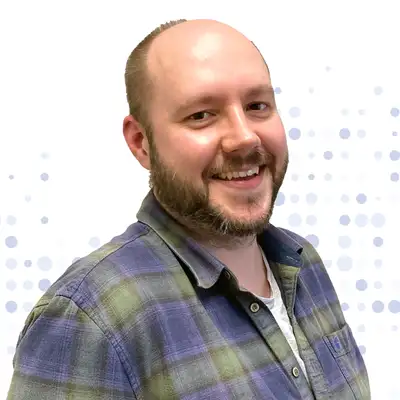
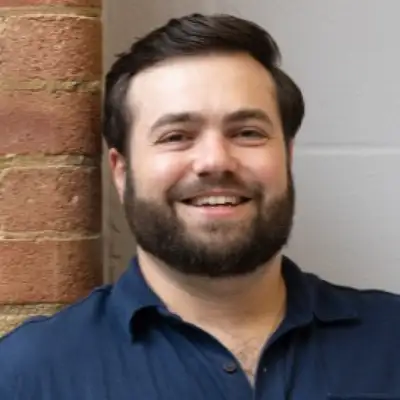
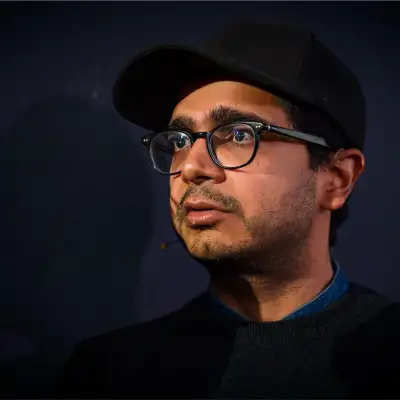
Hello, everyone, and welcome back to the World Cement Podcast with me, your host, David Bizley. In this episode, we're going back once again to March for the concluding part of the AI panel discussion from EnviroTech twenty twenty six. So join us once again to hear from Vivek Juneja, Head of Engineering in Cement at Alfie. Noah Miller, COO of Carbon Re, now known as Gigaton. And Scott Ziegler, CEO of SemAI for a wide ranging discussion on the role of AI in Cement.
David Bizley:I hope you enjoy! I just wanted to take a moment to remind you to register for World Cement. It's free of charge and gives you access to the latest issues of World Cement, both in print and online. Every issue comes packed full of regional analysis, technical articles, project case studies, and the latest industry news. Simply head over to worldcement.com, click the Magazine tab, and register today.
David Bizley:It's as simple as that. Happy reading! Well, let's move back to this question here from the audience, and it's sort of touching on that human in the loop situation we talked about earlier. How do the how cement plants manage safety concerns if AI is involved more and more in process decisions?
Scott Ziegler:A number of ways to look at this, right? We've got, we have safety of personnel in the plant that we're concerned about. We're not really taking decisions that will put anything at risk, right? This goes back to the concept about self driving and the human in the loop. I think it's absolutely critical to know that this is not a set it and forget it, take everyone out, you'll automate your plan and everything will be fine.
Scott Ziegler:A number of number of plants and a number of customers that we're working for actually don't see a reduction in the amount of people. And so they continue to be out there. They continue to do the work, but we keep that human in the loop in some instances. Another way is, you know, we're thinking about centralizing some of the control room operations as well. Those are some of the other things that cement plants are thinking about, cement companies are thinking about.
Scott Ziegler:Adding that an extra layer that, you know, our colleague at Simple was talking about with this is a safety side of things. That adds, that really takes a lot of the, some of the risk away as well. So it, again, it's a combination of things. Clearly our safety has got to be first when it comes to this. We're not, we don't need to put anything or anyone or any piece of equipment in jeopardy.
Scott Ziegler:That's, that has to stand as our, as our foundation here. But, you know, I think a robust system of planning and being ready for there probably takes care of most of the safety concerns. I think I could add an aspect. Just just so you know, this is not Terminator two Rise of the Machines that we're talking about AI. So I go ahead with that.
Scott Ziegler:I agree. I think I see a change,
Vivek Juneja:in the skill set of the plan team, with these concerns coming in. I think a lot of need to be retrained, also upskilled around what does managing a safety concern looks like in an AI native environment. What does a guardrail look like? What are the thresholds we need to set? I mean, in our area, when we work to optimize cement strength, we definitely provide thresholds on what is acceptable strength or not, and we can provide that upper ceiling and lower ceiling to the lower full floor to that.
Vivek Juneja:But a lot of it over time will come from people experiencing and having getting more trust that, you know, recommendations work, the predictions are working, close loop is working in our case, and then figuring out, you know, what could be the new role for them and it could be understanding the safety nature of an organization. So I see may maybe the first question that you asked about job displacement, would say in augmentation, every plan team and plan member is a safety engineer, understand safety guardrails. And, as Scott said, it takes step by step. Safety almost could be the layer zero that cannot get wrong, and then everything can work around that. So designing these systems to be in such a way that safety is almost kept it as a heart of our system, which I think a lot of us calls it to when we develop all these products.
David Bizley:And then, Noah, did you want to add anything to that?
Noah Miller:I think the way I would think about it is in 10 time, operating a cement plant without AI will be like flying a plane without autopilot. I don't think anyone today would suggest that was more safe than flying it fully manual, let's say. Like, the safety aspect comes from both together. And then, you know, maybe to briefly touch on Scott's answer to the last question as well, you know, we look at process optimization first and then maintenance, but it has that effect. Like, it it is all a holistic effect.
Noah Miller:The less blockages you have, the less you have to send someone into a dangerous environment. And so, you know, we a customer of ours in Heidelberg, Mokka in Czechia, we saw throughout our sort of evaluation with them, a reduction in sort of 4% in fuel cost and 2% in CO2 from the process optimization, but that also almost doubled their mean time to failure, which means that you are protecting those people more from that environment and therefore increasing safety. Me, I'm gonna disagree slightly with Scott. I think in a mostly friendly way, I don't think, you know, it doesn't require a really good process to start optimizing. We've worked with, you know, plants who are trying to push their TSR, their thermal substitution rate from 86 to 90%, and that's a fantastic process so we can, you know, got their TSR up to 89%.
Noah Miller:But we've also worked with plants who are at 15% and struggling with supply and are really trying to like manage that like base level, and there's still optimizations gains to be had there even if you're going from 15 to 18 rather than 86 to 89%.
David Bizley:Okay. And then staying with you for a moment, I'm gonna put you forward for this question. Yeah. But and, obviously, this is a question about how cybersecurity ultimately. So how will AI systems be protected against things like hacking and so on when it's connected, when everything is connected via Wi Fi into the Internet?
David Bizley:What's the what things should cement producers be taking into account?
Noah Miller:Yeah. A 100%. I mean, the safety is critical in your AI systems just like it is in your process control systems. Any good AI provider, any software provider will have layers and layers of security and backup, and it also the control signals and the modeling that goes from the cloud to the plant is different than the things that happen on plant site and control system. So, you know, just because it's connected to the Internet doesn't mean it's necessarily more or less, safe, but that is a critical safety concern just like, any other process safety concern.
Vivek Juneja:I think from my side, the question about how the system is protected against hacker attacks when it's connected to Internet, so the good news is a lot of the work on cyber security over many, many years is gonna be super useful here. Those are almost hygiene now. Right. So which is good news because you wanted to invent something new here. Having said that, having worked with these technologies like language models, agentic new surface areas of, you know, attacks will happen as with any new technology.
Vivek Juneja:And I think, with adoption, with a lot of people using it, we will try to figure out, you know, ways to tackle it. But with the question itself, as soon you connect to an internet, I think essentially means, opportunity for cement producers and suppliers working with is your hygiene is a starting point. So get those hygiene in, making sure that you're following the best practices, which has been there since forever. And now it's a great time to kind of take that, hygiene and put it in play. The most important piece which is missing, maybe that's not what the question asked for, is prioritizing it.
Vivek Juneja:A lot of times cybersecurity initiatives are almost like the priority number 20 of a list of 100 things. And that's where I think, when we are enabling these new systems coming in where it's closed loop autonomous, cybersecurity aspects will kind of rise up on the priority list for a
David Bizley:lot of the providers. But you're nodding along. All good. Okay. So we'll move to this other question from, the audience as well.
David Bizley:So AI will fundamentally transform the way some implants operate. We've all agreed on that, I think. What new skills will be required to run future plants effectively? Are we looking at new skill sets for staff training and things like that?
Noah Miller:I love the question. Cheekily, I'd say, I'm not sure yet, and I think that's something that a lot of people are invest you know, thinking about. The way we look at it is, like, in it's an excitement in what's coming and an opportunity to learn those things, and that will serve you better than any, like, oh, I can do this set of data analysis with this language in this way. So I think that, like, enthusiasm and curiosity and desire to learn is key because these tools are so good at teaching. I think beyond that, an understanding of sort of data and being able to sort of look and understand numbers and then bring the real world into that picture is gonna be critical, but that's all based on a bedrock of if you're excited, if you have people who are keen to use these tools and to learn and to get their hands on the latest thing and to work with the new provider.
Noah Miller:That's gonna be the bedrock on which you build a successful future plan.
David Bizley:Excellent. Now markets can differ pretty dramatically in terms of priorities and digital maturity. How do you build a platform that adapts to a local context while staying scalable?
Scott Ziegler:Vivek? Can you repeat the question for
David Bizley:that? So, yeah, how do you build a platform that adapts to a local context whilst also being scalable?
Vivek Juneja:A platform which is scalable. Yeah. I mean, you need to start by testing what works and building a kind of a learning loop around that. And then scaling will obviously increase cost. So you need to figure out where you, in which parts of your stack you want to apply economies of scale.
Vivek Juneja:So essentially means which part of your stack is essentially a commodity. So your cost of operating cost of improving is almost negligible because that essentially solves your scaling problem. So, to your question about, like, handling, I think a lot of our especially when you're building cements with lower clinker, you would start looking at SEMs and that obviously makes the whole chemistry volatile. So which will difficult to then manage it using a manual process. And that's where, investing in systems that do intelligent prediction control and making sure that other plants can learn from it would start be almost like a clear, know, table stakes for plants who are looking at scaling.
Vivek Juneja:So ensuring that, you are getting understanding on what is the commodity for you when you start to scale across different plants, building confidence and creating learning loops, in your, in your product. If you are, basically going into new area, like for example, cement plants producing cements with lower clinker for in our customers, the, there is no, there's essentially not, not gonna be any, I would say like hard problems to solve when you're trying to do manual control. So that's where you need to start looking at, you know, automated prediction and closed loop monitoring. So those are the areas where I see scaling would really be useful.
David Bizley:No. Oh, Scott. Yeah. No.
Scott Ziegler:I I think a couple of thoughts here. So we're fortunate from some had to work with some of the best software developers and and engineers around. So that's the basis of being able to build a good product. You talk about, you know, the differences in what priorities may be or even different regions, what's going on there, what the challenges may be. We have, you know, we're, we're in, in, in Africa with Dangote at a number of the plants.
Scott Ziegler:Those are actually quite advanced on their sensors, very unadvanced on their IT protocol and what they have as far as their ITOT setup there. The good news is, is again, going back to the software companies and developers that we work with, the work's been done. And again, from our perspective with having the cement background, with all due respect, a cement plant is a cement plant is a cement plant. If you do waste heat recovery, that's a good thing. We can, you know, we work on waste heat recovery.
Scott Ziegler:We work on another, a lot of other processes. A five stage preheater, pre calisthenia versus a six stage, or there's not a whole lot of difference there. Vertical roller mills and cement mills, we're not talking about brand new types of processes here. So that being said, we've done the work. We've built it out.
Scott Ziegler:We've been in the industry enough that we're not having issues on scaling it up when we've been able to lay these out and have the number of installations. Once you have that in place, there's no need with all due respect, there's no need to reinvent the wheel every time. Right? This is the concept of you saw you saw in Bakar's presentation, the concept of digital twins. Not every plan needs to build a digital twin.
Scott Ziegler:But if you've seen enough, if you've seen 40 different assets across the world and you've seen every, you know, ball mills and vertical roller mills, and you've seen different types of kilns, that knowledge base and everything else really brings it, brings it together a lot more.
Vivek Juneja:Let me quickly add one additional thing to that. I think one we are seeing also in the live environment, when we do start doing large rollouts under enterprise, under a large group, standardizing how the lab data is accessible to us becomes a very important element. So that's where we are seeing some customers having very comprehensive data lake where all their plants data is in one place so that, the cost of integration with these plants or easing each additional plant is not very high. So I think that's another example that when we start scaling, what parts of our, ecosystem of capabilities can scale easily and maybe investing in the right source of truth becomes a great opportunity to kind of reduce the burden of kind of adding on new plant to the system.
David Bizley:Noah, I know you've wanted to chime in.
Noah Miller:Well, I get to wholeheartedly agree with everything said so far. There are more that unite cement plants worldwide than divide them. Maybe to give a slightly different skew on the answer from a sort of modelling perspective, one of our fundamental beliefs of a cup as a company is there is a shared latent space across the cement process. You are burning you know, spending a lot of energy to, calcinate some limestone and clay and come out with some version of Plinker. Right?
Noah Miller:There is a shared latent space across every plant that does that in every way, and so we're building a system that every plant we work with makes that latent space better, makes that control system better. And fundamentally, you know, another of our core beliefs is that configuration beats customization. So taking that shared understanding of what this chemical physical process is and configuring it to, you know, do you have an inline calciner or or not, is much more effective than starting from scratch to to build a new model every time.
David Bizley:And sticking with you now for just a moment, I think we're gonna wrap things up, as we are drawing to the end of the day. Looking five years out or perhaps ten years out, what do you think will be the most transformative AI capability in cement plants that we haven't potentially really seen yet?
Vivek Juneja:I want to borrow
Scott Ziegler:I'm I'm late I'm I'm letting you go.
David Bizley:We we will go down
Scott Ziegler:Oh, you know, if
David Bizley:you like it. I mean, you've been talking about self driving cars. Right?
Vivek Juneja:So I I I think it'll be great to use that analogy here. Plants learning from other plants. I think that's for me is, not a kind of a rocket science or a breakthrough. It's already happening in different industries and we can learn from that. So essentially plants improving not in isolation, but across plants.
Vivek Juneja:And that's where I think, I see a lot of value in because then you're not restricted with how much of knowledge exists within a particular plant, but rather you're learning from other plants that are operating maybe in a particular group or even outside. So I would say that if I had to make one bet and, you know, crystal gaze, I would say that perhaps feels to me, that we are probably going to see.
Scott Ziegler:I I will I will say this. I think it's I think it's a it's a probably a good vision to have there. Look, we we we still have to get past, and this is not to throw a cold towel on it, but I think about, you know, how how can those smaller one or two plants learn from others. There's still a lot, this data, production data, quality data, historical data from plants is very, very, very valuable, extremely valuable. It's one of the closest held information that these plants have, right?
Scott Ziegler:You know how much they you can figure out how much they sell, you can figure out how much they produce. That data that they have though is really the most valuable piece of information that's closely held. I think Vivek is a 100% correct. If we can get to the point that as a whole, we wanting to share more information, will elevate the entire industry and take that next step. I think from, from a little bit different perspective, it is really starting to put your arms around the the the the entire cement process from extracting materials all the way through end of sale of and placement of concrete in three d printing or wherever it may be.
Scott Ziegler:There is a opportunity to link all of those things together. If you think that the three d printing house doesn't, or that the quarry does not impact how the three d printing house is actually done, you're kidding yourself. It is. It's all it all combines. It all flows together.
Scott Ziegler:So somehow getting all of those pieces together into a, into a, you know, into a livable AI machine learning type of digital package, think is a big ask, but I think we're well on our way there.
David Bizley:And Noah, last word. Yeah. As a,
Noah Miller:finish us off rather than start off, I think I'll answer this in two ways. The next big thing I think is gonna happen in the next two years is we're gonna go from an operator, a process engineer, someone running a kiln, sees something that goes wrong, tries to dig into some rule blocks and logic, fiddles with it, doesn't know how to fix it, and calls a a commissioning engineer. We'll go from that to they see something goes wrong, they tell the machine it's gone wrong and why it's gone wrong, and the control system learns from that and doesn't do it again. I think that is very soon gonna be the normal thing that everyone will do. And then, you know, that's the next two years, maybe the five to ten years is, you know, again, this same belief of we will have a fundamental, a foundational cement model, and that is what's gonna drive control at a really kind of deep level.
Noah Miller:And GBD5 offer. Well, we'll see.
David Bizley:K. Well, excellent. Thank you so much, guys, for your contributions. Grand model, boys. Thank you.
David Bizley:Well, that wraps things up for this recap of the AI panel discussion from EnviroTech twenty twenty six. If you enjoyed the episode, make sure to like, leave a review, and subscribe if you haven't already done so. And if you'd like to meet experts like these in person and explore the cement industry's decarbonization process with leaders from around the world, then head over to worldcement.com forward slash EnviroTech to book your tickets for EnviroTech twenty twenty seven, which is taking place in Madrid, Spain on the seventh to the tenth of March next year. Don't miss out. Goodbye for now.
David Bizley:I just wanted to take a moment to remind you to register for World Cement. It's free of charge and gives you access to the latest issues of World Cement, both in print and online. Every issue comes packed full of regional analysis, technical articles, project case studies, and the latest industry news. Simply head over to worldcement.com, click the Magazine tab, and register today. It's as simple as that.
David Bizley:Happy reading!