Subscribe
Share
Share
Embed
Welcome to the world of Peptides. New episodes every Tuesday.
My wife would chase me out of the wedding
if I started speaking about peptides at the
wedding. That's for sure.
I was a sprinter.
My dad was a bodybuilder.
My uncle was Mr. Universe, actually, three
times.
We still have that sports heritage in the
family.
And in the background, from 2015,
I was working on peptides for my own health
optimization,
but keeping it very quiet because it was very
dark gray then.
So everyone's talking about peptide stacks.
How many peptides are you doing?
What peptides are you doing? What are you
doing?
It doesn't matter what I'm doing.
Again, it's about biological individuality.
Always start low and slow, because you need to
know what's working and what's not.
We need to understand you as a person,
your objectives, your history,
and then we can build a protocol around you.
Before we get into this episode,
thank you so much for listening and sharing
the show.
If you're enjoying these conversations,
please do subscribe so you don't miss a thing.
An early injury cut Dean Henry's ambitions in
football short. Soon after,
he developed a condition that made it
difficult to swallow food,
with no clear explanation.
His search for answers led him to peptides.
He's since built businesses across Europe and
the Middle East,
and works with individuals and practitioners
on developing protocols.
But for someone so deeply immersed in this
world,
his starting point is surprisingly simple.
Before you look to optimize your health,
are you actually healthy?
In this conversation, we explore the three
mistakes he sees most often,
why someone else's results tell you so little
about what you need,
and what to make sure you get right before you
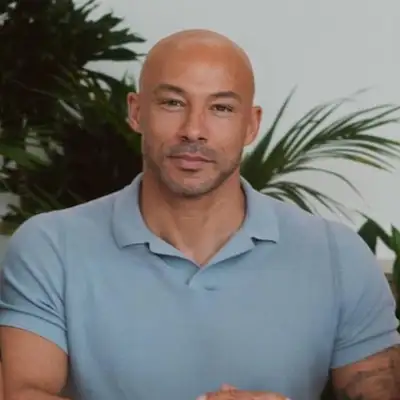
start. My guest today is Dean Henry.
Welcome to Peptide Show.
Dean, thank you very much for joining us on
Peptide Show.
You have a fascinating background.
Tell us a little bit about how you found
yourself
in the midst of longevity and peptide therapy.
Hi, Richard. Thank you for having me.
So, yeah, I guess it started when I was...
Well,
my interest in health was from sports.
And I did...
I was signed to be a semi-professional
footballer.
I never played a semi-professional game.
I was a sprinter. My dad was a bodybuilder.
My uncle was Mr. Universe, actually, three
times.
So we still have that sport heritage in the
family.
[Laughter]
We still have that sport heritage in the
family.
And I had...
I suffered an injury very early on.
That's why I never actually played a
professional game,
when I was just before my 16th birthday,
actually.
And then after that,
I did the usual thing that teenagers do.
You know, sport was my thing.
That was my dedication.
So I went and partied
and did all the stuff you do when you're a
teenager,
but still was training and very interested in
exercise.
But I was also struggling to swallow food.
Not long after my knee injury,
my esophagus used to close up.
The muscle used to basically be too tight,
and I went down the mainstream medicine route,
and no one could really answer the question
of what was going on, which was...
It...
planted a seed that I wasn't aware of
until later in life, but that was there.
And in the end, you know,
it wasn't until I was about 30 that I
realized it was a stress response,
and I managed to sort that out.
And one of my daughters was born with a nut
allergy.
I kept getting misdiagnosed on my knee.
They kept shaving my cartilage, and it was an
ACL.
And then I just realized that, actually,
mainstream medicine has its place,
of course, but I don't think it's the only
place.
And then my...
18-year-old daughter now, she started at
school in
Surrey, and one of her friends' mums
sadly had cancer, and she had given up on
mainstream,
and she got a Chinese doctor.
So I met this Chinese doctor.
Amazing guy.
He was talking about holding viruses in the
gut,
and I just learned a lot from there
about the importance of gut health.
Fast track to 2016,
I had a bone broth company,
studied functional medicine.
I studied therapeutic nutrition.
This is all in the UAE.
And then just started looking after people,
really understanding biological individuality,
and understanding how different everybody is
when it comes to working with them and their
health.
And in the background, from 2015,
I was working on peptides for my own health
optimization,
but keeping it very quiet because it was very
dark gray then.
Just working on this in the background
to the point where we got to sort of 2019,
where I had my first commercial peptide
business
in the UK. And then simultaneously, since
then, have
quite a few peptide companies, or...
or connected within the sector. Indeed.
And talking of connection, do you actually
connect the knee injury to
the issues that you had through your throat?
Was there some sort of correlation,
or do you see them as being completely
independent?
A hundred percent connected.
So my life was dedicated to sport.
And actually, at the same time, I failed to
mention,
my mum and dad were going through a divorce
around
about the same time that I
had my knee injury. Of course,
you're oblivious to it because I'm out
partying,
not worrying about it, you know. I'm fine. I'm
a teenager.
Of course, somewhere there in my subconscious,
I'm suppressing everything.
And we now know that, you know,
most of us have the stress response somewhere
in the body.
And all that stress that was going on
that I wasn't really aware of came in my
throat.
You know, it came in my esophagus,
and my esophagus was just stressed.
That was my stress response.
And actually understanding how to manage
stress,
and everything we know now with breathing and,
you know, meditation and food,
and food that doesn't create a stress
response,
and lifestyle being the foundation,
that is what really helped me understand
biological individuality.
And actually, everything is a stress response,
within reason. Fascinating.
So, I mean, take me back to 2015.
You've just discovered peptides.
How did you discover that?
Was it the bodybuilding forums?
Who influenced you
to look at something, ultimately, in the West,
quite early on?
Yeah, so I think I heard it on a podcast,
actually.
I heard someone mention Epitalon and BPC on a
podcast.
But also, one of my friends,
and later a colleague, was a physique model.
And so he was doing the TRT and everything
else,
but he was also looking at peptides.
So we sort of just put our heads together,
listened to this podcast, and then,
you know, we went onto a site in the US
and started ordering peptides.
Absolutely.
And you also, I mean,
you work with bioregulators. For people who
are
not familiar with the difference,
what would be the way you'd explain to
somebody
sat next to you at the wedding
what the difference between a peptide and a
peptide bioregulator is?
I would have chased me out if I started
speaking...
My wife would chase me out of the wedding
if I started speaking about peptides at the
wedding. That's for sure.
But to answer the question as simply as
possible,
how I like to articulate it is: peptides,
generally, they are signaling molecules,
as I think we all know now.
And they send...
So they sit on the receptor protein.
They sit on the cell,
and they send signals
endogenously for the peptide to create a
response,
whatever that may be: healing,
growth hormone secretion, whatever that may
be.
Bioregulators actually sit inside the cell,
and I always say they act a bit like a...
There are two analogies I like to use.
Number one, because bioregulators are
creating a better epigenetic environment
for the target area, I always say it like,
you know, over the years,
our tires go bald. So whatever that target
area is,
the grip has gone bald on that target area.
The bioregulators are regulating the target
area
to start rebuilding that grip slowly
in the background. And also, I like
to use the thyroid as a good analogy.
So when you take a thyroid bioregulator,
if you've got hyperthyroidism,
it will deregulate it. If you've got
hypothyroidism,
it will upregulate it. So they're
just regulating that target area to give its
best
optimal outcome.
So if someone wants to come along
and offer you, you know, $100 million,
but there's a caveat:
you've got to split it half and half.
Half of it needs to go into a particular sort
of
peptide, or a use case for peptides,
and the other half is going to be split across
bioregulators, or a use for bioregulators.
Where would you put that money, and why?
That's a good question. So where would I
put...
I mean,
the research into bioregulators,
there's a lot of depth in there,
you know, from Professor Khavinson in the
early 1980s.
Be good at reading Russian. You do, you do.
But of course, AI has really helped with that,
actually. Yeah.
So, you know, there were a lot of mistakes
in the translation from Russian to English,
and some of the peptide protocols that came
through.
I mean, I sat and spent
a lot of time with Professor Khavinson
directly.
And I need to get back and answer your
question.
So I think I
would definitely go more into the therapeutic
peptide side. And I think
creating more human data around
what I call the homeostatic healing peptides,
so like BPC-157, KPV,
GHK-Cu and TB-500.
The outcomes are so profound that I've seen
over
more than a decade, but they're so individual.
And I think sometimes that's where we get
lost,
and where maybe the mainstream regulators are
getting lost,
because they can't really identify what it
does.
And so I think a lot of time and money would
need to go into that,
really understanding that
from how they like to do their studies,
randomized controlled trials.
I think the same for bioregulators.
You know, it's interesting.
I can't remember the name of the Russian
doctor,
but he's been working on peptides since the
'80s.
He was asked a question recently.
Great scientist. He said,
"Is there anyone born today
that you believe could live to 200 years of
age?"
And he said, "Yes, using this technology."
So, you know, investigating that would be
really interesting also.
Thank you.
Now, you see people
coming to you who are already using peptides,
or considering peptides.
What do you think is the most common mistake
when people are looking to
start a journey of working with peptides,
which quite often, I imagine, is,
you know, "Do your own research"?
But even if somebody is working with
a medical practitioner,
what are the most common mistakes that you
see?
I would say there are three.
Number one: not working on the foundation
first.
Making sure, because it's exciting.
"I want to do peptides. I want to be
superhuman.
I want to be a health optimizer." Okay.
Well, to be a health optimizer,
are you sleeping, eating, training, getting
out in the sun?
All the basic stuff that, you know,
we like to do as biohackers. But I don't...
I don't even like the word for that.
It's just getting your foundation right
to be a bit of your optimal.
Are you doing... We'll come to that later.
[Laughter] Okay.
So, are you doing everything that you should
be
to optimize your health? Number one.
Number two,
lots of, not all,
but a lot of the peptides you're looking to
use,
you're going to need to understand what's
going on with your blood data.
So getting,
you know, a good full blood panel.
And number three, I thought of it when you
asked the question.
It escapes me. Oh, sorry.
Yes, it's doing too much.
So everyone's talking about peptide stacks.
You know, how many peptides are you doing?
What peptides are you doing?
What are you doing? It doesn't matter what I'm
doing.
This is, again,
it's about biological individuality.
And, you know, we need to understand
you as a person, your objectives, your
history,
and then we can build a protocol around you.
But always start low and slow, because you
need to know what's working and what's not.
Absolutely. What to turn on and what
to turn off. Now,
one of the things you touched on was this
sort of taking it back
to fundamentals, and going back to your
very, very beginning,
gut health.
What is the significance to you around gut
health
and the way that peptides will ultimately
interact with somebody who has yet to fix
the fundamentals?
So first and foremost,
answering the question, that's most important.
Peptides,
whether you're taking them subcutaneously or
orally,
if your gut is not optimized,
you know, that ecosystem,
microbiome is not optimized as much as it can
be,
that's a very good reason why
the peptides might not be working as
effectively as they can.
So if someone has come to me and said, "I've
been trying peptides. They don't work,"
I say, "Well, we need to look at quite a few
things, and number one is
gut health, hormones, liver and kidney
function."
So we need to look at these,
because these are all going to be part of the
process
for the peptides to get working optimally.
And if they're not, it's generally not the
peptide.
Not the peptides we work with, anyway.
It's generally not the peptide.
It's normally the individual,
if you're not getting the same results as
maybe I am getting from the peptides.
So, yeah, optimizing the gut health as much as
possible,
of course, is going to help with the efficacy.
And as somebody who's
listening or watching this and thinks,
"You know, I've never really considered my gut
health,"
are there any telltale signs that something
may be
not quite as it should be,
or is this a test that somebody needs to do?
What do they need to be looking for? Yeah.
I think, I mean, all of the above, really.
But I think first and foremost,
without sounding like a cliché,
listen to your gut, right?
So, you know,
for me, and without being too graphic,
something I learned very early on in
functional medicine is stool quality.
You can go on Google and see the stool quality
chart,
what your stool should look like
and the consistency be like.
You know, every day, firstly, you need to be
consistent,
at least once a day. But secondly,
if your stools are not of that perfect
consistency,
not too runny, not too hard, shouldn't be
straining,
and that's a consistent thing for you,
where you've either got loose stools
or slight constipation,
then your gut health is not in a good state.
You know, so that's a really good start.
And then when you're consuming food,
if you feel any bloating or pain
when you're consuming certain types of food,
or you feel really tired, then that's another
reason,
which normally indicates some sort of
intestinal permeability.
So you really need to get those fixed.
I mean, as a caveat to that,
there are peptides that can fix that, right?
But, you know, that's...
that's how I analyze my own gut,
based on being regular,
based on being regular and stool quality.
Absolutely. Know your shit.
[Laughter] Thank you. That's what I wanted to
say, Richard.
Absolutely. We'll bleep that bit now.
I mean, we touched earlier on this sort of
concept of biohacking.
And would you say that when you went into this
journey,
you would have
labeled yourself as a biohacker?
And is that now potentially
an unhelpful title for somebody to stick onto
themselves?
Um...
I think I'm just getting old and miserable,
right? So there's two...
There's two different words I don't like,
and I don't know why I don't like these words,
but I just think it's such a...
It's so overused, biohacking.
And it's just been thrown around so much now.
And I also, for some reason, don't like the
word
entrepreneur anymore.
So I just find everyone's an entrepreneur
and everyone's a biohacker.
Right, and these are, in Silicon Valley,
definitely both of them. Yeah.
[Laughter] Exactly.
So I think, like, I don't know why,
but as I'm getting older,
these things seem to aggravate me. But
even the word health optimization,
which I love, but I think firstly,
before we talk about biohacking and health
optimization,
let's talk about being healthy.
Let's just get the basics right.
Are you healthy? Not health optimized,
biohacked.
Are you healthy? Then from that conversation,
we can expand into more,
you know, exciting things, maybe.
And as more and more people
look to take sovereignty and
ownership of their health,
and more and more preventative medicine
becomes, you know, in
the public zeitgeist,
what do you think the future looks like
for longevity? Where
do you think we'll be
in terms of
people accessing these therapeutics in the
future,
or even today?
I think it's clear there's a lot of movement
going on globally,
depending on which jurisdiction you're based
in.
It is very jurisdiction-specific,
which, when you think about it,
is interesting because the science remains the
same
no matter where we are in the world.
It's about the jurisdiction
and what they feel about peptides and
protocols.
So I think that's going to be a key indication
of how we move forward.
And there's no hiding from the fact that
the FDA are the lead,
you know, lead party, right?
So a lot of people are waiting for their
decisions
before they decide what to do.
But, you know, for example, where I am now in
the UAE,
you are permitted to compound peptides based
on
prescriptions. There's,
I think,
12 peptides, and all the ones that we will
know and love.
You know, the BPCs,
the GHK-Cu.
You can go to... Wow.
So actually ahead of the... Yeah, actually,
ahead of the US right now in terms of getting
access,
but through a compounded route, because I
heard that
research-use-only
peptides are heavily frowned upon and
simply viewed as being illegal.
Well, ahead...
Interestingly, they weren't ahead, because
the US were ahead of everybody
with their compounding pharmacy.
But then, of course, they stopped it. No one
knows why. And when they stopped it,
people like the UAE continued.
That was all. So now we're waiting for the
FDA,
or whatever, to start
approving compounding pharmacies for certain
peptides
again, but the UAE just continued.
So no sort of slowdown there.
And has that, do you think, created
a peptide economy of the
future? Is that
what you're seeing happening in the UAE?
And of course, you work in Europe as well,
and very much all over the world.
But when these
regulatory movements happen,
let's call it earlier,
earlier in certain markets,
what do you think that looks like for future
markets?
What do you think that
you've seen in those more progressive markets,
and how do you think that will
map into other markets
around the world? What should,
God, I'm going to use the word
"entrepreneurs,"
be looking for? Yeah.
I think, look, there's all that...
What's interesting is when people say to me
that,
depending on what jurisdiction you're in,
they're going to stop the gray market. Okay.
Well, the gray market, by default,
is going to always exist because it's gray.
So it doesn't matter.
The more legitimate markets we have,
there's always going to be another market.
There's always going to be a gray market,
right?
So unless it completely gets deemed illegal,
then that's, of course, a black market, which
is very different.
So, to answer your question,
most other markets are waiting for the FDA.
Once the FDA has approved their list of
peptides
and how they're doing it, then the MHRA in the
UK
and all the different bodies around Europe,
they will no doubt follow.
And then that's going to be the legitimate way
to get peptides.
People are always going to work a way around
it, right?
So if I go and see a doctor now,
let's just say it gets approved in the UK, and
they say,
"Right, I want BPC."
So I'm going to go into a doctor, and they're
going to say,
"Right, have you tried everything else?"
"Yes, I've tried everything."
You know, it's always supposed to be the last
resort,
because it's what's deemed as a special
in the UK. So,
you know, I said, "Yeah, I've tried
everything." And then,
you know, the conversation is probably going
to
be manipulated in the doctor's room,
isn't it? I was like, "I just want BPC. What
do we need to get it?"
And they're going to write a prescription.
And the challenge is, of course,
I think,
this is a conversation that we've had with
people who are operating predominantly in the
US,
is how many medical practitioners,
given the risk that they wear
when they write a prescription,
are going to be comfortable prescribing?
Because we've got this really interesting
mismatch where,
you know, people are walking in to see
doctors,
and they're telling the doctors
they're already taking certain things,
and they're just wanting some form of
clinical validation.
So we've got more patients
who are probably spending more time
researching,
and not necessarily researching information in
the best of locations, but they're ahead of
the medical practitioners
in terms of their perception of awareness.
Yeah.
I think it's really interesting because,
and it always seems to
come across that I'm being negative about
doctors,
and I'm not, because
they're amazing at what they do.
They've studied for many years.
But of course, they didn't learn about
peptides at med school
or at university, because they're not
regulated,
and then they weren't backed by the
pharmaceutical companies,
or whatever the regulatory body is.
So they didn't learn about peptides.
So the doctors who are now working with
peptides,
the first conversation is,
"Where did you learn about them?"
You know, what knowledge and history do you
have?
Because it's all about history and experience,
and RWE, real-world evidence.
Now, in the US, there are some amazing doctors
that I aspire to.
I sit on the board with some of them in a US
company,
and I've learned a lot from them.
But,
I'm trying to be as diplomatic as possible,
some are just jumping on the bandwagon
because of the monetary aspect,
and say, "Only use doctors because we know
what we're doing."
Well, how do you know what you're doing? How
long have you been using peptides?
How many use cases have you got?
So it's a very interesting market.
They haven't got the prescribing experience,
and the challenge, of course, is,
you know, there are only a small number of
people who've got
the real depth of knowledge and
the ability to train those people.
So I think there is going to be a pinch point
where
there is certainly
a much larger amount of patient demand
than there are doctors who have got
competency.
And then we get into,
how do we look, as a sector and a category,
to track adverse events and positive events?
You know, we're a sector
which has got tremendous amounts of anecdotal
evidence,
but a fundamental lack of clinical evidence.
But that anecdotal evidence is generally
extremely passionately delivered.
[Laughter] Yeah.
Exactly. And that's something that I'm working
on in the background.
I'm sure others are as well.
We're working on, you know,
AI is fantastic.
And where I consult, and I have a team
coaching,
I should say coaching,
individuals and doctors and clinicians,
but coaching individuals on peptide protocols,
use cases, and we're getting responses.
Because the other thing with doctors,
not to digress, is that they will say, "Well,
you need to offer medical oversight.
You need to do blood data."
Well, most people have got access to that.
Well, I certainly do, obviously, through the
different jurisdictions.
So I have clinics. I've been reading blood
data
for 11 years. I've been reading like 300
blood panels a year.
So I understand how to read that
from a functional medicine perspective.
And medical oversight, of course,
you know, they can't be in the doctor's clinic
every day.
So what they mean by medical oversight, of
course,
we like to see them come back every four to
six weeks,
take their blood data again and see
what's developing there.
So, yeah, I've digressed,
and I forgot what the initial question was.
Sorry.
Whether we're going to have a real shortage of
medical professionals
who are truly
able to prescribe with confidence.
The answer has to be yes.
But then what this will do, and this is
the risk element to it, is that people are
just going to
keep going down the gray market,
because that's where they can get it. That's
where they can access it.
They haven't got to wait for a doctor's
prescription.
You know, the US is going to maybe be under
insurance,
but other regions, they might have to pay for
it.
So that's always going to be there, and that
does have...
You know, and I'm all for...
And I work in research use only. I sit on 503A
labs. I have the compounding pharmacy in the
UAE.
I'm all for doing this the regulatory way.
But, you know, there's going to be limitations
to that
that's going to push people to go down the
gray market.
Absolutely. I mean, Dean,
it's been a fascinating conversation.
We always wrap up with the same question
for all of our guests,
which is sort of jumping forward,
you know, into the next 10 years.
What would you like to see happening to the
peptide
space? What would it look like for you 10
years from now?
I would love for all of the regulatory bodies
to not hide behind the regulations
and to say, "Look,
it's clear that these peptides are helping
people.
Let's make this safe. Let's just,
you know, if we need to invest, or
the usual suspects need to invest in getting
these real
randomized controlled studies,
let's just put time and money into it,
because it is the future of medicine."
There are many peptides out there that are
working for
endometriosis, which is a massive thing now
for women.
Let's just get these out there,
you know, because
they are life-changing, or they can be
life-changing.
And we just need to
get these trials in place as quickly as
possible,
so we can start to understand
the possible downsides as well as the upside,
of course.
So, funded trials, more data,
and ultimately a promise of some,
you know, huge potential in the future.
Dean, thank you very much for joining us on
Peptide Show.
Thank you, Richard. Thank you for having me.