Subscribe
Share
Share
Embed
"There's so many things that need to line up for a company to reach final investment decision... helping roadblocks out of the way or streamline the process, or just getting the information that they need to make a decision or partnering them with the right people to get their project moving forward, all part of the process here, and that's what we're doing here." - Mark Plamondon
Looking to lead, grow, and stay ahead in the global chemical industry?
The Chemical Show is the #1 business podcast for the chemical industry, bringing you leadership insights, business strategies, industry trends, and real-world lessons from the executives shaping the business of chemicals.
Each week, host Victoria King Meyer sits down with leaders from across the chemical industry, from Fortune 50 companies to mid-sized businesses and innovative startups. You’ll hear how they’re navigating today’s challenges and opportunities, the experiences that shaped their leadership, and the insights you can apply to your own business and career.
Conversations explore the issues that matter to chemical industry leaders, including:
• Business strategy and growth
• Leadership and talent
• Innovation and technology
• AI and digital transformation
• Supply chain and operational resilience
• Markets, customers, and industry trends
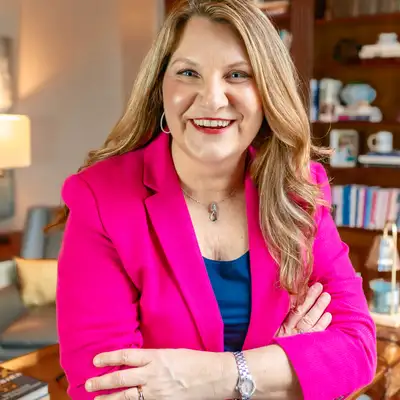
Victoria brings more than 25 years of chemical industry experience from companies including Shell, LyondellBasell, and Clariant. Today, she is an executive advisor and coach, founder of The Chemical Summit, and host of The Chemical Show.
Whether you’re an executive, business leader, or rising leader in chemicals and materials, The Chemical Show helps you stay informed, think differently, and lead with greater impact.
Follow The Chemical Show on LinkedIn and join the conversation. (https://www.linkedin.com/company/the-chemical-show/)
The Chemical Show: https://www.thechemicalshow.com
The Chemical Summit: https://www.thechemicalsummit.com
Progressio Global: https://www.progressioglobal.com
Welcome to The Chemical Show, the
podcast where chemical means business.
I'm your host, Victoria Meyer,
bringing you stories and insights
from leaders, driving innovation and
growth across the chemical industry.
Each week, we explore key trends,
real world challenges, and the
strategies that make an impact.
Let's get started.
Victoria: Welcome back
to The Chemical Show.
Today, I am speaking with Mark Plamondon,
who is the executive director of the
Alberta Industrial Heartland Association.
You may remember that Mark is
previously a guest on The Chemical
Show, and we will link to that episode
so that you've got access to that.
And we're going to be talking about
the wonderful world of Canada and
specifically Alberta and the industrial
heartland, and just the, the Benefits
of investing in that region and more.
So Mark, thanks for joining me today.
Mark: Very nice to see you,
Victoria, and thank you once
again for having me on the show.
Appreciate
Victoria: Absolutely.
So just provide If you would a
brief overview to you and what
your role is within the heartland
and also to the heartland itself.
Mark: Glad to do so, for sure.
So, so thanks for the introduction.
Yeah, so I'm Mark Plamondon and I'm the
Executive Director here at Alberta's
Industrial Heartland Association.
And our association, we represent
Municipalities, five municipalities,
the city of Edmonton, city of
Fort Saskatchewan, Strathcona,
Sturgeon, and Lamont counties.
These all have land in an area called
Alberta's Industrial Heartland,
which sits in the northeast corner
of the Edmonton region in Alberta.
So just for those in the show, if
you go to Alberta and then Edmonton
in the northeast corner of Edmonton,
there's a 582 square kilometer heavy
industrial cluster called Alberta's
Industrial Heartland, it is Canada's
largest hydrocarbon processing region.
will talk a little bit later about,
the competitive advantages are and why
companies are building projects here.
But what we do, our association, we're
funded by those municipalities and
we are in sort of three main areas.
We're focused on, promoting the region.
So there's a huge marketing component.
do a fair amount of international travel.
We work with companies when they're
assessing their next capital project.
We want them assess the industrial
heartland and see if their next
major capital project makes sense
in Alberta's industrial heartland.
Victoria: Yeah
Mark: we also have a significant
effort in improving the region.
So improving is either from a
competitiveness standpoint, an
infrastructure standpoint, a
regulatory streamlining standpoint.
This is all done through advocacy
and partnerships with government and
with other like minded stakeholders.
And then we also have somebody focused on,
you know, communications, social license,
making sure that there's good dialogue
between industry and community and that
there's support for growth in the region.
In a growing region, it's obviously
very helpful if you have supportive
community and strong social
license, which we have here.
So we spend a fair amount of time on
that as well in partnership with the,
with the companies that operate here.
Victoria: Yeah, and I
think that's so critical.
I think the role that you guys play is
so critical because of course investment
doesn't just happen It happens with the
support of the community, with the support
of organizations such as yours, the
municipality, and also other companies.
I think it's, it's so critical the
role that you play in this area.
Mark: Yeah, there's so many things
that need to line up for a company
to reach final investment decision.
And so helping roadblocks out of the
way or streamline the process, or just
getting the information that they need to
make a decision or partnering them with
the right people to get their project
moving forward, all part of the process
here, and that's what we're doing here.
Victoria: Awesome.
I love it.
So when we last spoke Dow had
just announced its FID for
its net zero cracker, ethylene
cracker in Fort Saskatchewan.
And to the extent that you're
able to, how is that progressing?
Mark: yes, it was probably,
it was over a year ago.
Maybe 12 months ago or so, 11,
12, 13 months ago, I think,
Victoria: Yeah.
Mark: that Dow reached final
investment decision for this.
They're the world's first net zero,
ethylene manufacturing facility here
in the industrial heartland, which was
a, very exciting announcement for our
region because it's such a large project.
Not only is it such a large project,
it is, of course, that first net zero
ethylene manufacturing facility that
really puts Industrial Heartland on
the map, I think, because, of course,
Dow is a global company and they can
put capital in a lot of places and
they have chosen to do this project
here in Alberta's Industrial Heartland.
I can't speak.
to their project, of course, but
just in general, in the industrial
heartland, there's been so much activity.
And of course, the big
project is the Dow project.
We are seeing ramping up of of
traffic through through the region.
We are seeing workforces grow,
to meet the growing construction
profile, primarily at the Dow site.
We'd expect, you know, peak labor
to be reaching here, but probably
by the of this year, but we're
Victoria: Wow,
Mark: Growth their site and then in
a number of other areas as well when
it comes to construction activities,
because since the Dow project reached
FID, there's been a couple other
final investment decisions, which
are in the public domain as well.
Shell reached final investment
decision on their Polaris project,
which is a carbon capture project
at the Shell Scotford site.
Victoria: that's excellent.
Mark: about carbon sequestration
capability in this region and why that's
a competitive advantage for us here.
also Shell, in partnership with ATCO and
Power, announced their Atlas project,
which is a sequestration project.
So these both these projects
were announced final investment
decisions at the same time.
So there's activities
for that project as well.
also seeing, um, there's
current construction activities
in fractionation facilities.
There's fractionation
expansions in the region.
So there's, Lots of activity that we're,
approaching a 50 billion, 45 to 50 billion
of assets in the ground here now, and
before the end of the decade will be
well over 60 billion, in assets, um, 60
to 65 billion in assets, probably with
growth and fractionation, of course,
the net zero ethylene manufacturing.
There's also, Lindy has announced that
they're building a 2 billion hydrogen
facility on the Dow site to meet the needs
of the net zero path to zero project.
So just,
Victoria: amazing.
So it is.
I haven't been up to Canada in
several years, but I can only
imagine that it is really hustling
and bustling in that region.
Not just because the invest
those direct investments, but
of course, we also know that.
I think ACC had published some data
a while ago that says something
like seven jobs are created for
every job that's created inside
the petrochemical industry, right?
Whether it be grocery stores and schools
and doctors and nurses and all of that.
So that's a huge impact for your region.
Mark: Yeah.
There's both the direct and the indirect.
There's, there's, there's all that stuff.
There's the indirect impacts as well, but
also the spend that the companies have
amongst other companies, the supply chain.
I mean, of course, there's the effects
from workers staying in hotels and eating
Victoria: Yeah.
Mark: that stuff.
But, but even the spend of companies
in the industrial heartland, a real
economic engine for the region, for
the province and for the country.
Victoria: Yeah.
So what about the Heartland
makes it such an attractive
place for companies to invest?
Yeah.
Yeah.
Yeah.
Mark: you know, really optimistic
about the future growth here
for the industrial heartland.
And there's, there's a few things
have been competitive advantages.
For decades, of course, and then
there's really the growth in the,
in the drive for low carbon products
and industrial decarbonization
that enhances that further.
But, you know, just to start the main,
the main economic driver in this part
of the world is the low cost feedstocks.
So low cost methane, propane, ethane,
butane, particularly in the petrochemical
space coming out of natural gas, natural
gas liquids, you know, in North America,
it's the lowest cost feedstocks in North
America, your discount rate here versus
Gulf Coast is typically between 30 to 40%.
I mean, that, of course, ranges
day to day, but on average,
you're looking 30 to 40 percent
discount for those feedstocks here.
And when your
Victoria: that's real money.
Mark: When your largest operating
cost is your feedstock, having a
significant discount for your, your
methane or your propane or whatever
you're using as your feedstock, that's
a tremendous competitive advantage.
And as you know, those feedstock costs
in North America are a lot cheaper
than other parts of the world, too.
There's, there's a few pockets, of
course, that have still have really strong
advantage, but in general, North American.
Feedstock costs are low relative
to other jurisdictions and here in
Alberta where we have a discount
compared to say the Gulf Coast.
So there is a tremendous economic
advantage and that's driven
investment here for decades.
What's really been, I'm going to say,
interesting over the last five years,
five to seven years is the interest
in producing lower carbon products.
Thanks.
And
Victoria: Right.
Mark: leads to companies looking at,
carbon capture and sequestration is,
is 1 of the technologies that large
emitters would look to this jurisdiction.
It's world leading when it comes to that.
You know, we've got region has operating
carbon sequestration assets in this
region been operating since 2015.
There's the Alberta carbon trunk line
is a carbon trunk line that leads to
additional sequestration capability,
That was built with capacity of 14.
6 million tons a year of
CO2 carrying capability.
It's
Victoria: Yeah.
Mark: you know, around 10%.
Victoria: Wow.
Mark: got 90 percent and capability
in that asset that companies can take
advantage of that that that capital is
Victoria: Yeah.
Mark: the ground and companies
can come in and work with the
Alberta carbon trunk line to look
to sequester, but that's just one
Victoria: Yeah, I think that's, I
think that's so significant because
of course we know that there's a lot
of companies and and regions talking
about building carbon capture and
sequestration, and it's expensive, right?
It is an expensive project to build.
It is time consuming to build any
of that, and so for that to be
part of your core infrastructure
is a real significant advantage.
Mark: Well, it's infrastructure
today that's working today.
So it's
Victoria: Yeah.
Mark: It's it's operational today.
So it's not like it's something that we're
hoping to do, or that this region has
that companies in this region have built.
pipeline.
That's an example.
But I also want to elaborate
on that a little bit.
The government of Alberta.
to three years ago, um, they
allocated poor space and they
identified carbon hub operators.
They awarded carbon hub operator status.
So there's 6, 6 of them in the, in the,
in the region that are now progressing
projects for, or at least doing the
studies that are necessary and trying
to understand, if they'll advance
their, their, their carbon hub operator
Victoria: Yeah.
Mark: Um, one of them is the
Atlas project that I mentioned
earlier, but there's, there's.
You know, so for those five
others that are under study,
so that would give optionality.
So you're building a large
emitting petrochemical facility.
You have optionality or you will
have optionality as to where you can,
how you can manage your emissions.
And so carbon management is another
key advantage here that I'm going
to say that over the last 5 to
7 years is really maybe the.
10 years on the outset but has
really come to the forefront
here as a competitive advantage.
So you've got low cost feedstocks,
carbon management capability.
Then you have logistics here with respect
to proximity or getting the markets.
So you know, two class one railways,
service the area, moving products
out to the West Coast or the East
Coast or down to the Gulf Coast,
good accessibility into the United
States markets with the rail networks.
And then, of course, you know, we've
got 582 square kilometers of flat
pre zone, heavy industrial land,
Victoria: yeah,
Mark: workforce here.
You come and look at the
industrial cluster here.
We encourage companies to
come and have a look here.
Victoria: yeah.
Mark: the cluster and you'll realize
that the skilled workforce that's here
to operate and build these facilities.
It's a bonafide cluster as skilled
workforce to do what needs to be done.
And I'm really excited and
optimistic about the future
Victoria: I think that's exciting.
And I think a few points
of that are so critical.
So number one, I think just the natural
gas backbone from a feedstock perspective
on a relative basis, it's already a
relatively clean feedstock as compared
to heavy oils as a pairs compared to
coal, which, uh, you know, again, is
being utilized as a feedstock for
some chemical products elsewhere.
So I think just starting with that and
then layering in the carbon capture,
layering in the infrastructure and,
in the workforce becomes compelling.
Cause you know, as you know, and
we've talked about this before, I've
spent some time developing projects,
back in my corporate days and, you
know, location, location, location.
Close to the customer, close to the feed
stocks and close to your transportation
is, is critical, but also being in a
friendly, and well skilled business
environment is really critical.
Mark: I just want to add one more
thing to Victoria's is, you know, we've
done some work over the last year.
We will be rolling that out
probably here in the first quarters.
We've done some work benchmarking
our industrial cluster here versus
other some other global industrial
clusters from a because you
mentioned, you know, carbon intensity.
And so we're doing that
from a nESG lens basically.
And so that, you know, the carbon
intensity of your feedstocks,
your grid, the capability or the
diversity of your workforce and
skill set and proximity of workforce.
Like there's a whole bunch of measures
between the environment and social
and governance range that we've
used to benchmark the industrial
heartland versus other jurisdictions.
And, you know, really for a
functioning industrial cluster, it's
world leading from that standpoint.
So for companies globally
where that matters, this will
be a jurisdiction for them.
Victoria: We're in a
changing world, right?
In a lot of ways.
When I think about just the global
economics and the geopolitical
climate, the U S has just
inaugurated a new president.
Canada's poised for
another federal election.
There's just a lot going on.
How does this influence
investment in Alberta?
How, how are you managing and
navigating some of those changes?
Mark: Yeah.
So it's a good question.
I mean, You'll hear often and
when you're talking with business
leaders and others, like, you know,
uncertainty is, is always a headwind for
investment and you can understand why.
I mean, when you're investing other
people's money and lots of it, hundreds
of millions or billions of dollars,
you know, boards of directors and
executives, or there'll be, there'll be
a tendency to wait and see what the, if
the uncertainty is going to become more
certain before you can make a decision.
And
Victoria: Yeah.
Mark: typically uncertainty.
Leads to bit of a pause
in capital investment.
And so there's not much we can do
about the uncertainty, but what
we can do is a few pillars, a few
things that we, that we focus on.
So of course we have an advocacy
component that we work with like
minus stakeholders on where we're
advocating for specific policies.
Over the years, we've been fortunate
that there's been good traction in
a lot of things that have improved
competitiveness and improved the
regulatory streamlining here in Alberta.
So, you know, we put in our best efforts
to work with like minded partners and
governments to try to, improve the
region from a number of fronts, that
hopefully improves the certainty for,
for companies that are looking to invest.
So that's, so that's, um, one.
We also, Help companies navigate the
system here, the regulatory framework, or
Victoria: Hmm.
Mark: right people in the government
to navigate so that they can
understand the complexities of
the system a little bit better.
The actual uncertainty itself,
though, it's at very top
levels of governments, that's.
You know, it'll be what it'll be.
And I
Victoria: Yeah.
Mark: will figure it out.
It's a bit of a wait and see, I think,
at the moment, and we'll figure out
Victoria: Hmm.
Mark: the world's going to look
like from a policy standpoint and
make the appropriate decisions.
Victoria: Yeah, makes sense.
And I know we've also seen, a few,
uh, supply chain challenges recently.
In fact, the, the U.
S.,
somehow all of our ports have decided
that this was the year to strike.
We saw it in Canada.
We saw it in the U.
S.
How do you see that
playing out going forward?
And did, did you have any role in,
uh, or were you also watching on
the sidelines like the rest of us?
Mark: Well, again, the message around,
you know, stable, certain logistic
supply chains is so important for
Victoria: Yeah.
Mark: in
Victoria: Yeah.
Mark: Being landlocked.
It's so important for us to be able to
move products and not not only just being
landlocked, but also the majority of the
products in this region are exported.
So we need access to export markets.
And so,
Victoria: Yeah.
Mark: that uncertainty again is is
significant headwind for investment,
especially from an international investor.
So just being a voice there, of course,
is what the best that we can do and
trying to really raise awareness that
look from an international standpoint,
any hiccup or interruption to logistics,
supply chains, logistics to getting
products to international markets that
would cause international investors in
their overall assessment, that would
probably be a strike against this
Victoria: Yeah.
But they're also, but it's
also temporary, right?
Those things have gotten resolved.
Those are temporary, I
guess blips in the system.
And in fact, I spoke with Kevin
Yttre, who's a investment banker a
few weeks ago on the chemical show.
And he really talked about the U S
being a very attractive market for
Asian investors, because they're
looking for secure and growing markets.
I would assume the same is true in Canada.
Are you seeing the same interest
in international investment?
Mark: So for our region, absolutely.
There's a lot of interest from
Asian companies primarily looking
to invest in projects that would
export the products to their markets.
Victoria: Hmm.
Mark: I mean, there are some companies
that are looking, they want to access
North American markets and build a
facility here get a foothold into
the North American markets that
there's some interest there too.
But I'd say a lot of our interest from
Asian customers or Asian clients,
companies that are looking to build
projects or look at petrochemical
projects, I'd say the largest
interest is building a facility in the
industrial heartland and then accessing.
Victoria: Yeah.
Yeah.
Mark: here.
Now, proximity and the connectivity from
here is really attractive more so than
I'd say from the Gulf Coast in the U.
S.
Because getting our product to the West
Coast Port of Prince Rupert, for example,
that shipping time from the Port of Prince
Rupert into Let's say Japan, for example,
that shipping time is about half than
if you came out of the Gulf Coast, had
Victoria: No kidding.
Mark: the canal and then over.
So
Victoria: Yeah.
Mark: we've got really good
proximity to Asian markets from
West Coast, British Columbia,
Victoria: Yeah.
Mark: Coast of Canada, and we've got
good rail connectivity to the West Coast.
So we do have a lot of companies,
a lot of interest in looking at
building facilities in the industrial
heartland, moving products to meet
the growing needs in Asian markets.
Victoria: Yeah.
Makes sense.
And again, as we talked about with the
infrastructure, feedstock costs, skilled
workforce, it becomes really cost
effective as well to build and export.
Mark: Well, definitely.
I mean,
Victoria: Yeah,
Mark: know, clustering has advantages.
There's a skill set here.
Some outputs from one
become inputs to another.
So when you have a bona fide cluster
like you have in the industrial heartland
and you have the connectivity like
we have here, think that's a, gives a
lot of confidence to foreign investors
when they're looking to invest and see,
okay, this is a function of cluster
world class companies operate here.
Victoria: yeah,
Mark: here that we need to understand.
Victoria: So I know that you
are gearing up for the Canadian
Petrochemical Summit in June.
And this is, I guess the second time
you guys have hosted this event, and
it's really, an opportunity to showcase
the heartland, and what it can do.
So can you tell us just a little
bit more about that event?
Mark: Absolutely.
So I believe it's their third time, to be
Victoria: Okay, third, yeah.
Mark: may even be fourth, but I, I have to
Victoria: Alright, so I
haven't been counting.
That's okay, we'll fix it.
Ha ha ha.
Mark: it's a, it's a very focused Canadian
petrochemical summit, but we're really,
it's really, small group intended to
really have the decision makers and key
participants in the petrochemical sector.
So it's so that it'll be high
value for them to be in such an
intimate setting, having discussions
around the petrochemical industry
issues of the day, potential
opportunities to work together, etc.
So, this, this year is June 17th to 19th.
It'll be in Lake Louise.
It's the first time we're
doing it out at Lake
Victoria: Nice.
Mark: in the mountains.
So think about the setting, right?
You've
Victoria: Yeah.
Mark: a fairly, small focus
group in the mountains.
You're there for 2 to 3 days.
You're not going anywhere from there.
You're, you're doing some wonderful
things out in the mountains.
You're either.
You're enjoying maybe
some golf or hiking, etc.
before the conference happens.
But, but it's not like at the
end of the afternoon, you're
going for dinner somewhere else.
No, you're all, you're
there at Lake Louise.
It's very focused.
It's a great networking opportunity,
really focused on having decision
makers and participants in the
petrochemical sector there.
So that's what this event is all about.
And it's in Lake Louise in the
middle of June, June 17th and 19th.
Victoria: I like that.
Well, and it's, and it's, you know,
I've, I've got my own conference
that I run in the fall, the chemical
summit, but, different focus.
But yet I also recognize the uniqueness
of having a small event focused just on
leaders and building those relationships,
having the right conversations is so
critical because it doesn't necessarily
happen a lot in our industry.
A lot of the events are big.
Dine and dash meet and greets
where you're running all day long.
And so having the opportunity to
spend time together and connect and
reflect and grow is really critical.
Mark: Yeah, both styles
have a role for sure.
We just
Victoria: Yeah.
Mark: that this focused event
specifically on petrochemicals, we
think that's adding value in the end,
like we're not in the business like
Victoria: No,
Mark: We're in
Victoria: no.
Mark: of facilitating development and
Victoria: Yeah.
Mark: advance projects.
Victoria: Yeah.
Mark: we just want to the
end result is that right?
We want companies to be able to connect
and advanced conversations and ideas.
And so having a focus
conference, we think helps with
Victoria: And I, and I know that the theme
this year is navigating global markets.
What can you tell us about the theme
and some of the speak speakers or
topics that, people will expect?
Mark: know, navigating global markets
really just highlights that, you know, the
petrochemical sector here, it is a global
conversation, particularly what we just
talked about with some of the geopolitics.
So, you know, the types of themes
that we talk about and speakers
we get in, we'll get experts.
We usually start off with, you know,
global market trends in the petrochemical
sector and then drill down into, you
know, specific feedstock outlooks,
in Western Canada and North America.
And then there's conversations
around supply chain.
And we talked about.
some supply chain challenges.
It's always useful to have a conversation
on on geopolitics and world politics and
get experts in on that and that as well.
I think that's interesting for some of the
Victoria: Absolutely.
Mark: So, we found it.
We've had really good feedback.
It's a very
Victoria: Cool.
Mark: couple of days.
And,
Victoria: Good.
Mark: so, you know,
Victoria: I love it.
Mark: com or Canadian cdn,
cdn petrochemicalsummit.
com to get more information.
Victoria: Okay.
Awesome.
We'll include a link so that
people can find it as well.
So final question for you, Mark, you
have worked with a lot of global leaders,
both in the public sector, in the
private sector, What characteristics
really stand out about a great leader?
Mark: I mean, business schools look
at leadership all the time and there's
courses on leadership and, know, at least
in my experience, and first of all, let's
talk from personal experience and then
Victoria: Yeah.
Mark: from what I've seen.
That leadership position, of course,
the first and foremost thing is you
need to actually, Take a leadership
position because in the absence
of taking a leadership position,
there's a void and then people fill
that void with their own narratives.
So,
Victoria: Yeah.
Mark: before you say whether
they're a great leader, just to
be a leader, it sounds trivial
and maybe a little bit trite.
But, that leadership position where you're
out front saying this is, How I think we
need to go and get people to rally behind
you taking that leadership positions.
First and foremost, whether you're a
great leader or not, the differences
between what that leadership position is.
Are you doing it with integrity and
conviction and driving that forward?
So, I guess from what I've seen,
when I look at that I've worked for,
who I think have been great leaders
Victoria: Yeah.
Mark: have been great leaders is, is
you're driving that leadership position,
but you're doing so with integrity
and conviction you're convincing
people that you're coming from the
right place and then you, you have
Victoria: Yeah.
Mark: to say that this is,
this is the way forward.
And those two things, coupled
with that, just stepping out
front and being the leaders.
I know it's, it's a bit of a circular
conversation because in order to be a
leader, you got to take a leadership
position, of course, but you've seen
in politics in, in, in some cases
where you have a void, like if, if you
don't have your, your leader coming
forward and saying this, then there's
a void and others and others fill it,
Victoria: Yeah.
I mean, this whole thing around owning
your space, you got to own your space.
Mark: business as well.
You're going to
Victoria: Yeah.
Mark: my view, anyway, your leader needs
to be Communicating up front that this
is the position you've got integrity
and conviction and then your workers and
your company and everyone will see that.
And I'm going to follow this because
it's coming from the right place.
It's got conviction and that's
at least off the top of my head.
What I've seen.
I know that when I was initially
put into in the leadership roles.
Victoria: Yeah.
Mark: I remember that being sort of
the initial stress was something's
happened and you need to be taking a
leadership position up front and, and
that's, that's the step you need to take.
That was the first real big learning
for me when I was in my, put in
my first leadership position.
It's like, wait a second.
Okay.
This is on me.
This isn't, I can't wait for someone else.
I've got to be out front
taking that position.
And, and sure you're in conversation
with the people that you work
with, but you've got to be the
one up front taking that position
and with integrity and conviction.
off the top of my head.
Victoria.
I
Victoria: That's good.
I really love that though.
And I think it, I think it's great.
And I think first of all, the integrity
and conviction are really critical.
But to your point that making that
switch into a leadership position, I
used to sometimes tell people, I'm like,
it's now your turn to define the work.
And the path like we go along
in our careers so long as being
worker bees, if you will, right?
Like letting somebody else
lead and set direction.
And that first flip into a leadership
role when it's like, oh no, I'm
setting the direction is so critical.
People are people expected of you.
And that's also how you define yourself.
Mark: so it's really interesting because
until you put in that position, or
at least for me, until I was put in
that position, you don't really think
of it that way until you're in it.
So the
Victoria: Yeah,
Mark: me in my career, you
know, I sort of had a pretty
big jump into a leadership role
Victoria: yeah,
Mark: So I'm now leading
a foreign operation.
You know, and everyone's looking to you.
Victoria: yeah,
Mark: need to be up front
taking that position.
I remember that specifically, it
was like, okay, I'm, I'm, everyone's
looking to me to set direction and, and
Victoria: yeah.
Mark: up and do it.
And so great leaders for me
of you're not leaving a void.
You're taking a leadership
position with, with, again, with
integrity and conviction to try
Victoria: I love it.
I think it makes a lot of sense
and I know that's what you do
every day at the Heartland.
Mark: Well, hopefully my team thinks so.
Victoria: I'm sure they do.
I'll ask them afterwards.
How's that?
Well, Mark, this has been
a great conversation.
Thank you so much for joining
me on the chemical show.
Mark: Victoria, thanks for
having me again, and I really
appreciate the conversation.
Victoria: Absolutely.
And thank you everybody for listening.
Keep listening, keep following, keep
sharing, and we will talk again soon.
Thanks for joining us
today on The Chemical Show.
If you enjoyed this episode, be
sure to subscribe, leave a review,
and most importantly, share it
with your friends and colleagues.
For more insights, visit TheChemicalShow.
com and connect with us on LinkedIn.
You can find me at Victoria King
Meyer on LinkedIn, and you can also
find us at The Chemical Show Podcast.
Join us next time for more
conversations and strategies
shaping the future of the industry.
We'll see you soon.