Subscribe
Share
Share
Embed
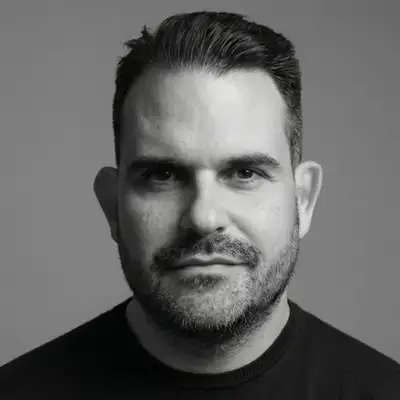
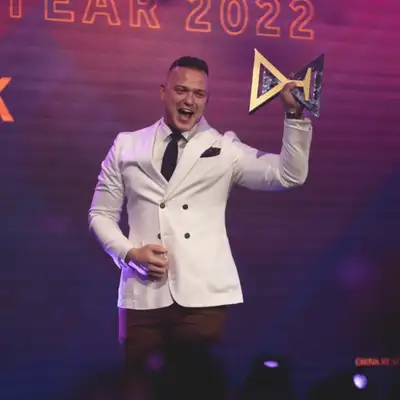
This is the first episode of the chat between Chris Maffeo and Adrián Michalčík. He is the Global Winner of the Diageo WorldClass 2022 and Global Top 6 in 2016. He is the Director of Mixology at Pier 42 in Oslo.
They discussed:
• The importance of On-trade in brand building, especially in dark markets.
• What can small brands learn from Global Brands' Advocacy Programs.
• How Salespeople can prepare themselves before approaching a bar.
• Latest developments in the Czechoslovak and Nordic bar scenes.
• The Italian and Czechoslovak connection in the Global bar scene.
• How top bars decide which brands to list on their offering
About the Host: Chris Maffeo
About the Guest: Adrián Michalčík
This is the first episode of the chat between Chris Maffeo and Adrián Michalčík. He is the Global Winner of the Diageo WorldClass 2022 and Global Top 6 in 2016. He is the Director of Mixology at Pier 42 in Oslo.
They discussed:
• The importance of On-trade in brand building, especially in dark markets.
• What can small brands learn from Global Brands' Advocacy Programs.
• How Salespeople can prepare themselves before approaching a bar.
• Latest developments in the Czechoslovak and Nordic bar scenes.
• The Italian and Czechoslovak connection in the Global bar scene.
• How top bars decide which brands to list on their offering
About the Host: Chris Maffeo
About the Guest: Adrián Michalčík
For founders, directors, distributor MDs, and hospitality leaders navigating the tension between bottom-up reality and top-down expectations.
20+ years building brands across 30+ markets. Each episode features drinks builders sharing what actually drives commercial performance: across beer, wine, spirits, and low and no-alcohol.
Hi, and welcome to the Maffeiro Drinks Podcast. I'm Chris Maffeiro, founder of Maffeiro Drinks, where we provide a non nonsense approach to building drinks brands from the bottom up. I will be your host, and in each episode I will interview a drinks builder from the drinks and hospitality ecosystem. In episodes seventeen and eighteen, I had the honor of interviewing Adrian Michalczyk. He is the global winner of Viagio World Class 2022 and global top six in 2016.
Chris Maffeo:He is the director of mixology at Pier forty two in Oslo. He has an incredible drinks experience in various markets. I hope you will enjoy our chat. Remember that this is a two part episode, so if you liked it, feel free to listen to both part one and two of our chat. Hi Adrian, how are doing?
Adrián Michalčík:Hello Chris, I'm doing very good, thank you very much. How are you?
Chris Maffeo:Nice. All good. All good here in Prague. It's a bank holiday, so you know, it's very calm out here, so that's good. So thanks for joining me on the podcast.
Chris Maffeo:This is a very great honor to have you as the global winner of the Diageo World Class 2022. Let's crack on with some questions that I have for you and, you know, this will be a very interesting conversation as, you know, you are one of the top bartenders around the world and you bring a different angle versus what I usually have here because usually I interview brand owners mainly. So now it's basically having somebody from the other side of the bar and we're all part of the same drinks ecosystem. So the first question I have for you is the drinks ecosystem, it's kind of like split in two, like the hospitality industry and the drinks industry. So brands on one side and hotels, bars and restaurants on the other side.
Chris Maffeo:Do you feel that they understand each other well enough or there is a lot of translation to be made between the two worlds?
Adrián Michalčík:They need to somehow be connected together. If there is no connection, there is something wrong, definitely, because I truly believe this goes hand by hand. We of course like serving or selling the products on an off trade market also, but on trade, I think it's an amazing like showroom of the brands. And that's also the opportunity to connect with the guests, with the experience around which we can build around the product where we are using the brands. So I truly believe that these products should go hand by hand.
Adrián Michalčík:From the perspective of the bartender, I would say we have a power of speaking about the brand and explain more about the brand to our guests and give them better experience. I think it's quite important also for the brands to focus on the bartenders and to communicate about the brand, all the informations, and present it correctly, then bartenders can be ambassadors for the brands and we can definitely bring these products to our guests and sell them in a better way. So I truly believe that this world somehow should go next to each other by hand.
Chris Maffeo:And do you feel that there is before, let's say, in earlier stage of your career, you were mainly working behind the bar. Now you're also representing some brands doing masterclasses going around the world and so on. So how has your job changed? And do you feel the corporate world understands the bar world or there is a bit of a disconnect between the two? Like meaning basically, if the brands are more focusing on off trade, because that's where the majority of the sales actually happen, do they really understand the role that you're talking about, about the on trade for brand building?
Adrián Michalčík:Based on my experience, like I can see many brand representatives, which are very helpful in focusing on on trade market, on us, on bartenders, giving us enough of information, support, and they really care also about on trade market. Of course, the biggest amount of money is made off trade. As I said before, I think many people are buying products to their homes and then, for example, are coming to the bar. And I think that bar can be used as an advertisement or as a kind of showroom of the new products. In a bar, you can also order a shot of something.
Adrián Michalčík:You don't need to pay for a whole bottle, you can try something. And if you really like it, then you can basically buy it home, right? For now, I can see that many brands really cares about the bartenders, and I think like year after year, even more and more, that they really understand that we can help them with the sales and with the presenting of the products. Now I also work with the brands, and I'm meeting up with the people which are sharing pretty much the same idea that they really want to be helpful and supportive for the bartender. So I'm very happy for that because I see that as an amazing opportunity to translate and present the brands to our guests.
Chris Maffeo:Fantastic. And you're spoiled because you're working with one of the best, I mean, class is probably the best advocacy program out there around the world. I can say it with no ties to Diageo, but I must admit that. And what do you think can small brands learn from world class for example? Obviously, they will never have the budget that is put into it like some of the executions are just like incredible but there must be some things that you can also do as a small brand working with the bartender community, right?
Adrián Michalčík:Definitely. The budgets for advertising, they are very, very different since we're speaking about big brands compared to smaller brands or newly made brands. But I think what is important is to try to become a bit more personal and also try to find a way how to sell their product. Maybe inspire also bartenders how to use that product. Also, maybe create small events where you can speak to bartenders and you can try to convince them that your product is high quality and it can be used in many different ways.
Adrián Michalčík:So how versatile, for example, can be that product? And then we as bartenders, if we feel that someone is trying to care about our knowledge and try to become more personal, we also feel much more connected to the brand. And then we truly believe in that brand and in that case we are also able to sell it to people. Because if we don't believe in a brand, in the quality of the product, for us bartenders, we will of course always use the brand, which we believe in, in the quality we are familiar with, or we have a sympathy. So I think small brands, what they can do always is to explain or introduce the product in the best possible way to bartenders Also try to be personal.
Adrián Michalčík:Even big brands, I would say, sometimes maybe it's hard to be personal with the bartenders, but based on experience here in our markets, there are many distributors which are trying to pass by the bar and trying to say hello and asking if you need any help. If we have, for example, new staff in a team, new team member, so if they have a knowledge about the product, if we want to educate ourselves or so on. This is a personal touch for me and I can see that someone really cares about that. If it is big brand or small brand, I think becoming personal and close to bartenders, give them enough knowledge and maybe inspire them or show them the ways how the product can be used, I think this is super important. So if there is like small brand which is just starting, I would say like a kind of good advice can be to create a way or give the knowledge to partners how to use the product and definitely try to become more than a business partner, even a friend.
Adrián Michalčík:And then we of course feel much more connected and we believe in the product much more. And in that case, we are able to forward it or sell it to our guests.
Chris Maffeo:Wow, that's a gold nugget. Think a lot of the listeners will appreciate your advice on that one. Talking about how people approach you and approach your bar and so on, whether big or small brands, After winning the global world class, has that changed the way people relate to you or to your bar and to you as a person or not really?
Adrián Michalčík:Definitely, yes. World class is the biggest part of this competition and it's a really big thing to be named as a global winner, so of course respect is obviously coming there. I'm very happy that the attention came to our market, to our bar scene here, because it really grew from zero to hero in the last years and it really deserves to be seen. So we have like in the Nordic countries, have amazing restaurants. That's a trend which we can see in the food industry.
Adrián Michalčík:The Nordic restaurants are basically setting up the trends somehow, also the minimalisms. It's not just like in restaurants or in a kitchen world, but also, for example, the architecture and so on. I think everything is kind of influenced by this, by We at the bars are influenced by, for example, Art and Kissen, right? Nordic bar scenes around Sweden, Norway, or Denmark, they really grew. I'm super happy that they are now having a little bit more attention.
Adrián Michalčík:About the respect, of course, nowadays many people are looking at me from different perspectives, which on one side I appreciate, on the other side I will say I'm still the same person. Yeah, I'm thankful that I can be maybe seen like this and it's also kind of a big responsibility, especially for the younger generation, be seen as kind of a leader. Therefore, the person needs to be really careful also on who with it's working. As you touch also on the brands, there are many brands which are trying to reach out now, and the first thing which I'm always looking for is the quality. Also, if that's the brand which we have in our portfolio or not really.
Adrián Michalčík:I'm branded now with the contract, so I can't really work with other alcohol brands. But there are many products from ice stamps across different shakers or tools, or someone who likes to collaborate. I appreciate if someone is really having a great quality of product and also trying to become a personal. So if someone just sends me an email that, Yeah, we like to collaborate and here is the contract offer, I kind of don't have really sympathy to this one. I appreciate much more the personal connection and if someone really shows me that he cares for the future, also for me is that I have a completely different feeling than from someone who is just reaching out across the email by a couple of words.
Adrián Michalčík:That is already showing you that the collaboration in the future will be probably kind of very cold and not really great. If someone likes to work with me, I always appreciate a very personal approach.
Chris Maffeo:Nice. I can relate to what you said. And I mean, I've met you after you were already famous, so I can guarantee that you are a very nice and humble guy. Like I was impressed by your approach. And also like, I mean, for me it's very interesting because I'm Italian, I live in Prague, I've been living here for thirteen years.
Chris Maffeo:And before this I have been living and working in the Nordic countries. So, you know, I lived three and a half years in Finland, one and a half years in Sweden, one year in Denmark. Actually, I'm missing Norway so we are quite complimentary on that one but I've been to Oslo many times for work with Peroni. And for me, it's very interesting because you are really representing the Czechoslovak bartender community. And what I've learned and what I've got to know is that there is always a big connection between Italians and Czechoslovak bartenders around the world.
Chris Maffeo:Like, why does that happen? I'm just like, just a note of curiosity, like for the listeners. What's this connection between those countries?
Adrián Michalčík:There is like, I think, like long term relationship between Italian bar mafia and Czechoslovak Bar Maffia, right? There is something about that, that we have probably hospitality in the roots a little bit deeper than the other countries somehow. I'm pretty sure that also in Italy it was happening the same thing, like once we had been growing up. And then you saw your parents, how they are your neighbours and there was a lot of good food and some drinks, right? I saw the same at home and we have this kind of culture, so it's very natural for us to execute the hospitality on this level.
Adrián Michalčík:It's something what you can see also nowadays in many countries, like if you have a look on the back of bartending, which still probably will be London or Singapore nowadays, or cities like Sydney, for example. Also in many great bars, or in most of the great bars there, you can see some Italians and also many Czechoslovak. So there is something about this one and I kind of feel privileged to be part of one Bar Mafia and have a good relationship with the other one because I think in both directions or both nationalities there is something very inspiring. But together we are stronger, so we are inspiring each other and making the other part of Mafia stronger. So yeah, that's a good relationship for sure.
Chris Maffeo:That's cool. That's cool. You mentioned how the bar scene in The Nordics has changed and developed and I can relate to that. I mean, I was living in The Nordics thirteen years ago and I remember the bar scene was a disaster. I mean, like, to have good cocktails, I mean, there were only like the big establishments.
Chris Maffeo:Of course, they are still very expensive, but they were also very expensive back then, but the quality was really low. So like the price tag on the quality ratio has improved. And also here in Prague, I've seen like huge developments and travel and I work with Prague and Bratislava and Brno and so on. So what's your take like? Has there been kind of like back diaspora of Czech and Slovak bartenders coming back from abroad that brought some trends?
Chris Maffeo:Or how did it develop in the last few years?
Adrián Michalčík:I think we now swap the sides because I'm Czechoslovakia and I live in the Nordics, right? Of course, I'm missing Czechoslovakia and I'm always very happy to come back. The bar scenes there like Prague or Bratislava are still on a broad level. The Prague scene or the scene in Czech Republic has been already growing like twenty years ago somehow. That has been seen.
Adrián Michalčík:And compared to Nordic countries, as you said, like in Oslo, the scene is super young. But there was not really a trend of cocktails here before. I think it was not really also demand, but also there has been no people which probably showed to guests that they can also drink in this way. First cocktail bar on the world level, I think here in Oslo, opened in 2015, the guys from HIMCOK, and they really brought a very different concept with the microbrewery and microdestillery, and they really pushed for local things and tried, or basically created cocktails on a high level and slowly showed this to the guests and to people. The demand basically has been growing.
Adrián Michalčík:This is our responsibility as bartenders, to teach people what they will be drinking. Because if we don't bring something new on the table as bartenders, new cocktails, new products, for example, people will be probably still drinking a beer and shot of Vagabad on the side, right? So this is our responsibility, and if we show them the way, if we show them new tents, new cocktails, new products, they will get used to that. And of course they are expecting more and more. So that's the same as we spoke with the brands.
Adrián Michalčík:I think the on trend market, of course, is not making that big amount of sales in general, but as I said, this is amazing showroom for people, which can come and they can try that product in a cocktail or by itself for a small price. And then if they like it, I truly believe that they can buy the bottle home. If bartender will also speak about that, okay, like this product is high quality because it's distilled two times and then it's aged in this way, or the ingredients which it is made from, they are like high quality and you can also fill it in a final product. If this guest is convinced and he believes in what we are saying, so then they are also becoming external ambassadors for the brand. So they will share this knowledge also with their friends and I think it has a power of spreading.
Adrián Michalčík:If you have correct product and correct information around that, so the people can basically be promoting this product by themselves. So I think again, it's very important for the brands to try to be comparison with the bartenders and give them the knowledge and the motivation to work with these products.
Chris Maffeo:You mentioned like a couple of times and it's very interesting what you said about the split on trade off trade and the importance of on trade being recognized. What I noticed is that there are a couple of things like, first of all, like I think there's been a lot of new people entering the industry and that's why I was asking you that question about the drinks industry and the hospitality industry because for me I feel when I work with brands I call them like are you an on trade guy or an off trade guy or girl? Because there's a lot of people that came from the off trade industry. So like dairy products, cosmetics, they were not used to drink with, let's say not to drink, but to work with drinks brands. And then some people came really bottom up from being salespeople or loving the entree and so on.
Chris Maffeo:And so those people get it, but then the off trade people, like they need to be educated around it, no? Even sometimes even like how to behave in bars and restaurants, no? And what's counterintuitive for me and it's very interesting is that in countries like for example The Nordics in which the off trade accounts for 80, I mean, sometimes even 90% depending on the category of the sales. There are so few places in the on trade that the on trade becomes really the make it or break it element. Because basically you go into 10 or 20 bars in Oslo that really make the difference.
Chris Maffeo:While, for example, if you're in London, mean, are hundreds of bars and restaurants to influence that can make the difference. So the funny thing is that it's counterintuitive. The smaller the on trade share, the more important on trade is because there are fewer places and you are more likely as a consumer to end up there and get the famous liquid on lease.
Adrián Michalčík:Absolutely. With this one, will add some information also here for people who are listening, that we have very different conditions, for example, compared to London or Czechoslovakia in general. Here, the brands, they cannot really promote the alcohol on social media, for example. They can do the events, but they can't place the advertisement to television, for example. I think here in Norway, for example, we as a bartender, we have privilege to maybe use some extra budgets from the brands, which are using us as a bartender for the promotion.
Adrián Michalčík:Maybe that's also the reason why this extra care about the bartenders, or care of bartenders from the brand representatives is here, because that's kind of only the way how they can shout out and spread their name to the world across the bartenders. It's kind of good for us and plus compared to other markets, but yeah, everyone needs to work with what they have, right? So in some of the markets, unfortunately, we don't have these opportunities. But yeah, that's how we have it and I'm super happy for that.
Chris Maffeo:That's a great point what you're raising because actually I'm very thankful that I started working actually in The Nordics because that's what I trained on. So basically for me, advertising has never been an option. So for me, I'm very against advertising because it's always like for me to make the investments in the trade and in events and in things that people can really relate to in a very bottom up approach rather than top down. And sooner or later, regulation will always be tougher and tougher. So sooner or later, the on trade will will always be more important than that on media spend, because that's ultimately where you gain the experience, right?
Chris Maffeo:Moving on, I'm a big advocate of this drinks ecosystem kind of thinking. We are bringing different perspective. You mentioned like distributors, importers. There's many players in this world. It's not only brand and bartender.
Chris Maffeo:There's a lot of steps in between. How do they approach you? Do you feel that they have done their homework before entering your bar? Have they studied what you do, your back bar, your list or so on? Or do they play that kind of broken record narrative all design without, you know, like with you versus the next door, the bar next door kind
Adrián Michalčík:of thing? That's very individual. I would say it's the same as someone asking you for a job and some people they do homework, some people they don't even know where or which bar they are entering, they just want the job. So with the brands it's also the same. There are sometimes coming people who know about the bar, they have information, they know what we are doing, that we are, for example, focused for the cocktails and they are straight coming like, Okay cool, I have a product which you might use in the cocktails.
Adrián Michalčík:But there are of course coming people, which sometimes they want to of course just sell the product and they don't have any clue about who we are. Many times it happens that there are also coming people to try sell wines. I like wine in general, but we have just very few wines, since we are a cocktail bar and we are highly focused for the cocktails. And it has been situations that someone is coming with the organic wines, you know, special, like we have like 10 types of white wine and you need to take it as a package. Of course, this person doesn't absolutely know where he entered, which part he entered.
Adrián Michalčík:Most of the time with the spirit brands, the people they really know like, okay, you are a guy's food cocktails, I have something cool for you. And that's a great start for a future collaboration because they really understand our DNA also and they walk extra mile. They really have something to offer for us, which can be a great fit into our product, like cocktails for example. So I like to work with these people. They do homework about the bar and they try to find some information about you and then also communication is much easier.
Adrián Michalčík:Also much easier, I think, for them to sell it because they already know, okay, I have good gin pardon me, this is a good cocktail bar. So I have a couple of different ways how they can use it, in which kind of cocktails and they are also helping us to decide, of course. Then for collaboration, we always see for quality. We're trying to find high quality of the product and basically we're giving chance even to small producers, to local producers, for example. If the quality of the product is great, then also there is dispute communication between us.
Adrián Michalčík:The relationship is becoming more like personal. So then it's a higher chance that we really believe in the product and we want to use it on the menu.
Chris Maffeo:Building on this, Lavius, this is a very interesting point. Like you are very well connected. You are probably one of the most well connected bartenders around the world. And you know, if a brand is worth it, you probably have heard about it, right? From friends on social media, within your network or your ties and so on, to the Italian and Czechoslovakia How does it work when if I go and I represent a brand that you have never heard of, like I just enter your bar and I try to sell you something and you think what the hell is this guy doing?
Chris Maffeo:I've never heard about this brand. What's your reaction?
Adrián Michalčík:It always depends. Like, we're trying to give chance to all the brands and we're looking at first for the quality. If the person is just like coming and just shooting something on us, there is not so much information around or they don't know even who we are, so then it's like probably a lower chance that we will work together. But always, as I said, like we try to find high quality and if person is nice and has a good product, then he's trying to create strong relationships straight from the beginning, so then it's like a much higher chance that we will use this product later on. Always of course, as I said, we also work as a team.
Adrián Michalčík:We definitely take samples always and we give this brand or this liquid to more people from the team and we try to find a common conclusion if the product is good quality and we want to work with that as a team.
Chris Maffeo:Talking about this, who makes the call? Because this is something that listeners are interested about, especially from you. You know, is it the bar owner? Is it the bar manager? There's a lot of confusion in all the steps in the system, no?
Chris Maffeo:The bar owner, the bar manager, Is it like the younger guys and girls in the team that are coming with the bottle that they've tried somewhere? How does it work with the decision making process?
Adrián Michalčík:It has like a couple of different angles. We bartenders, we know each other. If someone recommends a cool product which he discovered somewhere on a bar show or maybe any kind of exhibition or someone just walked into his bar, if I hear about something, I'm trying to also maybe get it on my market and work with that, or get it into my bar. Many times there are just people which are bringing in new products. But as I said, we work as a team and we're trying to create a collection of the brands which we want to use or possibly might use on the menu and then the decision is from all team members.
Adrián Michalčík:If we really see potential in the product, we stand behind that idea to get it and then of course it's up to our manager to list it and sign the contract with the distributor. But we try to work as a team always. That's very important, you know, all of us, we are human beings and I think that the decision should be made by the whole team. Partnering is not the individual sport, it's a team sport, right? There is also a higher chance that we will be selling that product actively if all of us will want to have that product.
Adrián Michalčík:If there is just a bar manager who will decide, you will have this product now, and if the bartenders are not connected to the brand and they don't believe in the quality, then the bottle is just standing on the shelf. So I think it should be kind of a decision of all team that, okay, this is something what we really want to work with and it's cool product. And we believe in that.
Chris Maffeo:Remember that this is a two part episode. So if you liked it, feel free to listen to both part one and two of our chat. That's all for today. So thank you for joining me on the Drinks podcast. I hope you have gained valuable insights in these episodes.
Chris Maffeo:If you have enjoyed the content, please review it and share it with friends and colleagues. I would really appreciate it. Don't forget to subscribe and follow the Mafir Drinks podcast on Spotify, Apple Podcasts or your favorite podcast platform. By doing so, you'll never miss an episode and you'll stay up to date with the latest interviews, stories and strategies shared by industry experts. I truly appreciate your feedback and suggestions.
Chris Maffeo:So feel free to reach out to me on social media at mafjordrinks or through our website mafjordrinks.com to share your thoughts, guest recommendations or topics you'd like to explore in future episodes. Until next time. Cheers from the Mafjordrinks podcast. And remember that brands are built bottom up.