Subscribe
Share
Share
Embed
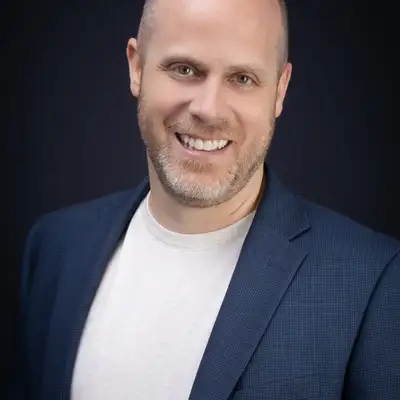
Welcome to Inside Marketing with MarketSurge — your front-row seat to the boldest business insights, marketing breakthroughs, and entrepreneurial real talk.
Hosted by Reed Hansen, Chief Growth Officer at MarketSurge and a digital marketing veteran who's helped scale everything from scrappy startups to Fortune 500 giants, this podcast dives deep into what’s really moving the needle in today’s marketing world. Find us at Marketsurge.io
Each week, we’ll break down the latest marketing and business news (minus the fluff), explore tech trends you actually need to know, and feature unfiltered conversations with the most interesting minds in entrepreneurship and marketing.
Whether you're a founder, a marketer, or just a curious hustler looking to level up, this is where growth happens—loudly, smartly, and with just the right amount of sass.
Subscribe, tune in, and let’s scale something legendary. 🚀
Speaker: Welcome to Inside
Marketing With Market Surge.
Your front row seat to the
boldest ideas and smartest
strategies in the marketing game.
Your host is Reed Hansen, chief
Growth Officer at Market Surge.
Reed Hansen, MarketSurge:
with Market Surge.
Most entrepreneurs say they want
freedom, but then they build a
Chris Kille: So
Reed Hansen, MarketSurge: guest
didn't talk just about delegation.
He rebuilt his entire business around it.
Chris Killey scaled and exited a
multi seven figure company by fixing
what most founders get painfully
wrong, hiring virtual assistants
without building real systems.
He went from burned out, buried
in admin, and stuck doing 10.
$10 an hour tasks to building a
lean high performance team powered
by global talent and walking
away with a life changing exit.
The dream now, he helps founders stop
being the bottleneck, install real
operational systems, and actually build
a business that runs without them.
doesn't do fluff, he builds structure.
Let's get into it.
Welcome to the show, Chris.
Chris Kille: Thanks for having me.
Reed Hansen, MarketSurge:
Yeah, my pleasure.
Alright, let's talk a little
bit about your background and.
Tell us, how you got here.
What was the breaking point where
you realized, if I don't fix this
business of mine is gonna own me?
What, where was that point?
Chris Kille: Yeah, I think I actually
lived there at that breaking
point for four or five years.
I had a credit card
processing business, right?
That I was in for about
20 years before I sold it.
Yeah.
And about 12 or 13 years in,
I really started to, I was,
I was making decent money.
I was making a couple hundred
grand a year, which was good.
Solopreneur, doing everything myself.
And I wanted to grow.
Like I wanted to scale.
I wanted to, you
know, make more money.
I wanted to be able to get bigger.
So that way I could
sell at some point.
But I just kind of, I, I
was caught in the grind and
it was, I was having a very,
very hard time finding a team
that one that I could afford.
Right.
I didn't want to
give up my lifestyle.
And so because of that, it was,
you know, either give up your
lifestyle and hire good employees or
keep your lifestyle and, and, you
know, keep doing what you're doing.
And, I chose, you know, to,
to maintain my lifestyle.
But you know, it was,
I grew to hate my business
and it wasn't so much about
like, I love the industry.
I love.
Everything about it, but I
grew to really not enjoy the
back end and the fulfillment
and the customer service part.
I'm not sure how familiar you are
with credit card processing, but
you know, most people aren't, yeah,
most people aren't very stoked
on their, on their rep, right?
Most people, you know, it's a,
it's a fee that's necessary.
To go by business, but nobody,
you know, I'm not, I'm not making
friends when I walk into a room.
That's for sure.
So, so yeah, I mean, I, I
lived in that for five or six
years where I was just miserable.
And, and I, that was when I learned
about, I was at a conference, a
business conference in South Carolina.
And I learned about virtual
assistants and, and what they could
do and, you know, that's, that's
kind of where my life changed.
Reed Hansen, MarketSurge: That's awesome.
Okay, so started working
with virtual assistants.
I know in, in some literature
I've read about you, you say that
hiring a VA isn't the solution.
Obviously that's a pro
provocative statement.
What, what does that mean?
VA isn't the solution.
Chris Kille: I mean, you got
to have the systems and
processes in place or it's
going to fail no matter what.
A lot of people they'll come to us
and they'll say, Hey, I need a VA.
And I'm like, cool, for what, right?
What, what is this
VA going to be doing?
And they're like, well, I don't
know, you know, like things.
And.
You know, going into any hiring
relationship with that, you
know, it's going in without
a plan essentially, and you're
just going to figure some stuff
out, eventually they're going
to run out of things to do.
And so, you know, without clear
structure, you know, it's, it's hard
to get a great person on the team.
It's hard to get a
great person to stay.
But then also, you know, you're,
you're not just hiring somebody to
run errands that they're going to
make an impact in the business.
There needs to be structure
around what it is they're doing.
Yeah,
Reed Hansen, MarketSurge: Okay.
I think this goes to the point of like
why delegation fails for most founders.
do you think that's a skill that
could be developed, like the
delegation skill or is it more.
More than that.
Is it like, process development?
What do you think the gap there
that needs to be developed?
Chris Kille: the very first thing that
we see, and this is 95 percent of
people that I talk to, if they have
a history of hiring, then it's not
as prevalent, but if you're new or
in the game, or this is your first
couple of employees, you know, you
don't have a big team underneath
you, The founder always struggles to
let go, like you gotta give it up,
and you know, it's because they've
probably tried a little bit before,
maybe with somebody else, that they
kind of tiptoed into it, and then
took it back right away, because
the person didn't do it, right,
exactly the way that they could.
And, you know, look, You're the
one who started the business, you
know, most of the time, you're
the one who, who's running,
who's doing everything and, and
really, it's very high likelihood
that no one's gonna be able
to do as good as you, right?
Reed Hansen, MarketSurge: Yeah.
Chris Kille: But, that's the
trap, that's the bottleneck that
they get stuck into because
there's only so much that you
as the founder can do, right?
Eventually, you have to delegate some
stuff if you want to be able to
focus on bigger things like growing.
And, you know, the biggest, hurdle
that we have in the beginning.
It's just getting to, you
know, you gotta let it go.
You gotta remember 80 percent
done by somebody else is
a hundred percent awesome.
And so, you know, it's just,
that's the biggest part.
And then we can worry about systems
and things like that afterwards,
but just getting them to let go
of the reins, even just a little
bit, it's that kind of thought,
Reed Hansen, MarketSurge: Okay.
Are there things that like pretty typical
of founders or business owners that they
should delegate or are, conversely, do
you have any examples of things that
they absolutely should not delegate?
Chris Kille: so what we always start
the lowest hanging fruit that we
have, we do a time study, which
is like, Hey, I need you to write
down what you've done every hour of
the day for the last seven days.
Great way to find
out where waste is.
And most people, they have no idea
how much time that they waste.
Myself included.
I do one once a quarter.
Reed Hansen, MarketSurge: Okay.
Chris Kille: And it's just
like, oh my gosh, I can't
believe how much time I waste.
But then, you know, we find out
what the stuff that they don't
like to do, that needs to be
done, that can be delegated,
either delegate or delete.
And that's kind of what it is.
Like a lot of stuff people do.
It doesn't even need to be done.
We just not do it and it's
not going to affect anything.
But typically the lowest
hanging fruit, right?
If we're hiring like an
executive assistant for a founder
is going to be email just
getting in there in the inbox.
You don't have to respond to him.
They don't have to reply.
It's not.
They're just somebody coming
in and organizing it.
So that way.
When you open your inbox,
however many times a day
you do it, I do it once.
I used to check it a
hundred times a day.
I now check my email once a day.
And I go in, my executive
assistant has everything outlined,
they have everything organized,
and like, I only focus on a
certain subset of the inbox
that's tailored just for me.
And I go through that.
I'm usually in and out of
my email within 20 minutes.
Reed Hansen, MarketSurge: Okay, so
you're saying if I need to get ahold
of you fast, I should text you.
I'm kidding.
Chris Kille: Yeah.
Oh, so my EA is in
there all the time.
She sees them as
soon as they come in.
So, and we've got a
relationship where she can
respond to some things,
Reed Hansen, MarketSurge: Okay.
Chris Kille: yeah, that's
Reed Hansen, MarketSurge: Okay.
Chris Kille: easy.
Reed Hansen, MarketSurge: Awesome.
Okay, so you have a
formal engagement, you.
What does it look like
in the first 90 days?
So you mentioned you do the time study
and that seems like a great approach.
What, what else is involved in this
are, so you're starting to build
what are the, where's the waste?
What's next?
Chris Kille: Yeah.
So a lot of times, you know,
what, what we'll do is we'll,
there's usually only a certain,
a couple areas of focus that are
pretty consistent in most people.
One of them is going
to be lead follow up.
Email organization, just, just general
executive assistant type things
you can do, accounts receivable.
There's all kinds of different
things that can be done.
But what we do is during
our discovery process, Well
actually we actually help people
build out a 90 day roadmap.
It's funny that you say 90 days
because we want to be able, we want
people to be able to actually track
the progress and see the deliverables
as they're coming through.
At the same token, we want to
make sure that people's expectations
are in alignment because sometimes
you'll run into somebody that's
like, I expect this person to be
able to do everything on day one.
And it's like, you know, that's.
Yeah, we gotta, you gotta ease
into it, you know, we gotta
onboard the person first, gotta
show them where the bathroom
is, you know, before, you know,
before they're answering the phone.
So, yeah, so that's,
that's something we put
together in 90 Day Roadmap.
Reed Hansen, MarketSurge: Okay.
So talk a little bit about
the VAs you hire, so you to.
A wide variety of skill sets.
Are they typically offshore what are like,
what's like a rough description of the
profile of a VA that you're working with?
Chris Kille: Yeah, so for us, we tend
to stick primarily to administrative
and operational virtual systems.
We get into a little bit
of marketing, but that's
more of like a lead follow.
Most business owners, when a lead
comes in, they're not very good.
The speed, the lead, getting
all of the person actually
booking the appointment.
That's something we're very good at.
But, and, and my whole team
is based out of the Philippines,
but there are, you know, there
are VAs for everything, right?
I mean, if you want a marketing,
if you want a sales, if you want
a computer coding, if you want
a copywriting, right, there's, if
basically if there's a skillset
that can be done remotely,
you can find a VA to do it.
Reed Hansen, MarketSurge: Okay.
And when you, yourself, you had your exit,
you had I don't know if it was a hundred
percent virtual team, but maybe talk to
that and what was like the organization?
Did you have VAs supervising other VAs?
How, did you have that hierarchy?
How did that look?
Chris Kille: I did.
Yeah.
So I had one, domestic salesperson
and, and then I had four VAs from
Reed Hansen, MarketSurge: Ah, okay.
Chris Kille: Yeah, and so actually
when the company who bought me
looked at my books the first time,
they thought it was a mistake.
They thought we were lying because
of how lean we were, that like
the productivity that we were able
to put out, you know, against
the, the, The number of team
members that we had and then
obviously the salaries was, they
thought it was a mistake at first.
They actually, before we closed,
they said, this is the leanest
business we've ever acquired.
Reed Hansen, MarketSurge: Did, did
they inherit your VAs as well, or did
Chris Kille: Yeah, whole team came.
Yeah, even the Americans, or
even Olivia was her name.
She went over with them.
They're still, this was
just over a year ago.
It's actually a year and a month
ago we closed on January 12th.
But, it was, like a little over
a year ago, the entire team went.
The entire team is still there.
That business is up 30
percent since they bought it.
It was a great deal for everybody.
Reed Hansen, MarketSurge: Congratulations.
That's fantastic.
Chris Kille: Yeah, that's great.
Reed Hansen, MarketSurge: You've,
you talked a little bit about, some
of the literature I've had from
you about the difference between
being an operator and a CEO.
Chris Kille: Yeah,
Reed Hansen, MarketSurge: on this
a bit, how do you make that jump to
be the CEO from being an operator?
The big difference?
Chris Kille: I mean, operators
involved in everything.
That's, you know, the word of it
is you're operating the business.
And, you know, I was stuck
there for a really long time.
And look, I'm going
to be honest with you.
You know, we, my company
now, EO, it's ran 100
percent in the Philippines.
And, you know, I wanted to
prove that it can be done.
So every single one of my
employees is in the Philippines.
I'm the only one here.
But, I still get sucked into
the day -to -day sometimes too.
So I don't want, you know,
people to think that I'm just
like sitting here going, Oh, you
know, and I don't want to remove
myself from the business, right?
Cause that's a little bit, I
don't want to replace myself.
I like this job, you
know, that's awesome.
And you know, and that's,
you can step away at
the level that you want.
But for me personally, I find that
I am much more productive to the
business and the rest of my team.
I show up better for
everybody in my life.
When I can focus on the things that
I like to do and the things that
I'm good at and some of the stuff
that I'm not good at is, you know,
being down in the weeds and the day
-to -day operations, making decisions
that really don't, you know, you
know, not making major decisions.
I want to make the
big decision, right?
I want to be able to go out and
shake hands and kiss babies and
pick up, you know, big accounts.
And, you know, pick up partnerships
and go on podcasts and do
silly videos on my phone.
And, you know, that's the kind of
stuff that really gets me jazzed up.
Not sitting in meetings all day.
And so...
The biggest difference between an
operator and somebody who's CEO
visionary level is, is what it
is that you're actually doing.
You're still hands on
everywhere, you're an operator.
Reed Hansen, MarketSurge: Yeah,
so you probably have to elevate
these virtual assistants to a level
where you can really trust them.
How do you build that trust?
These are people that you.
Don't meet in person that you, at
least not on a regular basis, you
know what, how do you build that trust
or make them trustworthy and help
Chris Kille: Yeah, I mean,
that all comes down to
screening initially, right?
So we don't hire anybody who's
green, nobody right out of school.
That's something that there are
a lot of companies that do.
And that's great, right?
There's a need for everybody.
Everybody has to get
experience somewhere.
From us, you know, we, we
tend to pick a more, a more,
Employed whenever they come in.
Somebody's got a little
bit more experience.
That also means that they've got
a longer work history, so we
can go back and we can check.
Obviously, we do, you know,
criminal background checks,
but those only go so far.
Right.
And, you know, just like here
in the States, just because
somebody's got a clean background
doesn't mean they haven't
done anything in the past.
And, you know, it just comes down
to the, the character screening
and, you know, and, and being
able to check references and just
going by your gut, too, you know,
some people you just get the X
from and we don't hire them.
Reed Hansen, MarketSurge:
No I totally get that.
I've had some virtual assistants and it's
been, hit or miss and I wish I were a
little bit better at the, at screening.
I've had some good ones for
sure, and, but it felt like less
of what I did and more of luck.
And then the bad ones I could
see ah, there were probably
Chris Kille: Yeah.
Reed Hansen, MarketSurge:
Flags I should have caught.
But do you feel like I, I wanna
talk a little bit about your, like
looking back, you've exited, you've
sold, you've been very successful.
Now you're on your second or your
next step of your journey, if you
had to do everything you did in your
previous business over again, is
there anything you'd do differently?
Would you have taken anything
a different direction?
Would you have tried to shorten
the cycle and exit earlier?
I dunno, I think.
Chris Kille: Yeah, so I wouldn't
do anything differently as to
what's already been done, right?
But what I can tell you is I am
doing things differently this time
from a go -to -market standpoint.
Reed Hansen, MarketSurge: Okay.
Chris Kille: what I found towards the
end of Payment Pilot was when we
really hit our stride, we weren't
trying to be everything to everyone.
Obviously with credit card processing,
if you're a business and you
take credit cards, then you're
technically a prospect for me.
Reed Hansen, MarketSurge: Yeah.
Chris Kille: what we did was
we found a very, very small
niche inside of another niche.
So it was like a
micro, micro niche.
And that's what we hit.
We just targeted it.
And that's all we did, you
know, it was the only language
we spoke, the only types of
people we were talking to.
We had one offer for everybody,
one pricing and one, you know,
value, value add essentially.
And that was once we started
focusing exclusively on one
lane, we got into a very
small lane and stay there and
didn't deviate from it at all.
That was when things
really started to take off.
Same thing right now
with what we're doing.
And, you know, oddly enough,
I came into this business
thinking that I was going to
be everything to everybody.
And then it took me about a year
and a half to be like, Oh, you
know what, man, I'm doing it again.
So, switched over into, you know,
shifted over into this, and, and,
and it's been, it's been great.
We work with franchises, and
we direct it, but it's such
a great, such a great product
to bring to them, yeah.
Reed Hansen, MarketSurge:
that's fantastic.
Do you feel like businesses are you
running into this over and over again?
That businesses, founders, are they
misunderstanding global talent?
Are there key things that,
like lessons that they.
You teach and reteach.
Chris Kille: Yeah, the funny one,
and it's, I don't know how funny
it is that that's the word I
want to use, but this happens
when, with newer people, or
people that are new to hiring.
They think that they're going
to get this person for like
four bucks an hour, right?
That will run their
entire business, right?
There's a lot of stuff that
you read online and, you
know, obviously not everything
you read online is true.
And there are some other companies
out there that set expectations.
And, you know, it's, there are
people out there that are very,
very talented and that can do
a whole lot in your business.
And obviously they're not at
the $4 an hour price point.
I mean, if you can find, I
don't know, but, but, you know,
just getting people's expectations
realistic again is because they think
that, you know, I had a call the
other day with a guy and he had
like three full pages of things
that this person wants to do.
And I was like, this is
work of like 10 people.
Five people and not even exaggerate,
like this is an entire team
and, he's like, no, no, no.
I think one person can do this.
And I was like, dude.
And so that's one of the biggest
things we see is, you know, just
want to make sure everybody's
expectations are kind of in
alignment before, before we move
forward or we don't move forward.
But, that's, yeah, just make sure
everybody's starting off on the
right foot with, with expectations
that are, that are realistic.
Reed Hansen, MarketSurge: Yeah.
And I like to hear you say that,
I feel like, you're in it and
you're sourcing these people and,
helping build these processes.
I think, man.
Managing expectations,
I think is really key.
That tell us, so you've, you are
obviously well read and, you're,
you think a lot about business and
strategy what are some of the books or
do you have any recommended podcasts?
Any, anything?
I'd love to talk, about the
things you write and present.
What tell us a little bit
about what you're reading,
what you find very valuable.
Chris Kille: I think books, right
now I'm into communication style
books to help me to improve
the way that I speak to people,
you know, being able to listen.
There's a, there's a book and it's,
it's, I left it out on the, on the
counter, I think a week ago, and
my mother -in -law was over and she
probably thinks I'm so arrogant now.
There's this book, I forget
who wrote it, but it's
called Surrounded by Idiots.
And it's, it's just, it doesn't,
the title is strange and he's got
a couple of other books and it's
all, you know, they're all similar,
surrounded by whatever, but, it's
just a book about communication
and being able to communicate with
people who don't communicate with
you, like, obviously, I think most
entrepreneurs are, you know, typically
there's an era, there's a bit
of neurodivergence with them, in
terms of we just We don't think
like other people, for the most
part, we're usually very tolerant
of risk and where most normal
people would say, you know, no,
no, no, I don't want to do that.
Right.
You know, some of your entrepreneurs
be like, no, no, let's go.
Let's do that.
And, So being able to
communicate, but then also
books on efficiency, right?
I still think that, there's a
great book before they got into
this industry called Who Not How?
Great book.
And that's basically like,
instead of going out and trying
to learn how to do all these
skills yourself, go find somebody
who already does know how to
do them and hire them, right?
Great example would be, if I
wanted to be a video editor or
a web designer, I could spend six
months learning how to, You know,
code pages, but learning how to do
that, and I would still be probably
below average, or at best, mediocre.
You know, I just took six
months of my life to learn a
skill that I'm not good at.
However, right, I could take,
I don't know, what it, you
know, you go on, you find a
freelancer for that, and for a
couple thousand bucks, and in a
week, right, you can, you can
have the same thing accomplished.
So, Who Knot How is a great book.
Also there's a book by Dan Martell.
He's one of my coaches.
It's called Buy Back Your Time.
I'm not sure if you've
ever read that book.
in my opinion, best
business book ever written.
Right?
And I'm, that's a big one.
Most books are fluff in
terms of it's conceptual.
Hey, here's an idea and you
figure it out on your own how
to actually make this a reality.
I've actually Yeah, exactly.
You know, it's like, Hey, cool.
You know, this is this.
I just wasted, you know, two days.
But he wrote a book called buy
back your time and it is tactical.
It is completely.
So here's the concept.
Here's the lesson.
Here's the step by step.
Here's the homework assignment.
Go do it.
And each chapter, you know,
is that way and they're
not, it's not difficult.
It's very, very easy.
When I read that book, and
this is, Reid, I'm not,
I'm not exaggerating at all.
I called my team after I
was done, and I said, We are
completely revamping the way
that we onboard clients, and
we're going to follow this book.
So, we had a, a method before
that I think was pretty effective.
I read this, and I was like, that
method sucks, we're doing this now.
And, like, almost
immediately switched it over.
And so, yeah, it's, it's
a, it's an incredible book.
All
Reed Hansen, MarketSurge:
I am writing this down.
This I
Chris Kille: right.
Reed Hansen, MarketSurge: That
Chris Kille: You do a good
job selling it, don't I?
Reed Hansen, MarketSurge: Yeah, you
Chris Kille: You're showing my,
Reed Hansen, MarketSurge: Yeah.
Chris Kille: you're showing
the affiliate link.
Reed Hansen, MarketSurge: do you
have an affiliate link or something?
I don't, but in any case, Chris, you have
a lot of really interesting experience
and I appreciate the insight, having
successfully exited yourself, and
that's a really important perspective.
If you're gonna work with a vendor of
any kind, somebody that's actually.
Been through it and hit the
high point for a founder and
the exit, and that's fantastic.
So congrats on that and congrats
on this current venture and people
would like to work with you.
Chris, where can they find you?
Where are the best places?
Chris Kille: Yeah, easiest place
to find me is on Instagram.
I'm always dicking around on there.
It's IamChrisKilly is,
my handle on there.
And, you know, to your point,
you know, just a second ago,
I think one of the things
that really separates myself is
I've actually done it, right?
I didn't just read
about this somewhere.
Like I took this concept that
was, you know, I didn't invent
it, but I got very good at it.
Used it for myself and
then said, you know what?
Hey, I'm going to start a
business, you know, doing this.
It wasn't until after I built the
business that I started doing this.
But the other thing
is, is most people.
You know, they still
think they hear VA.
They're not really sure.
Is this Alexa?
Is this somebody that's a, you
know, so I actually created a
guide that is the ultimate guide
to virtual assistant, right?
Not a sales pitch.
It's not a webinar.
It's nothing.
It's like literally everything
that you could and would need to
know about the industry all the
way from, you know, the types of
people, what they can do, how much
they cost, where do you find them,
even about the Filipino culture.
It's a very, very comprehensive,
you know, and I give that out
to people who, you know, just
to spread awareness about it.
So, you guys follow me and
then DM me the word read.
What I do is I'll send it
over to you and, you know, and
that's, and that's been returned.
Reed Hansen, MarketSurge: Awesome.
I will take you up on that.
That's fantastic.
Thanks so much Chris.
I'm gonna include this
information in the show notes.
Refer to those and please
reach out to Chris.
Obviously you've got some great
resources and some I think you'd
be a great asset to help a team,
a founder really get the freedom.
Thanks so much Chris.
Chris Kille: Yeah.
Thanks for having me.
Speaker 2: Want to stay ahead of what's
actually working in marketing right now.
Head over to Market surge.io
and see how we're helping businesses
grow smarter, faster, and louder.
That's market surge.io
because your next breakthrough
shouldn't be a guess.