Subscribe
Share
Share
Embed
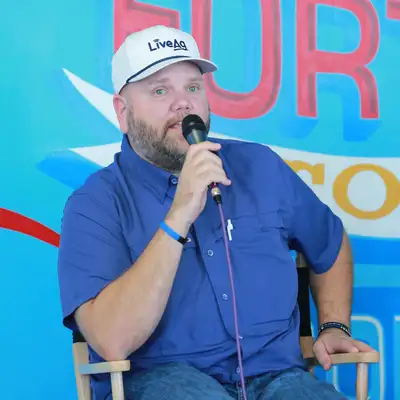
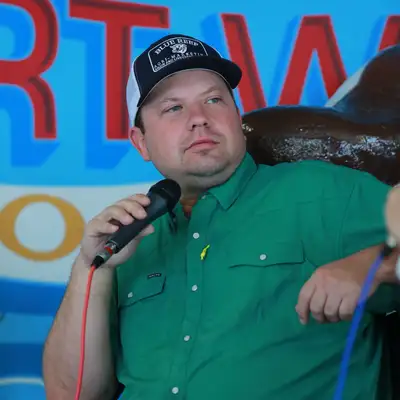
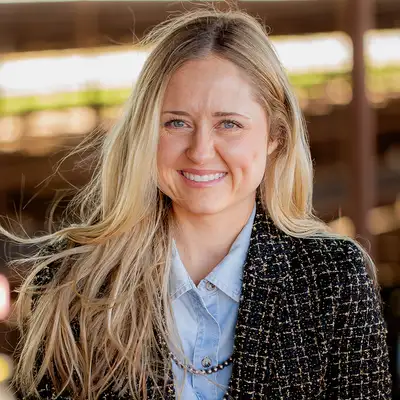
Welcome to the "We Live It" ranch and livestock marketing podcast, where cattle market intelligence meets ranch-ready wisdom. Join hosts Ty deCordova with LiveAg and Casey Mabry with Blue Reef Agri-marketing as they bring you straight-talk market analysis, proven strategies, and insights from industry leaders who understand ranching isn't just a business - it's a way of life.
From livestock market trends to cattle management practices, each episode delivers actionable knowledge to help take your ranching operation to the next level. Whether you're in the saddle or in the truck, tune in for conversations that matter to modern cattlemen. Because we don't just talk about the cattle business...we live it.
Of the most common questions that we get asked are about ag media and how ag media is changing, especially with, you know, as younger generations take over. And how we kind of address that is, it's not that people are consuming less information. People are consuming more information from more sources every day. It's a matter of them finding the sources that they connect with the most and that's where having trusted farm broadcasters is really helpful and really beneficial.
Speaker 2:That's a head on. We live it. The live ag podcast from seed stock bull sales built on generations of performance to commercial video auctions backed by real relationships. To equipment auctions that keep operations moving forward. Live AG connects cattle producers to opportunity Quality cattle deserve premium prices.
Speaker 2:The right bulls deserve more buyers and dependable equipment deserves a fair bit. Whether you're consigning to a live AG video auction, marketing seed stock or moving iron through the equipment exchange. We combine local representation with nationwide reach. Connect with your live Ag rep by scanning the code on your screen or visit us online at live-ag.com. We are proud to be powered by Biozyme, the makers of VitaFirm and GainSmart, value added nutrition partners trusted by cattle producers across the country.
Speaker 2:Now here are your hosts, Ty deCordova and Casey Mabry.
Speaker 3:Welcome to the We Live It Podcast. Myself, Casey Mabry, and co host Ty deCordova. We're excited to have a couple guests on here today. We've got the team from the Northern Ag Network, Coulter Brown and Emilia. I know I'm mess that up.
Speaker 3:Saroki. And excited to have you guys on here to work with us. I know that Ty and his team have been working with you guys pretty extensively here. Just to let everybody know who the Northern Ag Network is that's not necessarily in your region, let us know who you guys are.
Speaker 1:Yeah. Thanks for having us on. We really appreciate it. Our network is over 50 years old. We cover all of Montana, all of Wyoming, and the Western half of North Dakota and South Dakota with daily ag news, weather and information, primarily via radio.
Speaker 1:We've got about 60 radio stations in that coverage area. We also have a very active website, social media following. We produce, daily videos, and then we also do podcasts as well.
Speaker 4:The podcast is fairly new, so we're actually looking to you guys to steal some ideas from you of what works well.
Speaker 5:I don't know if I'd do that or not. Just winging We're just winging it. We're just two country boys trying to figure it all out ourselves too, though. But, main thing is just don't get no script, just go off cuff. And that's what we do next, I guess.
Speaker 4:So That sounds risky. I don't know. Well, we'll see how it works out.
Speaker 5:Culture, kinda give us a little bit of background of yourself. I mean, where'd you come from? How did you end up in the industry? Kind of the things you do there for the network?
Speaker 4:You bet. Well, I can give you the really short story of how I ended up here at Northern Ag Network. I was born. So it's actually a a family company that, we've been involved in my my whole life. Like Emilio mentioned, the company was started in 1975, by Conrad Burns who hired my dad Taylor in 1979.
Speaker 4:And so dad joined up with the company and ended up buying it from Conrad when he got into political office. And so it's been in our family my whole life. Never really intended to to come back and be an on air broadcaster. Actually, went to college at Montana State in Bozeman and was actually in banking for a while with with farm credits, spent five years there. But the opportunity came that that there was a need here and I was ready for for a change.
Speaker 4:So now I've been back for eight or nine years and, just just enjoying the the the ability to to help producers and and serve folks across Montana Wyoming and the Western Dakotas. We should also mention our family has a a cow calf operation in North Central Montana. So my older brother, Travis, runs that, and we're free labor whenever he needs it.
Speaker 5:Just a true meaning of we live it right there. Not only do you help the Oh, produce wish I that voice.
Speaker 3:Oh, he's way better than
Speaker 4:we do.
Speaker 5:I'm telling you right now.
Speaker 3:Way better than me.
Speaker 5:He's way, way better. So
Speaker 4:It's just genetics, guess. I grew up listening to my dad. So probably the number one thing I hear is, oh boy, you sound a lot like your dad. So finally just had to steer into the skit and be like, I guess there's worse things to sound like.
Speaker 5:So Amelia, how did you kind of end up end up here?
Speaker 1:Yeah. So I am a fifth generation Montanan as well. My family ranches probably 80 miles from Coulter's family in Central Montana. I went to college in Wyoming, also went into banking for a few years and then the opportunity came up to move back to Montana. I'd been around and heard of Northern Ag my entire life.
Speaker 1:They were always at State FFA. My mom was into marketing, so we were always like coming to radio stations or she was on TV and I was always going with her. So the opportunity came up at Northern Ag and I jumped at it. I've been here almost a decade now and I'm on the sales and marketing side. So I work with probably about 300 clients.
Speaker 1:Some of them being like full sales, other ones being big national clients, on all of their advertising and marketing.
Speaker 3:So did you do the the radio broadcasting in FFA?
Speaker 1:I did not. I did Extem Speaking.
Speaker 4:Wow. We don't actually have a radio broadcast competition in Montana. So I did prepared speaking in in FFA, but I think most all of us on air, actually, people in our company, FFA is is where they learn to talk. So that's like the most important thing on a resume when we hire people. Were you an FFA?
Speaker 3:Yeah. No, that's a Ty Ty and I had our conversation, what, a month ago or something was his daughters are working on their project for their their LDE. Yeah. LD? Yeah.
Speaker 3:LDE. Yeah. For next year. And we weren't even talking about businesses. More spending time on getting their project dialed in and bringing other people in.
Speaker 3:And so Ty and I are, like, super big supporters from that standpoint. And, like you said, I mean, I'm a big, big believer in hiring people that came out that program as well.
Speaker 5:Absolutely. Yeah. We back the FFA deal a lot, that's where our future industry is, FFA and four H, and we're big supporters of it. Like you said, they can learn a lot on speaking and different and being in public and how to operate, not just locked into their devices or in the house watching TV or nothing, they're at the barns a lot. So we love that part of it.
Speaker 5:Just kind of get into a little bit of the markets, kind of what how's the market trend in Montana and up in the Northern states, Montana, Wyoming, South Dakota, what are y'all seeing? What are y'all seeing on numbers? What has the fires and the droughts done to y'all in the last couple of years? And what does that look like on those inventory? I mean, and how's that affecting different things?
Speaker 4:Yeah. Well, I suppose from an overall market standpoint, be similar to what you guys are seeing, it's just fantastic, almost as as good as it's ever been or or pretty close to it. So that's, much appreciated, especially right now where, boy, across, I'd say, 90% of our region, we're battling drought right now. And, you know, it's it's spotty. Some areas are are better than others, but pretty much everybody is is feeling it.
Speaker 4:And especially in Wyoming, I would say, just drove literally across the state here over the weekend and boy, there are some really tough pockets and we've seen a lot of cattle sold already, a lot of yearlings that would have gone to grass and and sold later in the summer have already gone. A bunch of pairs across the region where more cow cat pairs than I can remember selling, in in a season in in my career here. And and then of course the the dry cows were were hitting that market pretty hard. So sure are thankful that that these prices are so good because it it's gonna be a challenging year and especially when you couple that with what guys are gonna have to pay for feed this year to have the the hay and forage to get through the year. I talked to one guy in Central Wyoming here and he said they just stopped feeding hay on Sunday and and that's just how bad it is.
Speaker 4:And he said, usually we try not to feed any hay through the entire year. So, there's there's some real challenges and so when you figure our our hay production's gonna be down because it's dry, because we don't have the irrigation water, and then what is it gonna cost to ship that hay in this year with diesel where it is, it's it's gonna be a difficult year. Sure, it it'll be profitable I think with with just the level of of markets that we're talking here, but a lot of that money is gonna be eaten up. So it's it's kind of interesting as you talk to producers where you have so much optimism from the market, but gosh, on Friday, there's a lot of challenges. Not to mention, you know, the overall market headaches and what are we gonna do with new world screwworm now and and all the the news headlines that affect it.
Speaker 4:But it it's an interesting place. But I I I do think this cattle market is outstanding. Looks like it's it's got some staying power. We'll see what the the video sales do this summer, but they seem well positioned to potentially set some more records this year.
Speaker 5:Comes to selling cattle, performance matters. That's why BioZyme Incorporated and LiveAg have partnered to bring more value to beef producers across the country. Cattle fed VitaFirm and GainSmart products are backed by proven nutrition programs designed to support reproductive efficiency, feed efficiency, and overall herd performance. And now through LiveAg's nationwide video auction platform, those nutrition backed cattle are positioned in front of buyers who recognize the value of a documented premium feeding program. This partnership connects what happens in your pasture with what happens at sell time.
Speaker 5:Better nutrition, better documentation, increased market exposure. Talk to your buyer's arm or your live ag rep, or visit your local dealer to learn how Biotofirm and GainSmart paired with LiveAg marketing can help your cattle stand out when it matters most. Yeah. I know that I'd think this summer we could see some.
Speaker 3:Yeah. There's been tons of optimism out there. And I'll tell you, I mean, like, you guys are having to deal with the headlines each and every day and actually probably recite the headlines in a lot of cases or, you know, really elaborate on them. But I know that the weather's definitely been a major impact. I know your grain situation predominantly in those areas that rely on ditch water coming out of reservoirs and things like that, Eastern Wyoming and those areas, they're going to have some issues not having enough water to irrigate those crops.
Speaker 3:And I know that those local corn bases are something that we'll probably have to keep a pretty close eye on here as we start going through the growing season and get into harvest and things like that from that situation. But yeah, cattle have been incredible. And you know what? It's probably time to reward the corn farmer too, you know, because it's been pretty tough.
Speaker 4:Well, that's true. That's true. And and you mentioned, where we're at in herd rebuilding. And I'm curious for your guys' thoughts on it because at the start of the year I would say this market is too good not to grow the herd. Like you you just can't be talking profitability at this level and have guys not wanting to to hold back heifers and expand it every second and now my my tone has totally changed Like, I don't see any way we can grow numbers at least in this part of the world when when it's as dry as it is and guys are already having to pull back on their numbers to save what grass they can.
Speaker 4:Thankfully, we we did get a pretty good shot of rain at least in Montana here. I guess it was two weeks ago. So that, you know, put a little bit of hope or at least reminder that it can rain around here. But I I don't see how we grow this cow herd, which you take that to the macro level. If we're not growing the the cow herd, well then the price probably just stays elevated for longer.
Speaker 4:I I don't know. What what are you guys seeing in your part of the world?
Speaker 3:Yeah. I'd say I mean, here's I'm a I'm a big, incentive drives outcome kinda person. And I know that whenever we start talking about all the things that are difficult to do that, but just as dry as it is in your area, there's other pockets of the country that are experiencing really good rainfall. And so the good thing is we can stick a lot of these cattle on a truck and move them somewhere, and there's somebody that's willing to do it. I think whenever you go look cow slaughter is, I mean, how reduced the cow slaughter is, it definitely tells me that we're not liquidating and we're probably doing some, a little bit of expanding because expansion doesn't necessarily we see this in the dairy herd.
Speaker 3:The dairy herd's grown by 400 to 500,000 the last year, and it's really done through lack of culling because we've made the cow herd older in that deal. We got more longevity in the cows. I think we're seeing that also because you can make the cow herd bigger by not slaughtering, right? Because it's not necessarily adding to, it's just not subtracting from. The other thing that I would tell you, and I actually made this comment to Doctor.
Speaker 3:Peel once, I was on a panel with him at NCBA, I think a little bit of the heifers that are in the cattle on feed report, the industry is probably missing that from some degree, in my opinion. Because ten years ago, we didn't have heifers on feed from the dairy supply chain. In the feed yard numbers, it was only steers, because all the heifers were Holstein heifers that were getting put back into Holstein herd, and we were culling the dairy herd, at a much more rapid pace and replacing that faster. The dairy industry has gotten extremely efficient as growing their sexed heifers out of dairy heifers. And then the rest of them are just natural fall steer and heifer with a native beef type bull, whether that's an Angus bull or a Limflex bull or whatever that's bred onto them, and then we're feeding that.
Speaker 3:So what I would say is the heifers that are on feed today, it's probably a million, a million and a half head larger than what would have been there. So if you look at the population that's on feed and you say the heifer slaughter's big, the heifer slaughter big is big because a lot of them are dairy heifers that were terminal. Had never believed to go into that deal. So I think we gotta rethink the way that that's probably positioned a little bit. So the data's skewed.
Speaker 3:Right, take the
Speaker 5:R out.
Speaker 3:The data's skewed. And I think as we move forward, the dairy industry is actually going to flip to sexed bull semen and make more steers. So then whenever we get to the flip side of this deal, it's going to look like we're expanding and we're not. You see what I'm saying? So the data that we've historically relied on probably needs to be rethought and kind of just some theory around that to understand it.
Speaker 5:Absolutely.
Speaker 3:Because we could be getting signals that aren't necessarily accurate. But when you go back through it, I think there's certain pockets that it's difficult to do. But I'm telling you this, if I'm a cow calf owner, if a producer, I'm doing everything in my power to hold on to every cow or female that I can.
Speaker 4:You can't own enough of the revenue when those calves are worth this much.
Speaker 5:Yeah. Yeah. Get one more out of her for sure. Oh, for I mean, that's
Speaker 3:you bet. Yeah.
Speaker 5:Yeah. Talking about the drought and the and all the stuff, a lot of y'all's you got a lot of y'all's grazing is public land grazing. How does that how does that look up there? Are we are we gaining ground on opening any more of that up for access for grazing or or kind of what what is y'all's policies looking like on that?
Speaker 4:Well, we certainly heard USDA and Interior talk about opening up allotments. I have yet to talk to anyone that that's actually done that but apparently that that's the direction they're gonna go. And I don't know that how many vacant allotments there are out there that would really dramatically help grow the cow herd but but you're right. It it is a a big deal out here in our part of the world. I mean, of Wyoming is public land.
Speaker 4:And Montana is not quite that much, but there's sure a lot of of BLM and forest service out here. And it it's an important part of of what we do. And really, with with this administration, it's gotten a lot more friendly towards ranchers who graze on public land. They've actually got a new grazing regulation that's out for common right now and it looks pretty friendly that it's gonna provide us some more flexibility and pull back on the areas of critical environmental concern where they can put that designation on and essentially force it out of production. And, and they're actually going to apply rangeland health standards to everyone that uses public lands, all multiple use, not just grazing which has been the case since the nineteen ninety's.
Speaker 4:So, pretty positive on on that aspect. But like you mentioned, just a a critical portion of of how we how we are able to use the land out here. And and I think and and Amelia's family, I know, has a BLM allotments that they utilize as well. And it's it's trying to communicate that, I guess, to the broader public because out here, you know, the sportsman will say, well, the ranchers won't let let anyone utilize the public. It's public land, but if it's landlocked, no one has to let you into it.
Speaker 4:But I think the rancher cares for the public land like it's their own because they're intended on using it as long as they can. So there's no incentive to to not care for the land. Amelia, I don't know anything you'd mentioned on public land.
Speaker 1:We had a really interesting episode of our Next Your Country podcast at Wyoming Stock Growers where there's actually a guy talking about their allotment that burned up two years ago. And he was talking about how the herd rebuilding cycle kind of laid into that. They had this allotment that completely burned. They had to get all their cattle off of the mountain in quite a big hurry. It was quite an awful fire actually.
Speaker 1:But their herd was kind of in this point where they were considering rebuilding, but because of that allotment, ended up kind of leaving their numbers where they were and it ends up that it's gonna work out for the better. But it was an interesting kind of mix of where the cycle was mixed with how their allotments worked out and not being able to find much more for grazing. I thought that was a really interesting story.
Speaker 4:And one of our biggest public land issues out here, I'll just throw this at you guys and you can do what you want with it. It might be worth its whole podcast in itself, but in North Central Montana, we have a a nonprofit group called American Prairie that owns, what, 200,000 acres of land and controls probably double that in in terms of public land. And their goal has been to get the livestock off of it and stock it with bison and have a free roaming bison herd that is not managed as livestock. And so, that's been it probably the single most contentious issue in in North Central Montana. And just what, a couple of weeks ago, a month ago, the BLM finalized their rule that said, no, those bison cannot be on the federal grazing allotments because the Taylor Grazing Act intends for that land to be used for production, not a conservation herd that's not being used.
Speaker 4:So, if you guys want a big story that matters to guys in Montana that that would be a full podcast and then some. It's been a a fascinating issue to watch. It's headed back to court actually just this week but it's it's probably a a big issue that we talk about in how public land is used and can a a conservation group get ahold of it and kick all other uses off the land.
Speaker 1:And not public land.
Speaker 5:Yeah. So if they have control of those allotments, if if they're not allowed to graze said buffalo up there, then do those allotments go back into the public to where people that can graze cattle? Are they able to get them or do they still control those allotment?
Speaker 4:The allotment is tied to the land, but it creates an interesting idea. I don't actually know which direction the BLM's gonna go with it. Some of that would you wouldn't be able to get to it. Like, it it's public land for sure, but the private ground surrounds it.
Speaker 5:Surrounds it.
Speaker 4:And so how would and in that country, that's the Missouri River Breaks and so you can't get to it from one side and there ain't that many roads out there. But, yeah, it's an interesting standpoint. And the issue isn't that they're bison. It's that they're not managed as livestock. They're managed as wildlife even though they're an owned animal.
Speaker 1:The way that they phrase it is they're trying to create the American Serengeti. So they're trying to take out all interior fences and create this wide open range for the buffalo. The other problem that the APR kind of forces, they have endless money and endless pockets, and they are buying out ranches at a staggering rate where it is absolutely preventing the next generation from buying out ranches that are selling because they can afford to pay four or five, six times what the land is necessarily worth. If it's in an area that gets them access to some of these allotments or that furthers their map. It is, it's been an ongoing issue probably for almost two decades.
Speaker 1:There's signs all over Montana that say save the cowboys, stop the APR.
Speaker 3:Don't mean
Speaker 4:to send us down a rabbit hole, but that's kind of the issues we deal with in public lands out in the West.
Speaker 3:Yeah. And that's what was mean, a ton and I don't necessarily deal with that in our day to day life. And I mean, I know you guys have different things. And I mean, you probably sit there and talk about different predators that you have that, you know, are impacting maybe the livestock, but you can probably view those groups as predators as well, you know? Because they've got a game board up there, and they're playing chess on trying to figure out how to piece that around.
Speaker 3:And whenever you talked about, you know, surrounding the public lands with private land, I mean, it really you don't necessarily think about that, but that's, I mean, that's, that's something to kind of really, really, really focus on for sure as an industry.
Speaker 4:It is. And as a nonprofit group, they can, they can play the long game. They've got hundreds of millions of dollars. And if you won't sell your ranch, they can wait out, see if your kids will or your grandkids. So it's a challenging situation.
Speaker 3:Yeah. That's wild to think through. The closest that time I get to see that's on the Yellowstone
Speaker 5:TV show. You watch it.
Speaker 3:So, so.
Speaker 5:Oh, Lord.
Speaker 4:Meli, anything you want to mention? I mean, we're we're here on a podcast, a couple of radio guys. You want to talk about the the changing medium, how we reach producers? Yeah.
Speaker 1:Absolutely. Some of the most common questions that we get asked are about ag media and how ag media is changing, especially with, you know, as younger generations take over. And how we kind of address that is it's not that people are consuming less information. People are consuming more information from more sources every day. It's a matter of them finding the sources that they connect with the most.
Speaker 1:That's where having trusted farm broadcasters is really helpful and really beneficial. I can't tell you how many times I've gone to conventions with these guys and somebody will come up to them and start talking to them like they have known them their whole lives. And the guys will have no idea who it is most of the time. But because they listen to them every day, they feel like they really know and connect with the broadcasters. And that's their person.
Speaker 1:That's their person that tells them the markets every day. That's their person that tells them the weather every day. And so they feel like they just know everything about them and they know them personally, even when they might not necessarily. We have seen a shift in some ag media where there's been more requests from advertisers all the time, you know, for digital or podcasts, whatever the new shiny thing may be. I don't know about in your neck of the woods, but up in our region, we still struggle really heavily with internet connectivity and cell phone service.
Speaker 1:So while those are definitely gaining popularity, I can tell you like at our ranch, there is one tree on top of one hill where you can get one bar of service and there is nothing else. So if I need to send a text, I'm going to that tree, but there is no internet. I mean, Starlink is our only option out there, but we can get three of our Northern Ag affiliates on the radio. So in a lot of areas, especially in Wyoming and Montana, we're still struggling with connectivity. So where digital and podcasts may be the new bright shiny thing, they're not a 100% realistic in our region yet because of those issues.
Speaker 1:I think they will be in the coming years, which is why we've started to do more and more on that front. But in our region, radio remains king.
Speaker 3:You bet. That's something I didn't even necessarily think through that. I mean, that's because in today's day and age where you were I mean, you used to not have cell phone service in a lot of places you'd go. As my wife and I, when we first got married, we lived in Torrington, Wyoming. And so you hit an area between Torrington and Cheyenne where you wouldn't have service for 30 miles or something, and I'd get freaked out.
Speaker 3:But now it's like, you don't even have to worry about that. Where we live here, but like you're saying out there where you're at, yeah, there's definitely some issues there. But Starlink, I mean, is it making it to where you can pretty much have access anywhere?
Speaker 5:Have it on cash for my pickup. I take a little of help.
Speaker 1:And it helps a lot of guys, like if they do, you know, like bull sales, work with a lot of bull sales and I know there's a lot of them where like, okay, I haven't been able to do, you know, have video because I don't have internet. I don't have reliable internet at my house. I think Starlink opens up a lot of possibilities in that front.
Speaker 5:Absolutely. Everywhere we go, when we're out that way, we whoever the person is working that sale, they'll have a Starlink with 90% of the time. And, normally if even if they all do they do have house internet there, we'll we'll still hook the Starlink up and use it.
Speaker 4:So Well, and it's interesting how much you talk about not having oh, sorry. Go ahead.
Speaker 3:No. You go ahead. You're good.
Speaker 4:No. I was gonna say, you know, there there isn't a lot of service in a lot of places, but more and more producers our age are turning to podcast because, you know, you can download it when you have service and then as you're riding through heifers or whatever you're doing that day, you can have your earbuds in and listen to podcasts. So it's been kind of fun for us to transition and and get into the podcast space a little bit. It's very different from radio which is actually been a lot of fun for us because, you know, our radio programs, they're three to ten minutes long and so you're you're limited on your time. You have to be exactly that length and and you gotta be very purposeful with your words.
Speaker 4:But as we record these podcasts, boy, it's a lot of fun. You got all that time in the world you need, time to BS and and, you know, talk about the weather and whatever else. Like, well, this is kind of a lot of fun. So and and I think it allows, you know, our our listeners to interact with us a little differently where we can, you know, delve into a story a little more or, you know, we can speculate wildly on what the market's gonna do because we got the time to. So it's it's been fun.
Speaker 1:Yeah. New podcast is called Next Year Country and the premise of that is we were saying up here that there's always next year. You know, it might not look great this year, but there's always next year. So that's kind of why we went with that title.
Speaker 3:It's actually a pretty good one.
Speaker 5:Pretty good to pretty good model to live by.
Speaker 3:Yeah. Yeah. Even if it's a great year, you still got next year, right? Yeah.
Speaker 4:Yeah. Well, unfortunately, it feels a little too timely this year as we're, you know, we're interviewing some ranchers last week for it, and they're really counting on next year where it's so dry. Like, oh, this feels a little too timely.
Speaker 5:Yeah. Yeah.
Speaker 3:Well, we appreciate you guys getting on here, and I think it's awesome. And I look forward to things that we could do in the future for sure.
Speaker 5:You bet. Yeah. Future things and and becoming industry partners for sure and and kinda bouncing back and forth on each other's shows or whatever whatever that may look like. We're we're super excited about it.
Speaker 4:Something that that we started
Speaker 1:Four years.
Speaker 4:Four years ago, kind of as a way just to support and and thank our growers. We started a a tour, we call it, for the farmers, and, you know, do it during the harvest season and we'll take, boy, I don't know, 30 or 40, maybe even more people with us to literally just drive out to the fields during harvest and, you know, we talk to the growers beforehand, course, and they'll stop the combine, get out, and just, you know, meet people. And some of them are are directly connected to egg and they they see them all the time like they're, you know, local equipment dealer or so. But some of the the the companies, the people that'll join us, yeah, they know egg's important, but they're not on a farm that much. So to be able to, you know, look a grower straight in the eye and thank them for what they do, we got a big old goody bag for them.
Speaker 4:Depending on the grower, it may involve a case of beer too that they can, you know, save for later. But there's been some when they were rained out, just, you know, tore into the case right there as well. But it's been a just a great chance to to elevate what our growers do and of course, you know, we take our radio programs out in the field that actually starts with our our statewide talk show, Voices of Montana. So, we'll we'll start in town obviously where we got service before we do that. But it's been a really cool opportunity that has just grown and grown probably because Amelia sells it so well that people wanna be a part of this.
Speaker 4:But it's it's it's been a great opportunity and especially in a year like this with the challenges that we face to remind people the role that that ag plays in their daily lives. I mean, it it would amaze you even in a place like Montana as rural as we are how disconnected people get from ag so fast. So, it's been a a great opportunity for us. We'll be doing it again this year. We'll be in Northern Montana in in the Golden Triangle Of Great Falls in Conrad.
Speaker 4:And it'll be Northeast Montana as well in Culberson. So
Speaker 1:Yeah. It's a it's been a really fun tour. And we've done it like Colter said, will be our fourth year. But it is probably one of the most positive days you'll ever have. We always end it with kind of a social happy hour at a local bar.
Speaker 1:And at the end of the day, just feel like so good. You thank these people and every year we have somebody on the tour who says, no one's ever told me thank you before. No one, you know, no one's ever done anything like this. So you have these farmers who feel, you know, underappreciated and undervalued getting lunch and beer in the field, and they just feel really dang good about themselves. And in turn, I think all the sponsors have have really loved it.
Speaker 1:It's grown a ton. And it ties in really well to one of our other initiatives called Beyond the Weather. Beyond the Weather was a program we started in 2021 with the Montana Department of Ag that is about mental health and ag. Ag has one of, or has the highest suicide rate per occupation. Montana is also always in the top five for suicide.
Speaker 1:So this initiative was started to kind of destigmatize mental health and ag and become a topic that people are more comfortable speaking about. There's also free counseling access for ag producers that has went along with it. And the program was so successful in Montana that we actually ended up launching it in Wyoming as well. It's won several national awards. It has been incredible to hear stories from people.
Speaker 1:We had one guy who is this older, he's probably 70, gruff guy, really tough, who just said like, I don't know if I can really talk about mental health. I don't know. And we ended up getting him to do kind of a video interview with us, testimonial kind of interview. And since then, he has people that call him all the time, like once a month and we'll just open up to him because if he's willing to talk about it, they should be able to talk about it too. So it's been it's been really, really great.
Speaker 1:We call it beyond the weather because the first thing we talk about with everyone is the weather. And a lot of times we don't get far beyond that. So it's a hopefully it will keep going for many, many years, but there's lots of lots of really sweet and sad also stories that go with it.
Speaker 3:Wow. You guys are doing a lot of great stuff there from I mean, talking about stuff that's immediate, like the market stuff to real I mean, that's pretty encompassing. Right? Absolutely. To, you know, thank people and then also, you know, try to focus on helping people, whether that's like I said, there's lots of things
Speaker 5:Oh, that's a hug and a thank you or picked up a phone call and talked through some tough times, and that's pretty good, great program y'all doing there. Great program. Thank y'all, we wanna thank y'all for being on with us today. Appreciate your time. If we can do anything, just let us know.
Speaker 5:Ag Network, how do we how can they look you up? There's website. How do they find the podcast? You wanna give give plugs there real Yeah.
Speaker 4:Yeah. Thanks for the opportunity. So you can find, most of our information on our website. That's northernag.net. You know, follow us on Facebook, Instagram, Northern Ag Network, and the podcast is titled Next Year Country.
Speaker 4:So give it a listen. We're actually gonna be producing our episode, our next one this afternoon. So it's a lot of fun to be able to to produce that and appreciate you guys for having us on. I'd to get your contact information and and maybe have you on the network a little bit. Love to share some of those market insights or how the next, live egg video sale goes.
Speaker 5:You bet, you bet. We appreciate y'all. We wanna thank everybody out there in social media land watching the podcast. Like always, be sure to submit your questions to Casey, that's Casey Mabry, not Ty, he loves to answer questions. You can send them to katielive ag or you can just comment in the podcast session.
Speaker 5:So we will have links up for Ag Network also just to click to get to their site and to look around there too. If you have any wants or want to come on or want to sponsorship or anything like that, just katielive ag dot com. And then like always, God bless.