Subscribe
Share
Share
Embed
The Autism and Theology Podcast is a space where we engage with the latest conversations in the field of autism and theology, share relevant resources, and promote ways in which both faith and non-faith communities can enable autistic people to flourish.
Our episodes are released on the first Wednesday of every month. We have a variety of guests who are related in some way to the field of autism and theology. Some are academics, others are people with life stories to share, and some are both!
We also release CATChat every third Wednesday of the month. These are shorter and more informal episodes where your hosts will share news and give you as listeners an opportunity to ask questions and share your stories.
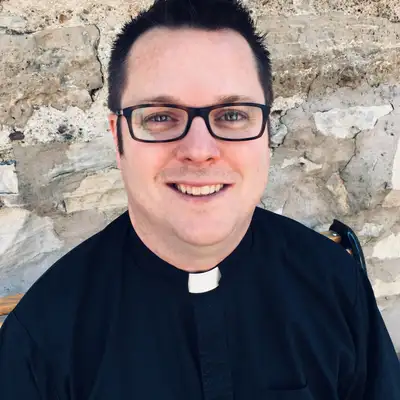
Monica and Harry
===
Zoe: [00:00:00] Welcome to the Autism and Theology Podcast, brought to you by the Center for Autism and Theology at the University of Aberdeen
hello, and welcome to this episode of the Autism and Theology podcast. I'm Zoe, and it's great that you've joined us this week. This podcast is a space where we engage with the latest conversations in the field of autism and theology, sharing relevant resources and promoting ways that help faith and non-faith communities enable autistic people to flourish.
This podcast is run from the University of Aberdeen's Centre for Autism and Theology, which we've shortened to [00:01:00] CAT. And you can find the transcription for this episode in the show notes. So today, I'm absolutely delighted to have Harry Gibbins and Monica Jones with me, to speak about a project they did with Leon Van Ommen on autism and spirituality.
So Harry and Monica, I wonder if you wanna just quickly introduce yourselves and, yeah, what your research is and what you do.
Harry: Uh, yeah. So, uh, thanks for having us. Um, my name's Harry Gibbins. Um, I am one of the researchers at the Centre for Autism and Theology. Um, my, my usual topics are stuff around autism and Christian ministry.
Um, but today we're talking about a, a, a different project, but you'll see how those things kind of overlap as well. Um, Monica?
Monica: Yeah. Um, I'm also a researcher- Yeah ... with the Centre for Autism and Theology. Um, and my current research project, my main one, uh, looks at the experience of belonging by autistic, uh, Christians, um, and [00:02:00] essentially asks, how do we know we belong to, uh, churches?
Um, so it's good fun. And, uh, Harry and I both, when we were completing this project, found certain ways it kind of resonated with many of the other parts of our- Mm-hmm ... unconnected personal research projects. Um, so- Indeed ... yes, we very much enjoyed that aspect of it.
Zoe: Great. Thank you both. And I think it's also important to say that once this episode comes out, Monica's thesis will be submitted.
Mm-hmm. Yeah. Which is very
Monica: exciting. It's being submitted in, like, three days. Yeah. Amazing.
Zoe: Cool. So yeah, you've just done this project on autism spirituality that's gone on for, like, a couple of years, has it? Like, it's been a big- Mm ... chunky project. Yeah. Um, and yeah, I wonder if you could give a summary of the research for our listeners, um, yeah, on what the research was and, yeah, how it came about.
Harry: Sure. Um, so- The idea with this research was to [00:03:00] respond to a common, uh, I guess trope or commonly cited statistic, uh, that you would sometimes hear in conversations about autism and religion. Um, and that concerns the fact that, that autistic people, um, are not spiritual. That's the claim. Autistic people are not spiritual.
Um, and, uh, Léon, who was the kind of principal researcher, principal investigator for this project, uh, he had kind of, um, realized that he had made himself surrounded by lots of very spiritual autistic people, um, through his work with the center. Um, and it caused him to think, "Well, maybe there's something in this.
Maybe there's, there's more to this than just the very statistical scientific data, uh, that's making that original claim. Is there a way that we can respond to that?" Because we know that there are autistic people who are spiritual, who [00:04:00] have very, um, active faith lives, are religious, however you wanna describe it.
Um, and so the plan was, uh, to take a qualitative approach instead, um, to compare that to, um, and contrast that with the more quantitative studies that have come before, the quantitative studies that are saying autistic people are not spiritual. So, uh, we, uh, did a what's called a... We took a grounded theory approach.
Um, that was our methodology. Um, in simple terms, that means that we're gathering qualitative data. In this case, it was through interviews. And we're using those as sort of building blocks to create a theory. That's the core of what we're trying to do. And so to do that, we interviewed thirty-one people.
They were all autistic, and they all described themselves as spiritual or religious. Um, we actually kind of... We had a, a, a survey that went out as well, so we could gather a little bit of [00:05:00] demographic, um, information as well. Um, of those thirty-one participants, uh, we found ourselves in a really interesting position, uh, that wasn't the intention.
Um, we initially, what, what we desired was we wanted a, a, a nice broad mix of different religious backgrounds. Um, knowing that inevitably, being based in the UK, we would expect, uh, more Christians, uh, especially considering prior work by the center- Um, and we did. We did get a lot of Christians. We had 20 Christian participants, but we also had 11 pagans.
Um, and I wanna frame that as, uh, we're not using that term pejoratively at all. Um, that is the phrase that these participants offered to themselves. They called themselves pagan. Um, within that, there was, uh, a, a lot of variety. Um, there were Norse pagans. Um, a couple people described themselves as heathens.
Um, an animist, [00:06:00] um, and then lots of people who would just use that kind of more general term, pagan. Um, what we think happened was we found, uh, what we would call a gatekeeper, someone who knows, uh, is a, is a key networking person who knows lots of, lots more people in a community. Um, and we think we just hit one of those people, and they were quite happy to send out our little advert looking for participants.
Um, and so all of a sudden we got lots and lots and lots of people who were pagan. Um, and it proved for a very interesting comparison. Um, it's important to note that that wasn't the intention going forward. The plan was not to compare Christians to pagans, um, autistic Christians and autistic pagans. That isn't the, the argument we're making.
Yes, it does produce some interesting results when you have these ideas side by side and I think has produced a very unique piece of work. Um, yeah.
Monica: Yeah, and I think our pagan, [00:07:00] um, gatekeeper, so, uh, they basically offered themselves as a participant without telling us they were a gatekeeper, and then at the end of the interview said, um, "Just so you know, I'm, I'm, I'm actually part of this quite big community, and I was kind of testing you out," because, um, they were disclosing the fact that a lot of the time when researchers are interested in paganism, it's not in a very open-minded way.
Um, and it's very much in a way where you are viewing it as, like- Well, you know, you're viewing it maybe as not the right kind of spirituality, or old world spirituality, or tied to certain things like alcohol or drugs, or, um, sex rituals and all sorts of things. Mm. Um, and they were very open about the fact that, you know, that when their group had been approached by researchers before, they had felt it was not done in a s- constructive way.
But that they felt our project was going to be constructive. Mm. And we're really grateful, um, to that person, that [00:08:00] they, they did actually, you know, receive our, um, interview, um, that well. Um- Okay ... and so that really opened up, as Harry said, this whole area, um, which I think we were also quite grateful for, because we, um, within the Center of Autism and Theology are in quite a Christian dominant space.
Um, and we were very mindful of the fact that we couldn't really say much about spirituality more generally if all of our participants were Christian. Um, we were essentially just talking about Christian spirituality. Um, and as Harry said, it produced some interesting comparison, where there were quite different approaches.
But there were also a number of things where the participants, both Christian and, um, Pagan, had very similar traits in their spirituality. Um, so actually that was also really helpful, um, and really interesting.
Zoe: Yeah, it's so fascinating. And I think, like, that thing with [00:09:00] participants, you know, we've spoken a bit on the podcast recently about, like, with the, like, we had our sacred text series, and it has been really interesting reflecting on, like, so much of the focus on, like, the podcast and also awesome theology resour- research more broadly is on Christian theology.
And there is so much untapped potential here to be having interfaith conversations and looking at different approaches and learning from each other as well, and yeah, it's really cool that you managed to do that with the project and, um, yeah, have a very under-researched group of people contribute and feel like they were valued, 'cause that's so important as well, right?
Like, as you said, there's so many problematic ways of doing research about groups, and yeah, it's really cool to see that you can have constructive conversations if you go in with the right attitudes, um, for it. And yeah, really interesting. Thanks for sharing all that. So obviously, that's kinda like the background to the research and what the research was.
What were the key [00:10:00] findings?
Monica: Yeah. So the way works, as Harry kind of said, is that we try to build a theory, and that means that, um, you're not quite producing themes maybe as people who are used to qualitative research. You've maybe read some books or journal articles that use interviews, um, might find that people talk a lot about themes.
Um, so we talk about categories instead. Um, and within those categories, we kind of have certain processes that we have tried to capture and describe. Um, so we identified four categories. Um, I'm gonna talk about two of them, and then Harry's gonna talk about two of them. So, um, and we've kind of given them like one, two, three-word kind of summaries.
Um, but the first category we have is about conviction. Um, and this captures the fact that, uh, most of our participants had... It was very easy for us to quickly identify this idea of conviction, this idea that they had a strong principle [00:11:00] behind their th- their spirituality, um, that they were convinced of their spirituality, um, and that, that they felt that they had the right answer in many ways.
Um, now interestingly within this, um, there were different ways that people had come to this position. So some of our participants, uh, had gone through and were continuing to go through, uh, very much a journey of questioning and struggling, and they were like, "Yeah, I'm constantly interrogating," we kind of summarized it as, um, spirituality.
So maybe they had grown up in one spiritual tradition, and then they had interrogated that spiritual tradition, and they'd found it was not, um, a, not fulfilling, not for them. Um, and then they had found another one, and they'd interrogated it, um, and they had found it fulfilling. And both Christians and, and pagans expressed this kind of journeying of, [00:12:00] um, reaching spirituality through asking questions, um, and that that was- A route to, um, achieving a point of spirituality where you felt, "Yeah, I found the answer."
Um, now some of our participants had this very interesting experience, um, we call them peaceful acceptors. So they were people who just, um, they're just like, "Yeah, this is right. I've not needed to question, I've not needed to interrogate." Um, they didn't use the word intuitive, but I think we kind of felt there was some kind of sense that they just didn't see a need to question, um, because it felt right.
They felt that they had the correct answer, um, and that actually questioning was not something they were even interested in. Um, it was not something they felt they needed. Um, and so they were our peaceful acceptor group, but both groups still had this very strong underlying idea of, um, having conviction.[00:13:00]
Um, and I think that we found that very interesting, um, within kind of a context of autism and autistic traits, um, and this idea that we talk about autism being maybe tied to strong interests or tied to rigid thinking. Um, but actually in terms of spirituality, those things can be good things because it can be good to have conviction, um, in your spirituality and to not constantly feel unsure about what it is that you're building your worldview around.
Um, so that was kind of really, our participants really found that, we really found that really present, um, within our participants in this theme of conviction. , Also within this theme of conviction, kind of generally we found this concern for correctness. So that was both, as I said earlier, being correct, having the correct spirituality, but also doing the right thing. Um, so this whole idea of, well, um, you should [00:14:00] practice your spirituality correctly.
Um, and that also you should have ethical concern for other people around you, and tying that to spirituality. Um, so we found that throughout the participants. Um, and also particularly within our Pagan sample, we had a very interesting kind of sub-theme of this category emerge, um, which is the fact that many of our Pagans expressed the fact that they had come to Paganism because there was this, the correct way to do things is that there is not a correct way to do things.
Um, and one of our Pa- our Pagan participants said something really helpful to us, which is that, "If someone tells you you are doing Paganism wrong, then they're the ones doing it wrong. There's no right or wrong way to do it." Um, and many of our participants found Paganism appealing because of this openness to questioning, but also, [00:15:00] um, this openness to diversity of practice, um, while still having a group to belong to and a belief system, a spirituality to be- Be convinced is correct.
Um, so that was kind of our, our category of conviction, um, and how that contributes to our understanding of how autistic spirituality, um, may function. Um, the second category, um, which I'm gonna discuss is authenticity. Um, and it's quite closely connected to the first category of conviction. Um, so many of our participants, they are con- when they're concerned for having correct spirituality, it's because they're con- they're concerned about authenticity, about truth, about being ourselves, about having spirituality which allows us to be ourselves.
Um, and so they, they sought out that their spirituality, um, would be [00:16:00] authentic towards themselves, um, but also that others who interacted with them through their spirituality would be authentic towards them. Um, and so there was a number of people who expressed a lot of frustration about people lying, about people putting on, um, certain behaviors, um, forcing spirituality.
That was another one that a number of our participants, um, both from the Christian side, um, and then one participant from the Pagan side, kind of talked about this whole idea of, um, artificially generating spiritual experience or spiritual sense. Um, because, um, one of our Christian participants in particular had had an interaction with a church leader who had discussed wanting to have the music a certain volume so that it produced a spiritual response.
Um, and so this idea of, um, you know, frustration with or, um, avoidance of, um, [00:17:00] spirituality which did not feel authentic, did not feel organic, did not feel, um, without inter- intervention, you know. And so, um, that kind of element of spirituality really shaped what their spirituality involved and really shaped who our participants, uh, talked about engaging with and who they were happy to engage with through their spirituality.
Um, and so it's very much kind of this idea that, um- Spirituality needs to be natural, it needs to be authentic, it needs to not be dishonest. Um, and that all of those things then lead participants to practice spirituality in certain ways. Um, and that's our first two categories, are conviction and authenticity.
So Harry?
Harry: Hmm. Um, so yeah, we've heard our first two categories. Uh, our third category, uh, we've just called connection. Uh, we can [00:18:00] split this into two kind of subcategories quite easily. Um, this was a really prominent, uh, category throughout all of our participants, and I felt that it, um, has a lot of bridges to what we're already talking about in terms of conviction as well.
There was like a certainty that really informed the participants', uh, spiritualities in terms of how they understood connection. Um, so the first type of connection we want to draw on is being connected with, uh, God or gods, spirits, nature, that sort of thing. Um, so we could see that, um, there was a real, a- as I've said, a certainty.
Um, but it was quite distinct, uh, for the pagans, um, in terms of, uh, a sense of responsibility to have that connection. Um, so, uh, there's one participant, um, one of our pagan participants, who talked about, uh, giving thanks to ancestors, so that's like the connection that's [00:19:00] being made there. It's with what's come before, ancestors.
Uh, when you celebrate your ancestors, that's almost like you're keeping their spirits alive. That's what she said. Um, uh, so there, there's that responsibility. That's the important part of what, uh, the, the, the connection and the spirituality. Um, sticking with the pagans as well, um, it was quite interesting that by the very nature of paganism, um, there wasn't a, as Monica said, there wasn't a distinct kind of right or wrong sense within paganism.
The, the flexibility is built in. That's kind of the point, is that pagan literally means to sit outside of the authoritative norm. Um, in this context, we would call that Christian belief. Um, and so that spreads into how they understand connecting with God or gods. Um, so there is a sense of, uh, let- letting the, [00:20:00] a, a god s- reach out and speak to you, rather than you initiating that yourself.
So, uh, one participant talked about attending an event, um, and then, um, honestly believing that Odin, um, the Norse god, had reached out and spoken to her in the form of an image in her mind. It was a raven, classic kind of Odin image of a raven. Um, that wasn't something that she had necessarily, um- Gone into that experience looking for, for Odin himself had pushed into her, her spiritual life and made that connection.
And that was quite different to how the Christians talked about connection. Obviously, as we would expect, Christians talked more monotheistically about their connection to spirits and gods, almost exclusively talking in, in, in that term of connecting to God occasionally, maybe the Holy Spirit as well. Um, interestingly, the [00:21:00] Christians spoke very relationally about those, those connections.
Whilst we saw with the pagans there was that more, um, a more variety in how that connection is made, like the Odin example. Um, the Christians found that, that, that being connected to God meant to build a relationship with him. Um, we would call that, as theologians, we would say that's a very kind of evangelical theology, and that might position the, the sorts of Christian participants that we happened to interview.
We might find that different if we carried on this. Um, but it's an interesting comparison to make, though. It's an interesting kind of split. Um, moving on from connecting to spirits to nature and to gods, um, we also, um, spoke to the participant- part- the, sorry The participants also spoke about connecting with people.
Um, so whilst the connection to, um, gods and spirits was largely positive, um, we found it was much more [00:22:00] mixed when it came to connecting with people. Um, in terms of the, the Christians, um, again, it's interesting that there's this, this strange split here. This is where we saw a lot more responsibility coming into play.
Um, so if the pagans felt a responsibility to, um, connect to nature or ancestors, and that was g- a, a, a central tenet of what the, the point of being a pagan was, we could probably say that, um, the, the opposite is true here in terms of, uh, the Christian participants, in our case at least. Um, so the Christians would often speak about, um, service to the community.
That's what being a Christian means. Um, connections with other people is the, the core of what I do as a Christian, is how I engage with my spirituality. It's serving others. Um, and that obviously, um, as w- as we would expect, um, really informs a shared identity. Um, [00:23:00] in fact, there was a real, um, desire to, um, be connected with other Christians, um, regardless of what they believed.
Um, so regardless of whether you'd get those, uh, small differences, cultural differences around the world or difference in theological belief between denominations, um, there was still a real desire to have a, a, a, a far-reaching community that is the Church with a big capital C. Um, that was quite different to, um, our pagans, um, who s- actually had a much more mixed experience.
Um, some of our pagan participants, um, recognized that there was a difficulty in terms of community for them in particular. Um, some participants talked about not really or taking a while to find a regular place they could go or attend, um, themselves, like making that comparison to like [00:24:00] a Christian would with church or a Muslim might do with a mosque.
Um, there wasn't necessarily a, a formal organized group. Um, and again, that's to be expected. As I said, pagan literally means to sit outside the authoritative norm, in this case, Christian. Um, so it's not necessarily a surprise, but it is interesting that our participants were very, um, they very much recognized that, that desire to find that somewhere, and that, that they could potentially do more, perhaps, to find that.
Maybe it was up to them to reach out to these groups more. Um- Yes, so that's connection, um, our third category. Our fourth category is spiritual experiences. Um, we asked, we, we had a list of questions we asked in our interviews. Uh, and one of them was literally just, "Have you had any spiritual experiences?"
Um, and we purposefully left it very [00:25:00] open. We didn't say, um, "Has God ever spoken to you?" Or, "Have, have you been healed before?" Or anything like that. We just ask any spiritual experiences. Um, and we got lots of very common examples across the whole data set. We heard about, um, seeing visions, like that Odin image, um, or hearing voices.
Uh, we heard, we, um, heard about this sense of like a, an inner warmth, um, of sensing that spiritual experience. Um, there was a real wide range, uh, of what they actually, um, experienced themselves. Um, and we didn't really sense that there was, again, kind of drawing on what's come before, that there was, uh, a, a right or a wrong.
It was more about that conviction that they had had that experience. That was really at the core, um, of what it was, what they were experiencing. Um, [00:26:00] we discussed, um, in our paper we've written, um, a lot about the, the consequences of these spiritual experiences. Um, so in some cases, participants talked about, um, the immediate aftereffect.
They've, they've been spoken to by God, how do I feel about that? Sometimes that was very positive. Um, so words such as feeling loved, feeling accepted, um, having a, a sense of trust, um, being connected again to that community. These are all the kind of common themes that were, that were coming out in their, um, experiences as they told us.
Um, some also had perhaps a little bit of anxiety that these spiritual experiences would sometimes excuse me. Some would talk more so about anxiety. Um, not hugely, or [00:27:00] we make that really clear that a lot of these experiences were, were positive. But there was, um, sometimes an anxiety that came out of, uh, these experiences.
So, uh, it was one participant, um, who unlike a lot of the other Christians who focused more on that feeling of I feel that God loves me, that's how I feel afterwards, um, she spoke about, um, what she described as a witchery craft. That was her words, witchery craft. Um, as she felt that dark spirits were around her or attacking her, um, trying to get in the way of her prayer life, of her spirituality.
A- and that inevitably wasn't a great feeling. She felt anxious about, about that, about, um, how she then engaged. What did it mean to, um, to engage in prayer if there is this risk of, um, an ad- some sort of adversary, a character, a spirit or a, a demon or, or this witchery craft that's gonna [00:28:00] come in and try and, try to interrupt her.
Um, we also heard a little bit about that from the pagans as well. Um, so there was, um, s- a, a handful of the, the pagan participants talks about, um, viewing other people kind of engage, the sort of, um, more pagans who had been a part of this for, for longer more experience and hence seeing events and watching them, um, engage in their spirituality and yeah, having that, that fear of the unknown.
Um, one participant talks about, um, uh, seeing something in, in flames. There was this big bonfire and seeing something come out of the flames and realizing that that's actually quite a scary image. Um, what does it mean now about my spirituality if I'm wanting to involve myself in this community, if I'm wanting to reach out for that connection, um, if I have a responsibility [00:29:00] to do that as well to honor those who have come before me.
Well, actually now that I'm faced with it, I've got this real fear of what I'm seeing. That was really interesting to hear. To see that kind of across both groups as well was really interesting. Um, lastly, we wanna talk about just the, the kind of shape of those spiritual experiences as well. Um, as, as I've said, a lot of those experiences, um, weren't necessarily initiated by the participants themselves.
Um, so we heard from, uh, a lot of the pagans kind of having this, um, spirits or ancestors were reaching out, um, and that was quite different to the, the Christians. Um, but across all of these different experiences, regardless of, of how they came about, uh, was a common, um, a common experience of its sensory nature.
That was kind of the outl- if we were to describe the outline of all of these experiences, it's that they were all sensory [00:30:00] in some dis- some capacity. Um, so people talked about, uh... There was one really interesting example of someone, um, smelling, uh, uh, the scent of a cigar that their, uh, grandfather used to smoke, and knowing that that meant that he must be there, their ancestor was with them.
Um, uh, the pagan participant hearing Odin's voice would be another great example. Um, but regardless of, of, of, of what was actually going on, um, a lot of those experiences, uh, would really inform, uh, and this is where we wrap back round to kind of start, would inform that conviction again. So there would almost be a bolstering, uh, because you have heard from your ancestors, because God has spoken to you.
Um, one participant, uh, described it as, um, feeling like a text message downloading into her brain as if she was being just, like, planted that information, [00:31:00] and so now she knows what she's got to do. She knows that she's doing the right thing. Um-
Um, and then lastly, um, we've- I've spoken a little bit about kind of those external sensory factors, but there was a real kind of inner sensory experience as well. Um, so, uh, some participants talked about, um, kind of dreaming and visions, um, about using this kind of unconscious part of their spiritual experience, um, to find, uh, connections and links between different things, and that then informing how they engaged with the community as well.
Um, some described, especially the Christians would talk about God's presence. It was interesting that, that it wasn't necessarily gone into a huge amount of detail about what that means. What does presence mean? Is it a, a literal you see God in front of you, or is it more of a sense? Um, but then as they kind of delve [00:32:00] into it a bit more, we did get this, this, um...
We came to understand that the participants were often talking about, um, it being a more inner, um, a more inner, not a literal hearing of a voice, but something kind of pulling you forward from within. Something about your spiritual experience kind of pouring out from inside of you in- into the world. Um, yeah, I think that's it.
I think that's, we've gone through, um, rattled through all of, all of our categories.
Zoe: That's absolutely fascinating. Like, so much interesting stuff there. Um, yeah, I'm sure there's something in there that will maybe resonate with different things. I think I find it, like, particularly fascinating just, like, thinking through the, like, comparisons in terms of, like, differences between the two groups and also similarities.
And I just think that's... It's a really interesting space to be able to compare, not to be like, "Oh, this is right, this is wrong," but just to be, like, explorative and- Mm ... [00:33:00] seeing points of connection. You know, like, um- I, I guess a lot of people can kind of, as you mentioned, like, this is the right way to do things, this is the wrong way to do things, rather than just saying, "Okay, well, what's the point of connection?"
Like, what are the similar experiences between different groups? And yeah, so fascinating. Really cool research and, yeah, so much in there. And obviously, like, these findings you've shared clearly show, like, strong spirituality among autistic people. Like, these were all autistic participants engaging in spiritual practice, many of whom were having spiritual experiences.
Um, you mentioned about, earlier, you know, this research came from the sort of question of, like, okay, there is this research that suggests, like, a, a significant body of research that suggests that autistic people are less spiritual than the general population. But then you found this from qualitative research with quite a big number of participants.
How [00:34:00] do those find- the findings that you've shared contribute to more broad discussions about autism and spirituality? And I guess, how do you see that sort of shaping that field of research going forward?
Monica: Yeah.
Um, so as Harry kind of mentioned earlier, a lot of these previous, um, studies are quantitative, which means that very, basically they're concerned with numbers.
And primarily a lot of them are based on, not all of them, there are a few qualitative studies, but a lot of the other studies that, um, also use interviews like we have, have a much more kind of neutral, positive leading position on this sto- on this, on this kind of, um, matter. But the quantitative studies, what a lot of them did was that they basically went and surveyed people and said Um, do you believe in God?
Do you, um, do you attend a worshiping community? Do you do this, that or the other? And then from the quantitative yes, no, yes, no, [00:35:00] yes, no, or maybe a how much do you, one to five. They decided, um, from the results that autistic people were... And the point about this is we can't, we're not q- I mean, I'm a mixed method scholar, but, like, we're not quantitative statistics-y people necessarily.
Um, but the, that, um, the difference was significant. You know, that's one of the things with statistical studies. They can't make claims unless the numerical difference is significant. So they say, "Well, look, like, there's a significant proportion here of difference between if you look at an autistic population, how many of them say, 'I believe in a god, I practice spirituality,' versus, um, a non-autistic population."
Um, but one of the kind of reasons why a lot of us in the Center for Autism and Theology are qualitative scholars is because we recognize that asking someone, "Do you believe in God?" is not that helpful of a yes/no [00:36:00] question. Um, and especially actually there are things in autistic cognition that might lead an autistic person to go, "Well, I believe in, like, a higher power."
Like, some of our animists, for example, they believe that everything has a soul, everything is connected, that there is this, that, or the other. But they're like, "Well, I wouldn't say I believe in a god," but they're deeply spiritual people. Um, and so I think that's one of the things that we hope this article kind of points to is, um, and the study kind of points to is that, um, perhaps there are certain methods which are more suitable for studying spirituality and certain methods which are less suitable Um, a lot of the s- a lot of the work which has been done on spirituality or religion, religiosity, faith, and autism, um, prior to the Centre of Autism Theology kind of being established, and the work that is still being done in fields like cognitive science, um, is not actually looking at participants [00:37:00] at all.
It's not asking autistic people about their spiritual lives at all. It is taking theories and building from there. So, um, the most common one that i- is referenced by pretty much every article that we read in our kind of prior scoping review is theory of mind. Um, which for any listeners who don't know, um, theory of mind is essentially a theory, uh, which seeks to explain autism that was established quite a while ago now.
Um, and it suggests that autistic people lack something called theory of mind or have diminished theory of mind, which is the ability to read the mind of other people. Um, now, any other autistic people listening would go, "Well, reading minds, is that something even non- non-autistic people can do?" And the answer is no.
Um, because, like, theory of mind is essentially tested by showing people pictures of people's eyes and asking what they think the people are thinking, and they found that autistic people were [00:38:00] less accurate than non-autistic people. But actually, in further studies they found that this theory of mind perhaps isn't holding up as quite such a clear division between autistic and non-autistic populations.
Um, but the point being that theory of mind basically suggests that autistic people, um, may struggle to, may not be able to, um, imagine what someone else might think. And this then is taken in two main ways to argue that autistic people would not have faith. So firstly, it's taken to argue that autistic people do not have the capacity to imagine what God might think in a situation, and therefore they cannot believe in a god, or have a meaningful relationship with a god.
Um, and then it's taken to s- also say in some studies that, um, autistic people may not be able to, um, understand what other human beings are thinking, and so may not be able to actually learn faith or [00:39:00] spirituality from other human beings because of this deficit theory of mind. Now, as I said, there's a number of problems with that basic principle of theory of mind and deficit of theory of mind.
Um, and so, um, we cannot, with our study, which has 31 participants and is interview-based, um, we cannot knock down 20 years' worth of quantitative, um... Some of these studies have hundreds of participants. Um, and one of the things that, like, people who are not, uh, reading academic research or doing academic research maybe don't realize is that there is this kind of, um, reality that, like, one study cannot undo a load of other studies, even if you have completely opposing findings.
Um, you have to start to explain why do we have such opposing findings, and who is correct is quite a hard, uh, uh, question to answer. So, but also, I think one of the things that, um, we talked about a lot in our kind of research group, but as we [00:40:00] did this project, is the fact that a lot of the, um, assumptions are, as theologians, we would argue actually, are quite flawed.
Um, the idea that as human beings, we might be able to comprehend the mind of God, um, or any kind of spiritual being who is separate but involved in the world, is actually, like, theologically not a sound claim. That's not... We wouldn't say that it is right for human beings to understand everything that God does.
So actually, uh, the idea that autistic people may not be able to understand what God does, well, uh, how much are non-autistic people able to understand what God does, um, from a theological point of view? Um, and so we are bringing theology into this conversation. We're saying actually asking all of these questions about spirituality and faith without thinking about the theological reality of how does God work in the world, how, what is human relationship to spirits, to gods, to [00:41:00] things of that nature.
Um, how, how is that relationship constructed practically? Um, what are its boundaries and limits? Um, and so we hope that that's kind of one of our contributions. Um, and that generally also we have brought voices, we have brought people. That's one of the things about grounded theory. Um, you start from the first week, you interview...
We interviewed four people in the first week. We took everything they said, and then we added the next four people, and the next four people, and the next four people. So there's very little of us as researchers actually in this. Um, you know, and so we're trying really hard to bring voices to a conversation where, quite frankly, it has predominantly been, um, psychologists and cognitive scientists speaking down into autistic experience, um, rather than allowing autistic experience to speak out.
Zoe: Yeah, I [00:42:00] really like that point. And I think that's so central to, like, what the Center for Awesome Theology does. It's not saying like, "Okay, we're just gonna outright disagree with this." It's saying, "Okay, well, like, we have a contradicting experience here. Let's bring more voices in and start further conversations that are maybe asking questions that aren't normally asked, maybe addressing the nuances that can't be addressed in quantitative."
And I guess it also brings in that balance of, like, you need both. Yes, it's helpful to have the big statistical numbers that are very broad and general, but you also need that very individual reflections of people and to find out what is actually going on in people's lives under all the big statistics and numbers .
Harry: I think that, um, what we have kind of accidentally done is start an autistic interfaith discussion. Mm. Um, I don't, I don't want to claim that this is that, [00:43:00] but I think it is maybe a foot being jammed into the door, um, potentially for s- for whatever's next.
Um- I think that, and I, I'm absolutely guilty of this, and I'm part of this problem, that we focus so heavily on Christian theology that there is a, um, a rich body of experience for autistic people that isn't being acknowledged. Um, and so I think the, the, the fact that we've stumbled into this at all should tell us something.
Like, th- before we even get into the data, the fact that we accidentally found this, um, I think there's something in that, and I think that that might be, that might help us speak into this idea that we have perhaps assumptions about what, what it means to be autistic and spiritual and, and what an autistic spirituality [00:44:00] looks like or even is, um, when we're already not willing to look at spiritualities that don't conform to a very particular line in the sand.
I don't know. There's something in that, and I'll be interested to see where that, where that goes in the future.
Zoe: It's so interesting, and then, like, my brain just goes, like, expanding that even further, like, cultural understandings of spirituality. Like, even- Mm ... I assume this research was, like, UK based
Monica: Most of them were from the UK. Some of them were immigrants to the UK but had been here for long enough that they were very much kind of within a British enculturation. Um, although it was interesting, we had a number of participants who were in, um, what we might call, like, African Pentecostal settings, um, and that became very clear as we kind of talked to them about what spirituality was and how their churches worked.
Like, that was kind of... Um, and I think there were certain things from their experience of spirituality that kind of [00:45:00] added to. Um, it was not disparate from, but I think, like, if I think about the theme of conviction, they were some of the people who were so straightforward, um, and were so like, "This is this."
Um, and for some of them as well, it was like, "Well, my pastor tells me this, so this is this." You know, um, but they were, you know, w- they were, they were living in the UK. How much that is tied to, that, that particular experience is tied to kind of that m- that African culture that has... 'Cause that is a very, like, the African Pentecostal church culture is quite a distinct thing.
Um, and there's entire, you know, research institutes in the UK to study Pentecostalism and the culture of that church environment. Um, but it's not something that we felt necessary to draw out necessarily. Mm-hmm.
Zoe: It's just so interesting, like, all the kind of offshoots of... It's like, yeah, so many offshoots you could go. It's, like, almost opening up more [00:46:00] questions than it seems to have answered, which is really cool. Um, but yeah. And just kind of like bringing it to a more, like, practical conversation, I guess.
Just, like, what are the practical implications of the discussions- Mm ... and the research that you've done?
Harry: I think as Monica has sa- has said already, uh, the point is not to push down this impenetrable wall of the research suggests that autistic people can't be spiritual. What we are, what we have attempted to do, and I believe we have done, is to say, well, we know that it's perhaps statistically unlikely.
That's what that research suggests. But that doesn't mean that there aren't autistically, autistically, there aren't spiritually autistic people. Um, and so when we find those people, when we encounter autistic [00:47:00] people who have a rich spiritual life, well, what does that actually look like? And if we're able to investigate that, if we know to expect that maybe an autistic person in a church setting, for an inst- for instance, is more likely to, um, to encounter or experience these things, well, I think that there's an opportunity there to pastor them in a, in an empathetic and supportive way.
Um, I'm obviously speaking from a Christian context as a Christian myself, and so it's hard for me to say what that might mean for the 11 pagans we had, and I think that's a limitation, absolutely, of this study. Um, but it does start to say, like, look, we know that there are autistic people who have spiritual lives.
We know that it might look something like this. This is the kinds of things that we're encountering, and so that's gonna help improve their [00:48:00] spiritual lives, I think. Definitely. Monica, do you have anything you wanna add to that?
Monica: Yeah, and I think, uh, I think one of the things I would add is that a lot of our- A lot of our pagan participants had grown up in Christian environments, and they'd found those environments stifling.
They'd found those environments too restrictive. They'd st- found that there, um, a lot of them actually, like I can na- I can think of four or five of them out of the 11 of them off the top of my head, who said, you know, "The reason I left the church that I grew up in is because when I asked questions, I was told I shouldn't ask questions."
Um, and I think that that's a really interesting kind of thing because I think Um, from our Christian perspective of the center, it can maybe be we don't want to be necessarily coming across and saying, "Church, here are ways that you can stop your autistic people leaving the church," because I think that's [00:49:00] taking a step beyond what we should be doing as a research center.
Um, but I also think that, um, maybe people who are parents of autistic children who they would like to raise them within a spiritual or faith tradition, recognizing the fact that that may mean that your child asks more questions than any other child might ask, you know, that a non-autistic child might ask, or asks questions where, like, they are asking those questions not just because, like, they are fundamentally needing to be, be able to ask those questions more than having an answer to the question.
Actually, it's the ability to ask questions. Um, and then I think, so if you think about our kind of four categories, like that conviction one, that produces that being able to ask questions. The authenticity one I think produces this reality that how often are our spiritual and faith communities, um, how often do they have kind of a level of inauthenticity within [00:50:00] them?
You know, how often are we playing roles? How often are we pretending that what's going on here is better than it is, you know? Or sticking our heads in the sand about the reality of a situation. And I think those are all things which drive autistic voi- people away from spiritual communities, because they're all things that they just can't tolerate after a while.
They just go, "This is just incompatible with my spirituality, and I don't wanna be in this community if this is how spirituality is being practiced." And I think that that's a lesson for everyone. I think that that's a, a real call to anyone who has spirituality to be thinking about, like, am I being my true self or am I being a presented self?
Am I trying to be someone, you know, who other people like versus my authentic self? Um, I think then, um, with the connection, again, it's this whole assumption that autistic people can't have connection, and we've disproved that, that they want connection. [00:51:00] Um, and so just from a practical point of view, like assuming that that's the case, assuming they want connection and acting as if they want connection, um, I talk a lot in my thesis, which is not yet finished, well, which is finished but not published, about the fact that, um, like- There's a lot of room for misinterpretation of signals.
There's a lot of room for, well, autistic people feel like they're indicating they want connection, but because they're not the signals that non-autistic people would be looking for, it's being misinterpreted and missed. Um, and so kind of if we just assume that everyone who's come to our spiritual gathering wants to connect with each other, then we will be in a much better place, you know?
Um, so yeah, I think that's my, my kind of thoughts about practical impli- implications.
Zoe: Yeah. Thank you both. And I think there's so much in there that just, like, I mean, certainly, like, me listening to that, I'm like, "This is really resonating." And I'm sure so many listeners will also feel that [00:52:00] way just, like, about some of those things that you've pointed out, um, both of you.
And I guess just, like, very briefly to close this fantastic episode, um, what are the kind of like... There's so much here, and as I kind of said, like, it feels like it's raised so many more questions. And like, yeah, there's clearly this is, as Harry said, it's like a foot in the door. There's more that could come from this.
Like, briefly, how do you see the research being developed further? Do you have plans for that? Is it a kind of like, yeah, I guess an invitation for more research?
Monica: Yeah. So, um, this study which we've just been talking about, um, the grounded theory aspect of it, um, with the four kind of categories we've talked about.
So that's gonna be published in a journal article, which is gonna be published open access, so that means anyone in the world can read it. So if any listeners would like to read it, um, we're expecting that will be published in the Journal of Disability and Religion probably by January, um, 'cause that's been accepted for everything now.
So we're just [00:53:00] waiting for it to actually be published. Um, and we'd really welcome, you know, people reading that. Um, and it will probably get advertised on the CAP kind of things when it goes out. So if you're interested in reading it, then please do. Um, as kind of a follow-up to this project, um, Leon and I, um, have done what's called a deductive analysis, which basically, um, for...
basically means that we took all of the existing theories, so we went through all of the literature that has previously been published, and we said, "What are all of the reasons that people give for why autistic people may have diminished spirituality?" Um, and then we have basically gone to the same interviews that we used for the grounded theory and we've said, "Well, can we find evidence that disproves or proves these theories?"
And so we've kind of said throughout, a couple of times throughout this, um, podcast about the fact that the grounded theory study cannot on its own [00:54:00] knock down, you know, um, all of these big studies. Um, and the deductive analysis the- study also cannot on its own, but it does a much closer job to that because it's paying specific attention to these theories.
You know, it's saying, theory of mind, what are the problems with it, and where do our participants exhibit the fact that they do have theory of mind in relation to spirituality? Um, so that, that, um, study, that kind of sub-continuation of this, um, we expect will definitely be published by next summer. So that would be, um, kind of a follow-up.
And that's a follow-up where we've taken the same data, but we've asked slightly different questions. Um, and that's gonna produce a slightly different response. Um, but as far as, like, further research projects, I don't know, Harry, if you wanna kind of chime in on what you think people might be worth looking at.
Harry: Yeah. I think I've kind of alluded to it, but I think that there is an untapped discourse in an [00:55:00] interfaith autistic dialogue. Um, this, these interviews aren't dialogues. Um, they're not... They are... There's a list of questions that the participants have seen beforehand, uh, and we go through them, and we gather what they, what they think about these topics.
I would be fascinated to see if we did something closer to focus groups or something like that, where we intentionally brought together people of different faith backgrounds, different spiritualities, and even no spirituality perhaps, um, who are all autistic. I would just be fascinated to see what kind of discussion is had and whether there is something, something more that can enrich our research as a center as well, and help direct us to what the need is for autistic people.
Zoe: Yeah Yeah. That's really exciting. Thank you both for coming on and speaking about this research. It's just been absolutely fascinating to hear more about it, [00:56:00] and I'm really looking forward to reading the article when it's published. And as Monica shared, it'll be, um, posted on social media channels. So yeah, you can find us on, um, most social media channels at Center for Autism and Theology.
And when it comes out, we'll also try and link it in the show notes to this episode, so you can always come back to this one and find it, um, in a few months' time. Yeah. Thank you so much, Monica and Harry, and thank you to everyone who's listened along. If you have any questions generally about the podcast or specific questions for Harry, Monica, um, on this project, you can message us on social media or send us an email at cat@abdn.ac.uk.
Even if it's just to say hi, we would love to hear from you
[00:57:00] Thank you for listening to the Autism and Theology podcast. If you have any questions for us or just want to say hi, please email us at cat@abdn.ac.uk or find us on Twitter @autismtheology.