Subscribe
Share
Share
Embed
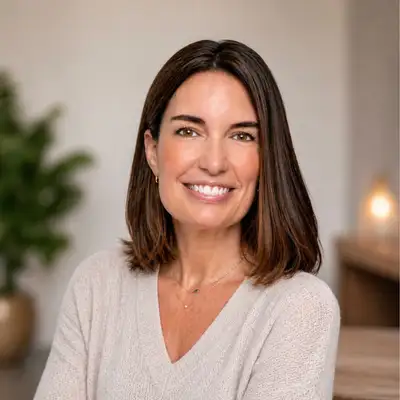
Welcome to The Sandwich Generation Survival Guide, where we explore the challenges and strategies of navigating life caught between work demands and supporting our loved ones while maintaining our own well-being. Join us in this dynamic podcast series as we uncover the complexities individuals face balancing multiple roles in the modern world. Our host, Candace Dellacona, shares personal experiences and professional insights to guide listeners through this complex journey.
Candace Dellacona: Welcome to the
Sandwich Generation Survival Guide.
I am your host, Candace Dellacona.
This is a very special edition of the
Sandwich Generation Survival Guide
because we are participating in the
fourth annual edition of Podcasthon,
for one week, thousands of podcasts
like mine are highlighting a charity
of their choice, and today my choice,
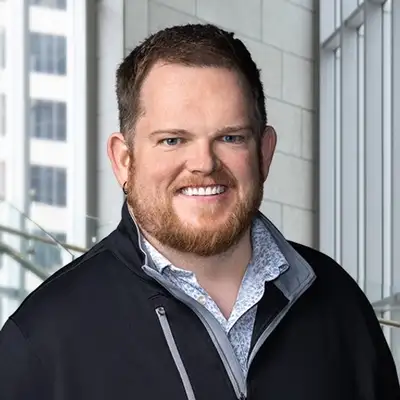
I am welcoming father Patrick Devine.
Father Patrick is a friend.
He is a priest, an author, a world
renowned speaker on peace and conflict
resolution, who's taught at the Harvard's
Kennedy School, and most importantly,
Father Patrick is the Executive
International Chairman and Founder of the
Shalom Center for Conflict Resolution and
Reconciliation, which is an organization
working across Eastern Africa to bring
peace to communities affected by conflict.
Through dialogue and mediation, grassroots
peace building, educational development
projects, Shalom has helped transform
relationships between groups that have
experienced deep and significant division
and violence for hundreds of years.
Father Patrick has dedicated decades
for building sustainable reconciliation
by training local leaders, empowering
communities and creating systems
that help prevent conflict before it
begins, such as schools and shelters.
And his work has impacted hundreds of
thousands of people across the region.
He has impacted my life and he
impacts most people that he meets.
He offers powerful lessons about
the possibilities of dialogue and
dignity, and of course blasting peace.
How is that for an intro?
Welcome, Father Patrick.
Father Partick Devine: Thank you, Candace.
That is some intro.
Candace Dellacona: I am
sure I embarrassed you.
You are a person who, is
certainly not immune to flattery
as a human like the rest of us.
But your work is such good work
and you take such pride in the
good work that you're doing.
So I'm really happy to welcome you today.
Father Partick Devine: Thank you
very much and I appreciate the
welcome and the invitation to be
here with you and your viewers today.
Candace Dellacona: Wonderful.
So let's get right into it.
I want to highlight Shalom, and I want
for you, the founder of the organization
to tell us everything we need to
know about this amazing organization.
So let's start at the beginning.
Let's start at what inspired you
to find Shalom Center for Conflict
Resolution and Reconciliation.
Father Partick Devine: Well, I grew up in
Ireland as you can hear from my accent.
And in 1979, I joined a group
called The Society of African
Missions, and you made a lifetime
commitment to Africa and its people.
And I was ordained in 1988 and
assigned to Western Tanzania.
Then I encountered the genocide
in Rwanda in 1994 with the
refugees pouring into Tanzania.
So I got involved in pastoral care
for them because over a million and a
half crossed the border at that time.
It was a terrible, terrible
genocide as are all genocides.
Then I ended up in quite a bit of
administration for our missionary
work in Tanzania and Kenya.
Our main drive in terms of development
was of course oriented around peace then
development schools, hospitals, and so on.
And my work as my career developed in
terms of administration I encountered
a lot of interacting conflict going
on in northern Kenya, South Sudan,
Southwest Ethiopia, and there's
no doubt and heavily influenced by
the violence in the Eastern Congo.
Since 1996 there's estimates that
there's between seven and 10 million
people killed alone over there.
And so it was from my interaction
with these environments and watching
well-intentioned NGOs and church
people and various other groups who
are very well intentioned, addressing
mainly the symptoms that I thought
there had to be a better way to
address the underlying root causes.
So I was inspired as opposed to set up
a group of men and women inter-faith.
And to get everybody qualified
with a minimum of a master's
degree in peace studies.
And on top of all that, I wanted
people who are willing to go behind the
front line into the conflict zones and
commit to live among the people there.
So that was the origin in
terms of the idea of Shalom.
So in 2009, Shalom was registered
in Kenya as the Shalom Center for
Conflict Resolution and Reconciliation,
and we began our first works in
Northern Kenya, along the border
with Ethiopia and South Sudan.
Candace Dellacona: Which is so remarkable.
Where you put faith and you're moved
to action in such a beautiful way,
and rallying those personally impacted
by it to be part of the change.
And I love the fact
that you call it Shalom.
As many of our listeners know, the
word shalom means peace, but it also
means wholeness and reconciliation.
So, Father, how would you say the
word shalom and those concepts of
wholeness and reconciliation shape the
work of the organization on a daily
basis, on a day in, day out basis.
Father Partick Devine: Well of course
it's important to know the root meaning
of shalom because some people just
take it as a greeting, but shalom means
peace, but it's not just a peace in
the sense of the absence of violence.
When we go back into Judaism and
the scriptures, and it's about.
Whereas the absence of violence,
I consider it only negative peace.
Where we're really
interested in positive peace.
We're all also mutually committed
to the wellbeing and development
and the security of each other.
And I'd like to say that at the
outset, 'cause that is our total
orientation as a group, as we
encounter conflict in Eastern Africa.
Shalom itself, of course means
about having a rife relationship
with God, with your neighbor, with
yourself, and indeed with creation.
It's about holistically integrating peace
and truth and justice and mercy, and they
are really the pillars of reconciliation.
Candace Dellacona: Which is remarkable.
And taking the organization to a
place where it's interfaith because
for those who are not familiar
with the region, there are so many
faiths in that particular region.
So broadening the scope as you have
successfully done to engage people so
that everyone feels that they can be
included in that process is remarkable.
For the listeners who are not familiar
with the region, as you point out.
Father, they the residents and
the citizens of those countries
deal with such significant
conflict and have for generations.
So what does Shalom in particular deal
with in terms of the type of conflict that
you're hoping to resolve in the region?
Father Partick Devine: Well, at the
moment we're addressing inter ethnic
conflict up in northern Kenya, as I
said, in that area where the Kenya
interfaces with South Sudan and Ethiopia.
Down at the coast then you have the
issues of religious ideological extremism
where you have Al-Shabaab and ISIS and
Al Qaeda and they're doing a lot of
recruiting in the slums as well of the
major urban centers in Eastern Africa.
And then on the issue of the urban
slums, like for example, there are
two and a half million people across.
I mean, it's debatable, but
definitely over 2 million
people living in those slums.
And there was a lot of violence
being done to women and children.
So we set up the Shalom Empowerment
Center to address violence
against women and children.
So there are two and a half thousand
women at the moment being trained
with conflict transformation skills
and peace building techniques.
And it widens out into the encountering
radicalization and countering human
trafficking and organ trafficking and
really enabling the people in all the
conflict environments where we work to
be the architects of their own future.
Now, in the threaten conflicts Candace,
we go in among the various tribes
and we identify the key influential
opinion shapers because you really
have to get them into the room.
And we spend about 18 months to two
years training them, first of all on the
analytics, what's causing the conflict
from a paradigm perspective of the role
of power, of the lack of institutions,
which comes under structuralism and
how the society can be positively
manipulated and the environment 'cause
an awful lot of the time conflict
is contingent on the environment,
communication, leadership and so on.
Then we move them to conflict
transformation training.
And that is dealing, first of all
with the personal 'cause, you have to
begin to look at yourself and that's
dealing with spiritual, emotional,
psychological, then relational.
The second phase is on the behavior
stereotype and communication issues.
Thirdly is to look at the lack of
institutions in those environments
to enable people to meet their
basic human needs and to be able
to actualize their potential.
What institutions are lacking,
such as law and order, legal
redress, medical education.
And fourthly, is to look at the issue of
where is culture legitimizing violence?
Where are human rights
being undermined and so on?
Where is the dignity of
life not being respected?
And we do that with both sides for about
18 months before we bring them together.
We have them trained also on
negotiation, pre negotiation,
negotiation and post negotiation skills.
And then we bring them together
because now they're speaking
the same conceptual language.
And may I say, in all my time, I have
never met a parent who doesn't want
a better future for their children.
They're all interested in getting peace.
But we have to remember also that these
countries, there are only a hundred
years you can say into modernization,
development as we know it in the west.
And there are huge areas, yes, semi-arid
desert territories that do not have enough
institutions developed by the governments.
And it's not that the governments aren't
trying, they are trying, of course, like
every government, we all can do better.
But that's the idea.
Candace Dellacona: You know what was
so great about that Father, is that
you gave us the blow by blow of the
architecture of the peace building process
that Shalom has developed over time.
And I think that the listeners now
have a practical idea of what that
looks like and the runway is long.
Father Partick Devine: Yeah, Candice and
I normally, just to give it a, rationale,
like you don't need to be a theological
genius or a sociological expert to realize
that in conflict environments where
people are killed, maimed and displaced
persistently, it's extremely difficult
for social and religious values, such as
peace, truth, justice and mercy to take
deep communal root for people to live
normal lives and experience through peace.
Secondly, it's extremely difficult to
have any sustainable development in
those environments because periodically
schools, hospitals, et cetera, either
become inoperable or destroyed.
So it's very important that we really
empower the people to be the architects.
Out of our peace processes, the first
thing that they all, both sides began
to agree on was the setting up of inter
ethnic and interreligious schools.
So Shalom has done a
huge amount of school.
We have implemented over 800 projects,
school educational development projects
in 450 plus institutions since we started.
And they, these developments when
we do medical as well and water
projects and equip these schools with
books and desks and solar energy.
But these projects help to
stabilize the peace process.
And since we started and many
students from these schools that would
never have got a chance have even
gone on some of them to university
and become lawyers and doctors.
And it's not that they
forget their people.
They are always there to
come back and help them.
Candace Dellacona: I mean if that is
not an endorsement of the good work
of Shalom, I don't know what is.
I think you know, what is so remarkable
about the organization is that you're
able with your infrastructure of the
organization and the training that
you do that is so involved and really
meticulous, bringing together groups who
historically saw each other as enemies
and the power of dialogue and that human
connection in resolving conflict is
so inspiring, especially as you point
out, Father, that these are people
that are doing their best to survive.
So things like justice and peace and
mercy have a hard time sort of seeping in
when you are literally trying to survive.
So I just think that's such a remarkable
testament of Shalom and all of the
amazing people that are committed to
Shalom to make peace in the region.
What I would like to know is, why do
you see as someone who is from Ireland,
it's so important to you that the
solutions for peace come from within the
community as opposed to from outside.
Can you talk a little bit about why
you're sort of tapping the shoulder
of Tanzanians and Kenyans and Sudanese
people to come up with the solutions?
Father Partick Devine: Well, you
see at best, outside intervention,
any war can only create a ceasefire.
And it's important that maybe within
a, to explain that a little bit.
When you have manifest
direct violent conflict.
The first thing of course you want
to do, and usually international
intervention lead to creating a
ceasefire, but a ceasefire can easily
revert back into violence again,
into manifest violence unless you
really understand the root causes
what's causing the and address them.
And you have to move that ceasefire
through interventions, development
interventions, further conflict
transformation, you have to begin to
move it through towards positive peace.
And if you're going to get the positive
peace you really have to have the people
on board and they have to commit to it.
And so often around the world
to today, we see interventions
in major conflicts, right?
I'm talking about international conflicts.
And the peace is there and
it can easily revert back.
But from once the people own
the piece on the ground and are
committed, both sides are committed.
And I think to add here as well, what
I have found working among the people,
they want to create environments to
where they can experience the divine
spirit because everybody is yearning
to experience that spirit as well.
And where people are killed and maimed
in this place, that's nearly impossible.
I would say like Candice, that, in terms
of addressing the issue of religious
ideological extremism, it's very
important that people are aware of the
terminology and that along a continuim
from radicalization to fundamentalism,
then on to nonviolent extremism, and then
further on to manifest violent extremism
operationalized in terroristic acts.
And I use that term, nonviolent extremism.
I remember giving a lecture in in
Chicago and the people, what do
you mean by nonviolent extremism?
And I said, you could even have
it in a western democracy where
you have side, so polarized.
So polarized, whether it be in politics
or the media or some other form that
they don't even want to listen to each
other, talk to each other, and they don't
want the other side to be heard even.
And they want to try and wipe them
off the social political narrative.
So I don't think I need to
explain that to too many people.
Candace Dellacona: No,
I don't think you do.
Not this day and age here
in the United States.
Father Partick Devine: It's bringing
all that awareness to the people that
you're empowering them, really empowering
them with the analytical skills and
the conflict transformation peace
building techniques that are needed.
Candace Dellacona: It's really
remarkable and I love the term
that you use, owning the peace.
Because when you have people that have
a vested interest in the peace and they
see the possibility of living a life
without pain of war and conflict, it
really does provide an alternative that
perhaps didn't exist for them before.
You're doing such amazing work in
Eastern Africa and spreading the
sort of good work that you're doing.
Obviously we're in a place of
conflict here in the world right now.
We know what's going on, places like
Iran and Gaza and Ukraine, and I think
a lot of us as families, we worry
about conflict even in our own lives.
So what are the lessons, Father,
that you could impart upon us
about conflict resolution even more
locally, even within our own homes?
Do you have any advice for our listeners?
Father Partick Devine: Well, like
conflict everywhere around the
world, and I think this is something
we can bring to our homes as well.
We should all be aware
on issues of conflict.
That conflict has a memory it's
very robust and it's resilient.
It's more than culture.
It can be transgenerational.
It usually is.
Unfortunately it's frequently distorted
by erroneous historical narratives
and false media reporting at times.
So that even comes down into our
local conflicts at home among people.
And I mean, communication is so vital
to have, and whether it be among family
members in marriage or whatever, and
sometimes to reach out and to find help
and to find people who are interested
because this conflict world we are in
as well, in terms of NGOs and so on,
it can often be abused and used by
organizations who use the cause just
to feed their own management needs.
So you really need authenticity among
people who are engaging with you.
To people in family homes, communication
is the key and to really begin to
get some help so that you do the
analytics on yourself as an individual
on the relationships in terms of
communication, stereotyping, and so on.
And look at your home life.
Look at your community life,
whether it be a parish or a village.
Look at what institutions can be
improved, and look at the overall
culture that's been fed into
the minds and hearts of people.
Candace Dellacona: I love that.
That is really a perfect
answer, Father Patrick.
After all of your many decades now
in Africa, and the conflict that
you've witnessed, the heartache, the
heartbreak and also a lot of positives,
the incredible network that Shalom
has been able to put together piece
by piece, what still gives you hope?
Father Patrick, what
gives you hope day to day?
Father Partick Devine: I have great
hope because of the human spirit.
'Cause I believe in the goodness of
the human spirit and I believe in the
goodness of the divine spirit, which
touches on the entity of life of all of
us, regardless of which faith you are.
So that's why we're even
inter-religious and to always give
scope to experience that divine
spirit and let it move us for good.
And there are other spirits that move
us into negative territory and to do
things that we shouldn't be doing, but
to have great respect for human rights
and the dignity of life and whatever we
do, do not close dialogue or shut people
out, keep the dialogue going and see how
can we make life better as a community?
Because if we just turn in on
ourselves, whether it be about our
own, just human needs or about faith
I think we have missed the joy of
life and the richness of each other.
It's like you and I here,
sitting here talking.
We're all part of the mosaic.
No one is above or below.
And I think that's what makes it work,
and we appreciate and care for each other.
Of course, Candace we are
registered in in Ireland as well.
The Shalom is, and we are in the
Northern Ireland, UK and here in the USA.
And I want to say this because your
country gave us a great honor and Colin
Powell was the guest in the event down
in Washington back a number of years ago.
And he had a good impact on me as
well, when in terms of speaking
about government interference and
for peace and for bringing about
reconciliation can only do so much.
But he said, ultimately the people at the
grassroots too have to be really trained,
as I said, to be their own architects
and to reach and to attain the type
of environment that which to live in.
Candace Dellacona: And you know,
Father Patrick, that really is a
perfect way to end my highlight of
the amazing Shalom Institute and
to of course, remind our listeners
that Shalom does such amazing work.
You just heard a fraction of what
Shalom has done for the region and as
Father Patrick rightly pointed out,
you have obtained certification as to
charitable status here in the United
States, in the United Kingdom, and in
Ireland to support all of the work that
you're doing in Africa, and donations
that you have made to the satellites
in the United States, The United
Kingdom and Ireland are tax deductible.
If you are moved to make a donation, and
I hope you have been, we will have all
of that information in our show notes.
Father Partick Devine: Candace, I'd just
like to say that I want to remember all
our people on the front line and all the
progress that's being made to thank them
and to thank all our donors as well.
And just to say this, that of
every dollar that's donated from
USA out to us in Africa, 95 cents
goes directly into the project.
Candace Dellacona: That is remarkable.
I wanted to thank Father Patrick
Devine from the bottom of my
heart for taking part in this
special episode of the Podcasthon.
And if you've enjoyed it, I would really
hope that you'd visit www.postcasthon.org
to learn about so many other
charities through the voices and
the talents of my fellow podcasters.
Thank you, Father Patrick.